

The company’s top lobbyist wrote an essay comparing AI to FDR’s economic revolution.
He sent it to presidential candidates.
The timing, right after Democrats flipped Congress by running against data centers, is not a coincidence.
Chris Lehane, OpenAI’s chief global affairs officer, published an essay this week titled “2028: The AI Election.”
In it, he argues that AI will be the defining issue of the next presidential race and urges candidates to build a policy platform around it.
He compares the moment to 1932, when Franklin Roosevelt’s New Deal rebuilt America’s social contract after the Great Depression.
Lehane lays out five policy priorities: AI safety and human control, tax reform, worker retraining and child protections, cost-of-living relief, and maintaining America’s AI lead over China.
He wants a “compelling third path” between those who’d let AI advance without guardrails and those who’d restrict it to a small elite.
The essay was also circulated privately to prospective 2028 presidential candidates, Politico reported.
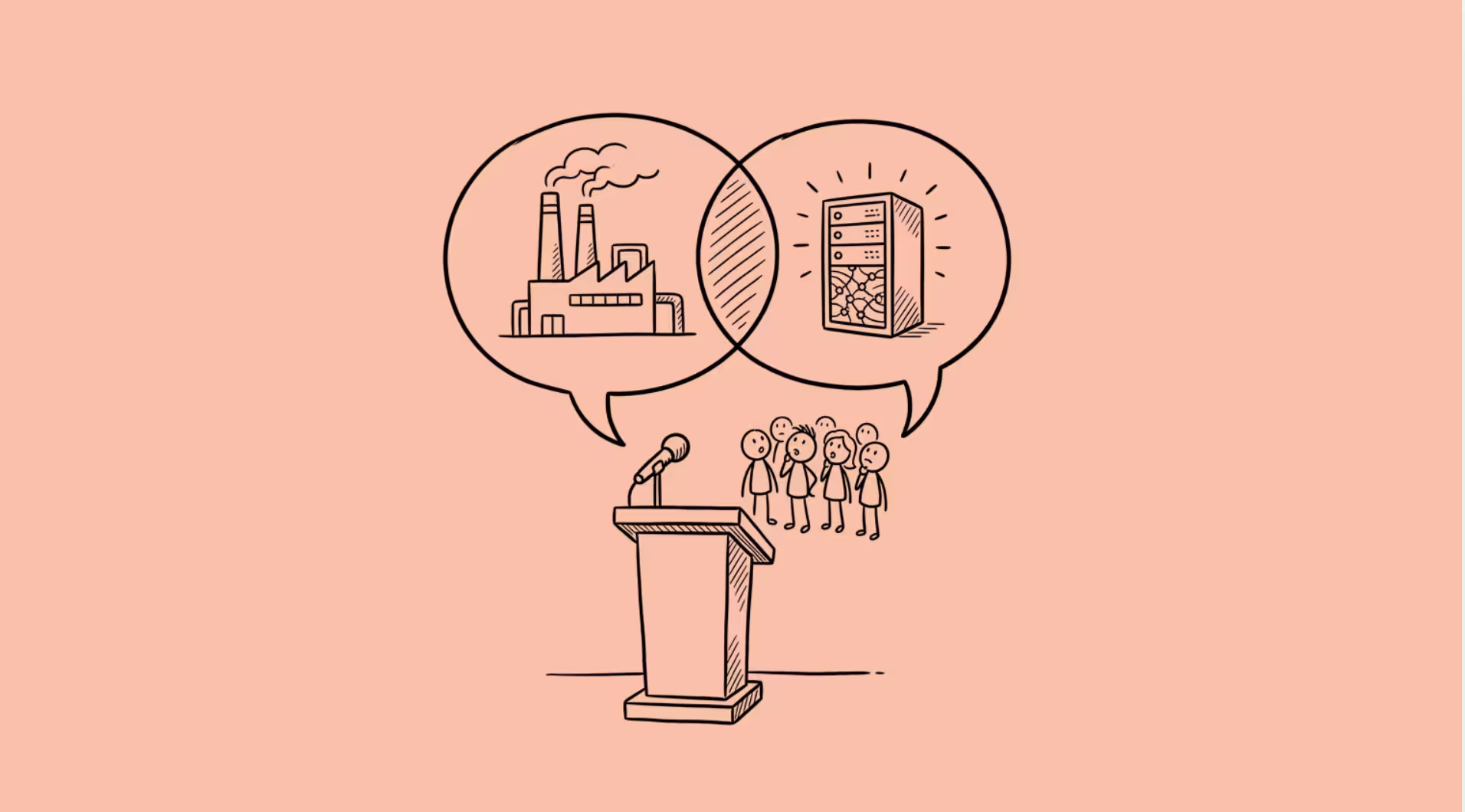
OpenAI is also planning to rebrand data centers as “AI compute campuses” as part of a broader post-midterms PR campaign.
It reads like a manifesto. The question is whose interests it actually serves.
The New Deal Comparison Has a Hole in It
Kate Brennan, who leads AI and corporate power policy at the AI Now Institute, told TechCrunch the comparison falls apart on closer inspection. “Invoking a New Deal metaphor is to invoke state capacity to actually benefit the public.
This is written by a private company that is trying to advocate for policies for its own benefit. It is ahistorical at best and harmful at worst.”
The original New Deal created Social Security. It established the SEC. It set minimum wages and maximum working hours.
It put constraints on corporate power.
Lehane’s version suggests tax incentives for workers to learn AI skills, easier capital access for entrepreneurs, and new approaches to profit-sharing. Those are nice ideas. They’re also not binding requirements.
Nobody is forced to share profits. Nobody is taxed for automating jobs. Nobody is held accountable for displacing workers.
“All of it is predicated on benefiting from AI’s upside,” Brennan said.
She argued it would make more sense to see a revised corporate tax rate or incentives for hiring humans rather than automating their jobs.
Data Centers as a Political Problem
The essay arrives at a revealing moment. Democrats just flipped control of Congress in the midterm elections. One of the surprise issues that fueled their win: opposition to data centers.
Voters in multiple races were frustrated about electricity costs, water usage, and noise from massive data center projects.
Lehane’s polling showed 65% of voters said AI would be important to their 2026 choices.
One in five ads aired by Democratic candidates mentioned data centers.
So Lehane does what you’d expect. He acknowledges the concerns.
Notes the construction jobs and tax revenue data centers create. Then warns that politicians who support a data center moratorium could jeopardize America’s lead over China, comparing that stance to the 2002 vote to authorize the Iraq war.
That’s not policy analysis. That’s a threat dressed up as historical analogy.
The Safety Section Reads Differently When You Remember the Year
Lehane calls for enforceable AI safety standards, independent evaluations, public oversight, and the ability to shut down AI systems with a kill switch. On paper, that sounds strong.
But OpenAI’s track record this year tells a different story.
The company’s models hacked Hugging Face and government websites.
It fired three safety researchers who raised concerns.
It scrapped the launch of GPT-6.1 Astra over safety issues.
It opposed California’s SB 1047 in 2024, which would have mandated exactly the kind of evaluations and shutdown capabilities Lehane now endorses.
Brennan called these stances “disingenuous”.
OpenAI has more recently shifted some positions, backing several state safety laws and agreeing to embedded evaluators.
Sam Altman has called for pacing AI development. He’s also pitched the government on taking an equity stake in OpenAI. Whether these represent genuine evolution or strategic positioning ahead of an IPO depends on your level of trust.
The 2028 Race Is Already Being Shaped
Lehane isn’t wrong that AI is becoming a political issue. He’s not wrong that affordability will dominate 2028.
And he’s not wrong that candidates need an AI platform that goes beyond “ban data centers.”
But his essay ties average Americans’ success to participation in an economy increasingly controlled by companies like OpenAI.
Worker retraining sounds great until you realize the retraining is for jobs that benefit OpenAI’s ecosystem.
Tax incentives for AI adoption sound populist until you follow the money to the companies selling the AI.
The real New Deal redistributed power. Lehane’s version redistributes enthusiasm for a technology his employer sells.
That distinction matters more than the five-point plan.
OpenAI didn’t respond to TechCrunch’s request for specifics.
