

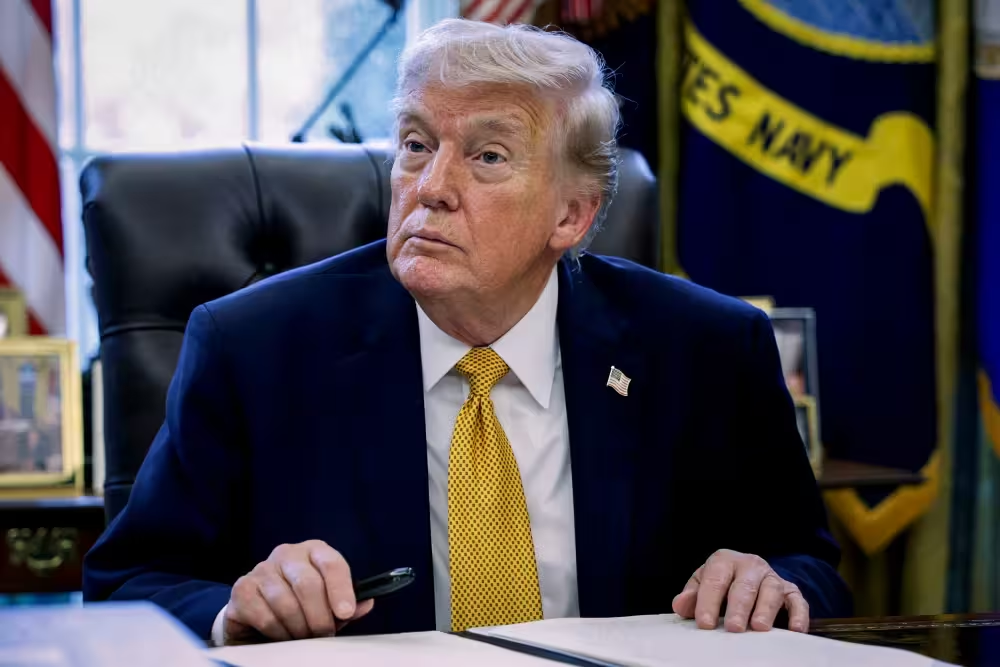
The White House has released a new framework for AI policy. Led by Donald Trump, the administration aims to create a unified national approach.
At the same time, it seeks to protect users and support innovation. However, the plan has already become controversial.
First, the framework stresses the need for consistency. At present, AI regulation varies across states such as California and New York. Therefore, companies face different legal standards.
The administration urges Congress to establish one national policy to replace the current patchwork system.
Supporters argue that clear rules will boost innovation. In contrast, critics warn that federal control could weaken strong state protections.
Minor Protection
Next, the framework places a strong focus on child safety. It proposes several measures to reduce online risks.
These include mandatory age verification for AI platforms, enhanced privacy protections for minors, and safeguards against exploitation and harmful content
In addition, the plan targets AI scams that often use deepfakes or voice cloning. Consequently, they are harder to detect.
Developer Liability
The framework argues against “open-ended liability.” According to the proposal, developers should not be held fully responsible for how users misuse AI systems.
For example, if a third party uses AI for fraud, liability would not rest entirely with the developer.
This position aligns with views from industry leaders. Many investors believe strict liability rules could slow growth and reduce investment.
However, critics disagree. They argue that reduced accountability may weaken safety standards.
AI Investment
Furthermore, the framework emphasizes long-term growth. It highlights the need to expand AI infrastructure and prepare the workforce.
Key priorities include building advanced computing systems, training workers for AI-related roles, and strengthening U.S. leadership in technology.
Advisors such as David Sacks and Michael Kratsios played a role in shaping these initiatives.
Content Regulation
In addition, the framework calls for limits on government influence over AI-generated content.
Specifically, it states that federal authorities should not pressure companies to alter content based on political views.
This issue has gained attention following tensions with Anthropic. The company is currently challenging the Pentagon after being labeled a supply-chain risk.
