
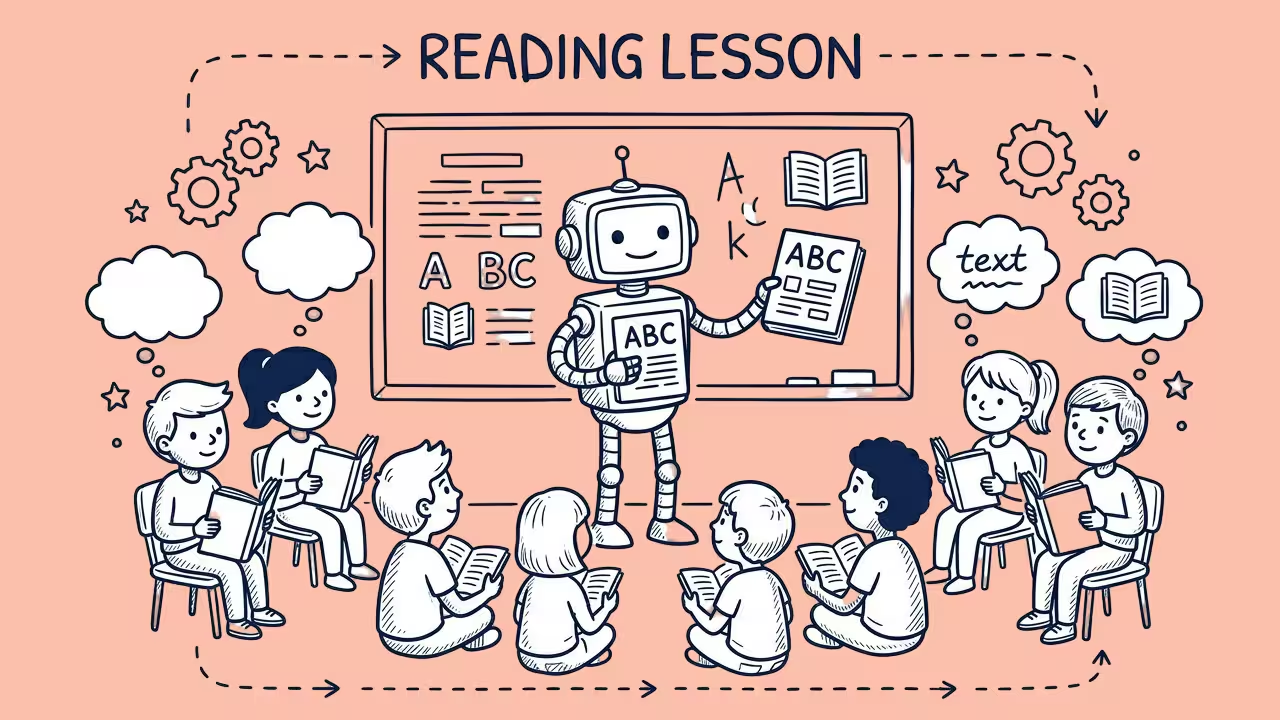

Amira AI is a more streamlined version of an AI learning tool.
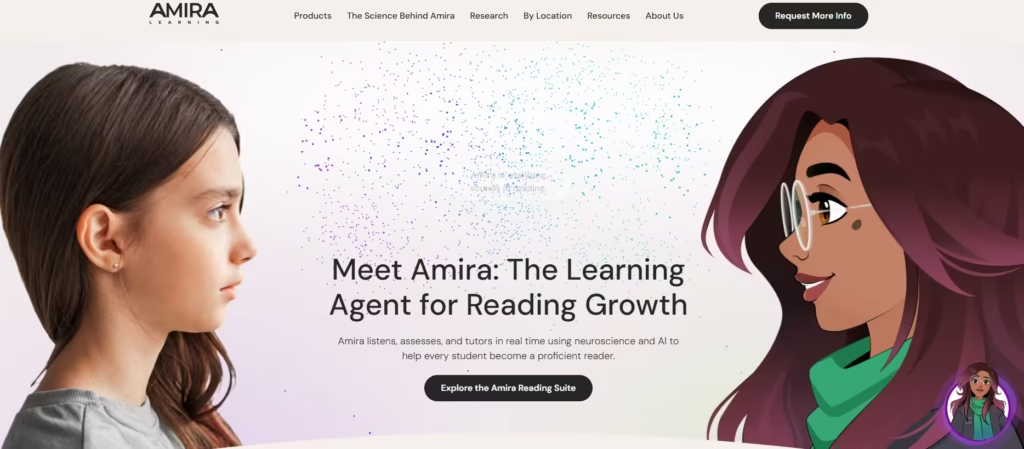
It was created for both students and educators, with educators included as an oversight. Amira’s primary focus is to help its users improve their reading skills through phonological recognition technology that gives a live assessment of how the brain works.
It then functions like a reading tutor by employing methods backed by neuroscience.
Amira’s live assessment can help detect reading difficulties such as dyslexia early on, prompting early intervention.
As a narrowed tool, there is a question of whether Amira is worth it or if traditional learning techniques are enough. This article will answer this question by reviewing what Amira has to offer.
Amira’s Offerings
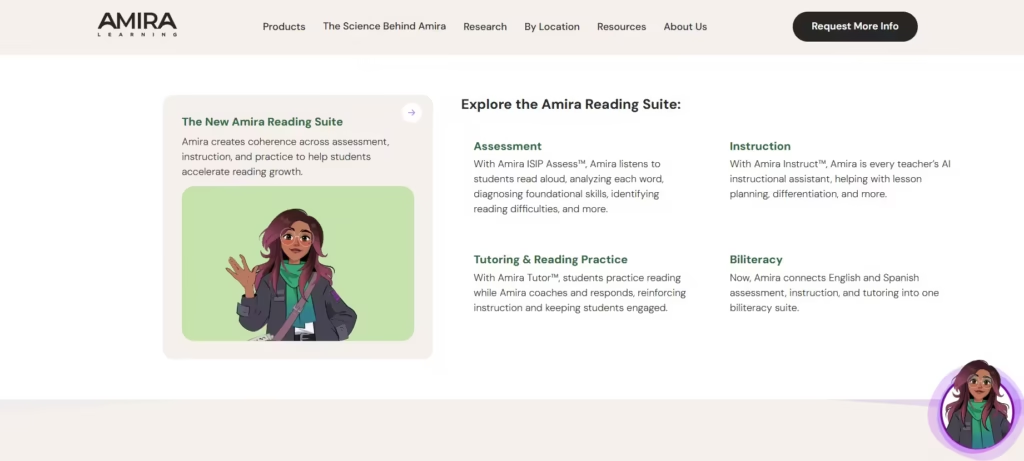
1. Assessment
Amira uses voice reading and a system called Amira ISIP Assess. Each assessment takes on a teacher-student dynamic; students read the text aloud, and Amira listens, checks for mistakes, pauses, miscues, self-corrections, and pronunciation to gauge reading skills.
It uses the data to make conclusions on phonological awareness, fluency, vocabulary, comprehension, dyslexia risk, and reading level. A combination of these cues helps Amira track reading progress over time.
2. Tutoring and Reading Practice
Amira provides personal reading practice when it spots errors. When students struggle with a word or concept, Amira immediately helps out by sounding out words, repeating words, or explaining vocabulary.
These micro-interventions are based on the science of reading and help students improve phonics and comprehension skills.
3. Instruction
This is a dedicated feature for teachers. It makes assessment data and tutoring results available to teachers, enabling them to plan lessons for different reading levels.
Amira establishes a connection between assessment results, reading practice, and classroom teaching. Therefore, classes are actually based on student reading data and performance.
4. Biliteracy
Amira dedicates itself to developing reading skills in both Englisha nd Spanish. There are assessments, instructions, and tutoring for each separate language.
But also, Amira strives to transfer literacy skills between languages through dual-language reading assessments and instructional recommendations for teachers working with multilingual students.
Note: The basic idea is that all four are connected in one system. First, there’s an assessment stage that births the instruction and tutoring process. It then circles back to a new assessment in a continuous learning loop.
Also read: Why Students Are Turning to AI for Studying and Homework
What the Reviews Say
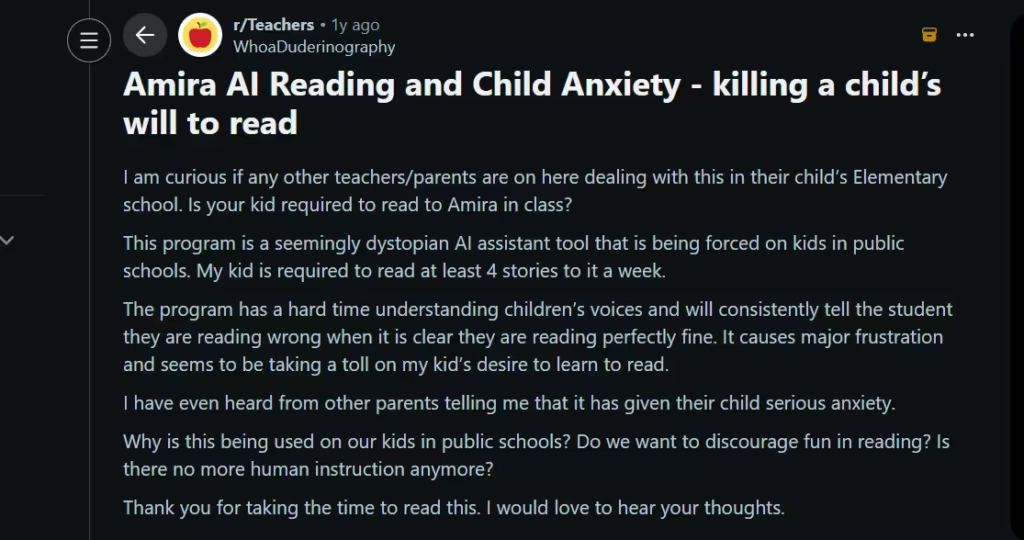
A telling Reddit comment details the unappealing proposition of Amira learning. The platform appeared to be doing more harm than good by consistently marking down young learners because it can’t pick up on children’s voices.
Children’s voices aren’t as well-sounding and are riddled with undertones that may be counted as mispronunciations.
Other Reddit users who also happened to be parents and educators tell similar experiences.
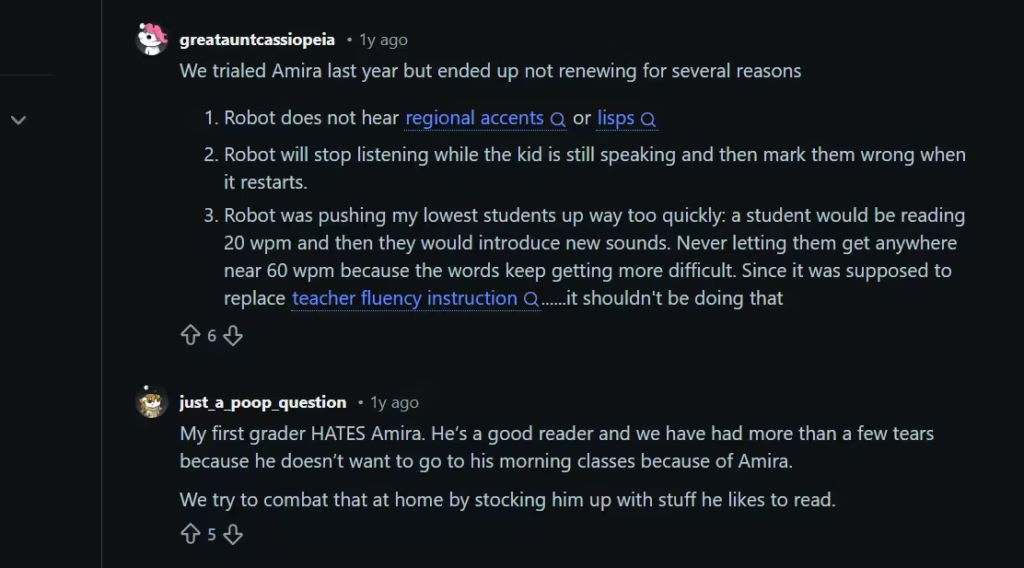
Many point out that Amira AI experiences glitches that affect a pupil’s view of their own reading skill. This has taken a mental toll on them and has cascaded into avoiding the habit of reading aloud altogether. Therefore, classrooms are filled with pupils who dread Amira.
And it doesn’t get better. Other review platforms like Trustpilot also take on a negative stance on Amira learning. There are good reviews, but they are general at best about an AI that helps learning, with no mentions of specific experiences.
The collective reviews can be summed up as a forced injection of AI into the learning process without justification. Amira appears to have been made a part of the curriculum despite existing effective traditional methods.
Reading Literacy Through AI?
Amira learning, at first glance, holds a lot of promise. However, the realities of reading literacy demand a better approach to cover all current oversights. Amira can be trained to pick up on children’s voices. It can also be finetuned to experience minimal glitching to avoid taking hits on the fragile self-esteem of young learners. Therefore, Amira AI doesn’t currently appear to be worth the investment in time and effort.
FAQs
1. Is Amira Testing Accurate?
Yes, Amira Learning’s own testing finds it accurate when measuring reading ability, especially fluency, accuracy, and some comprehension skills.
The system listens to students read aloud and analyzes mistakes, speed, and decoding skills using speech recognition and reading science models.
Schools use Amira assessments as a screening and progress-monitoring tool, but teachers still review results because no AI assessment is perfect.
2. Does Amira Use AI?
Yes, Amira uses AI in speech recognition to listen to students reading aloud and machine learning to analyze reading mistakes, fluency, and comprehension. The AI also provides tutoring by giving hints, corrections, and reading support when a student struggles with a word or passage.
3. Does Amira Diagnose Dyslexia?
Amira does not officially diagnose dyslexia, but it can screen for reading difficulties that may indicate dyslexia risk.
The system identifies patterns such as decoding problems, slow reading, and frequent word errors. If the system detects risk factors, a teacher or specialist may recommend formal testing by a professional, because only specialists can diagnose dyslexia.
4. Does Amira Record Your Voice?
Yes, Amira records students’ voices while they are reading so the system can analyze pronunciation, mistakes, and fluency.
The recordings are used for assessment, tutoring, and progress tracking. Schools and the company state that the recordings are stored securely and used for educational purposes only.
