

Everyone loves a good robot-takes-your-job story. But the data isn’t backing it up. Not yet, anyway.
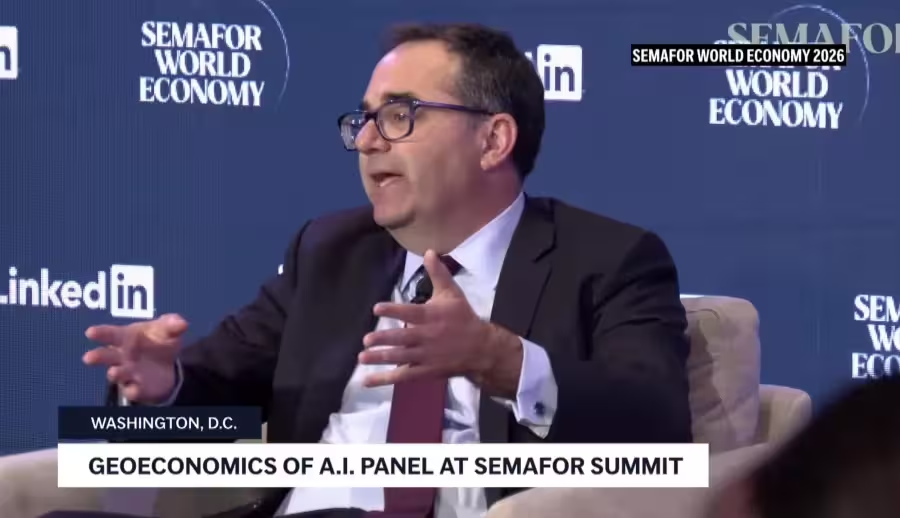
LinkedIn’s top legal and global affairs executive, Blake Lawit, stepped up to a microphone at the Semafor World Economy summit this week and said AI is not behind the recent hiring slump.
That’s not something a lot of people expected.
Hiring rates
LinkedIn tracks over a billion members. Its so-called Economic Graph gives the company a real-time window into the job market. And what does that data show?
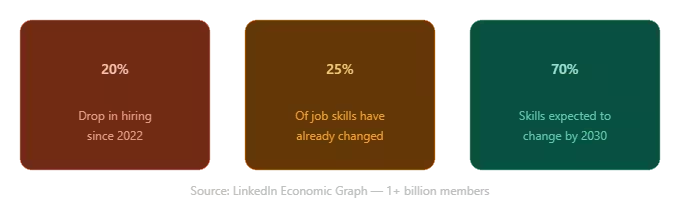
Hiring has dropped roughly 20% since 2022. That’s a big number. But Lawit says the culprit isn’t ChatGPT or any other AI tool. He points the finger at rising interest rates instead.
When borrowing money gets expensive, companies tighten their belts. They slow down hiring and freeze headcount. It’s the same old story that plays out every time rates climb.
Also read: Some Americans are Open to Taking Orders from an AI Boss
LinkedIn’s Data
Lawit said LinkedIn specifically looked for signs that AI was replacing workers in the sectors most talked about. That includes customer support, administrative roles, and marketing.
These are the jobs experts keep flagging as “at risk.” The data found nothing unusual.
“We’ve looked and, honestly, we haven’t seen it,” Lawit told the Semafor audience. That’s not a small thing to say; LinkedIn sees job trends across every industry in real time.
If AI were quietly gutting marketing teams or wiping out admin roles, LinkedIn would be one of the first to know.
Lawit also made another surprising point. Younger workers entering the job market for the first time aren’t suffering disproportionately.
The hiring slowdown hits everyone roughly the same- new grads and mid-career professionals alike.
So AI isn’t stealing jobs right now. But Lawit was clear that the current calm doesn’t mean the storm isn’t coming.
He said LinkedIn isn’t ruling out future disruption, just reporting what the data shows today. “Doesn’t mean it’s not going to happen in the future, but not yet,” he said.
That “not yet” deserves some attention.
Changing Jobs
Over the past few years, the skills needed to do an average job have already shifted by 25%. That’s not a small update. That’s a major overhaul of what it takes to stay relevant at work.
Now add AI into the mix. LinkedIn expects that number to hit 70% by 2030. In plain terms: seven out of ten skills that define your job today may look different within the next few years.
As Lawit put it: “Even if you’re not changing jobs, your job’s changing on you.”
Most people think about job security as keeping or losing a job. But the real risk isn’t losing your title, it’s losing your relevance inside the role you already have.
