

If you’ve been using HeyGen for AI video creation, you already know how powerful the technology can be. But HeyGen isn’t the only option there is. If you’re looking for better pricing, different features, or a fresh interface, there are strong alternatives worth exploring.
Below, we break down eight of the best HeyGen alternatives with honest overviews. Each overview is accompanied by testing observations and clear verdicts on who each tool actually serves.
1. InVideo(Best for Social Media Creators)
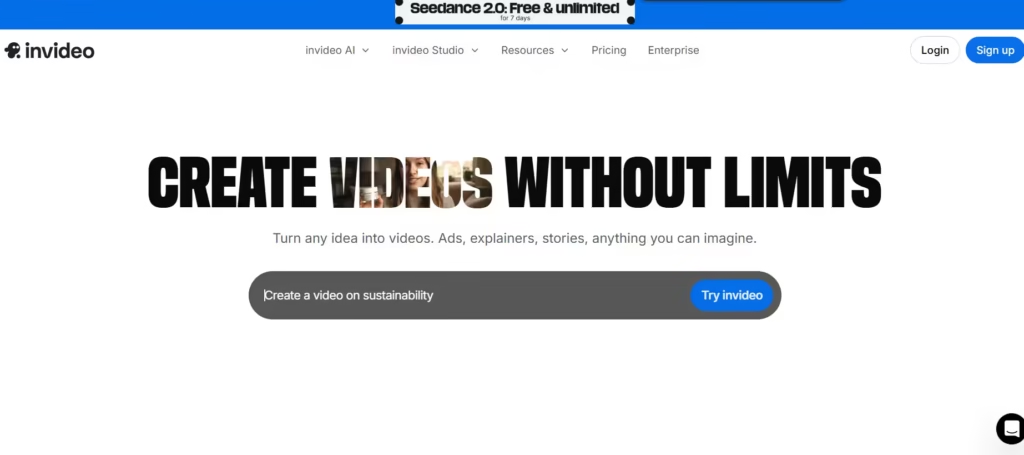
InVideo targets content creators, marketers, and small business owners who need polished videos without a steep learning curve.
The platform offers thousands of templates, an AI script generator, and a text-to-video engine that genuinely holds up under pressure.
Reviewers on G2 express how quickly teams move from a raw idea to a finished, branded video. The stock media library is deep, and the AI voiceover quality is more than adequate for most use cases.
However, the avatar feature is where InVideo’s limits lie. In test runs with the avatar tool, lip-sync accuracy was noticeably off in several videos, enough to make it unsuitable for polished client-facing presentations.
That gap matters if your primary reason for leaving HeyGen is to find a comparable avatar experience. InVideo is best understood as a content production engine, not an avatar replacement. For social clips and marketing content, though, it’s excellent value.
Pro: Extremely beginner-friendly with a massive template library and flexible pricing plans.
Con: Avatar lip-sync is inconsistent and falls well short of HeyGen’s quality, a real limitation for professional presenter-style videos.
2. Synthesia(Most Polished Avatar Platform)
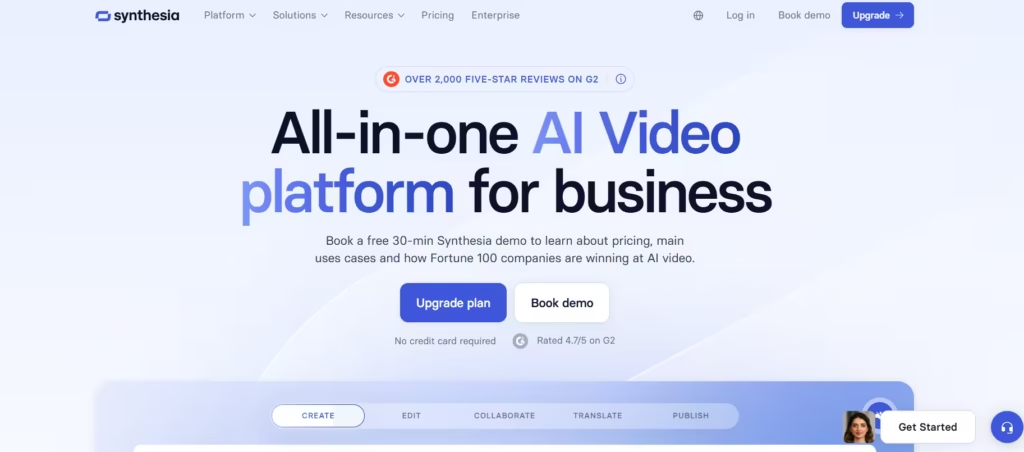
Synthesia is the name that comes up most often when people search for HeyGen alternatives, and the reputation is largely earned. It offers over 230 diverse avatars and supports more than 140 languages, which makes it a serious contender for global content teams.
Companies like Zoom and Heineken rely on it for internal training and corporate communications. You type a script, choose an avatar, and the output is ready in minutes. No camera, no studio, and no talent fees. Users on Trustpilot consistently commend the helpfulness of its support materials and impressive technology.
However, where Synthesia stumbles is price. For solo creators or small teams, the cost ($29/month) is a bit hard to justify. You’re paying a premium that only makes sense at scale. Even then, the starter plan might prove insufficient. A better option, “The Creator plan” ($89/month), would be a better fit.
If your organization produces dozens of videos per month and needs a reliable, enterprise-grade tool with strong support, Synthesia delivers. But if you’re a freelancer testing the waters, start somewhere cheaper and come back when the budget grows.
Pro: Industry-leading avatar realism with unmatched multilingual support and proven enterprise credibility.
Con: Pricing is steep; it’s realistically only cost-effective for teams producing video content at high volume.
3. Murf (The Voiceover Specialist)
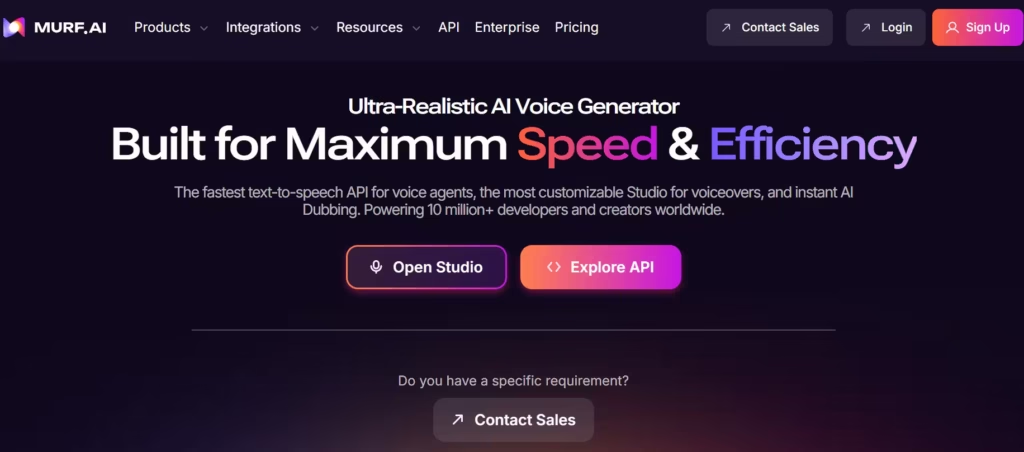
Rather than compete with HeyGen on avatars, Murf goes all-in on AI voiceover, and it’s the best in that category. The platform offers over 120 voices in 20+ languages, with natural-sounding delivery that outperforms competitors at a similar price point.
Podcasters, e-learning developers, and video producers reach for Murf when they need narration that sounds human without recording costs. Users on Capterra consistently highlight the granular control over pitch, pacing, and emphasis as a major differentiator.
The audio-to-video sync workflow is smooth. And its integrations with Canva and Google Slides make it genuinely useful as part of a production stack. But here’s the honest verdict: Murf is a companion tool, not a HeyGen replacement.
It has no avatar functionality. If you came here specifically because you want an AI presenter on screen, Murf won’t solve that problem. Use it alongside another tool on this list, and it becomes very powerful.
Pro: Best-in-class voiceover quality with impressive voice customization and clean integrations.
Con: No AI avatar support, it solves only part of the HeyGen equation and needs to be paired with another platform.
4. Pictory(Content Repurposing)
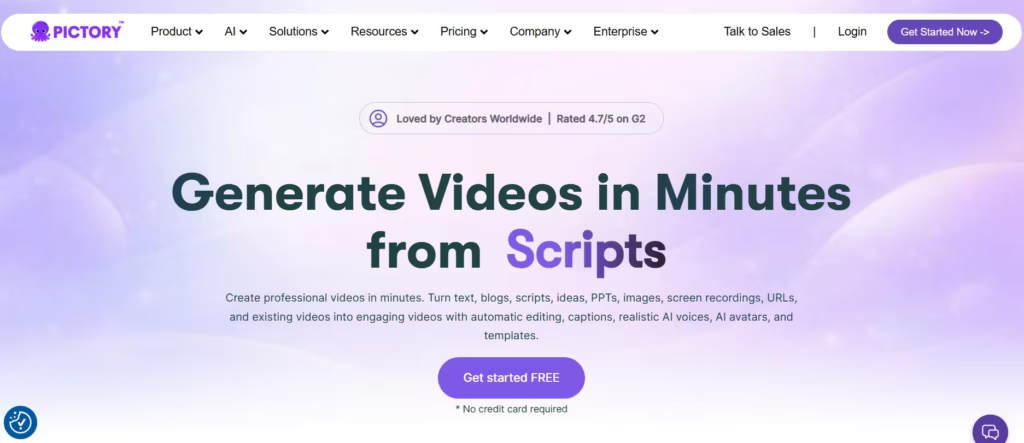
Pictory occupies a specific niche. It turns long-form content into short, shareable videos automatically. A 3,000-word blog post or a 90-minute webinar recording can be converted into a highlight reel. That’s together with captions and stock footage, faster than any manual editor could make it happen.
According to Pictory’s published case studies, marketing teams report cutting video production time to just 8-10 minutes per clip. That’s a real, measurable gain, not a vague efficiency claim. The branded template system is also genuinely useful for teams that need a consistent visual identity throughout their content.
Where Pictory falls short is equally specific: it is not built for avatar-based video creation. Also, the automated edits can miss important context in nuanced or technical content. Human review of the output is always necessary. For content repurposing at scale, Pictory is one of the strongest tools available.
Pro: Dramatically reduces production time for content repurposing, with solid branding tools and accurate auto-captioning.
Con: No avatar support, and AI-automated edits frequently need manual correction for anything complex or technical.
Also read: HeyGen vs Pictory: Which AI Video Tool Is Right for You?
5. Elai.io (The Underrated Avatar Tool)
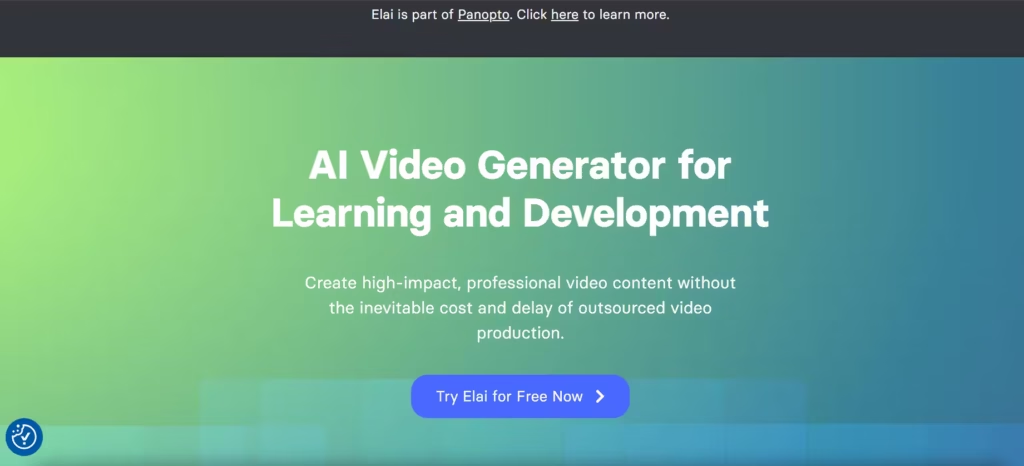
Elai.io focuses on AI avatar video production and makes custom avatar creation more accessible than almost any competitor. You can clone your own likeness from a short video recording. That’s a compelling option for brands that want a consistent digital spokesperson without committing to Synthesia’s pricing.
After testing Elai’s avatar generation across multiple video styles, the lip-sync accuracy was competitive with HeyGen in the majority of cases. It was also noticeably stronger than InVideo and Synthesia on standard talking-head formats.
Users on G2 confirm the custom avatar process is less technical than rival platforms. The 75+ language support is a genuine bonus. On the downside, the interface feels slightly rougher around the edges compared to Synthesia.
And lip-sync can slip on longer scripts or faster delivery speeds. But for teams that need an affordable, avatar-first HeyGen alternative that doesn’t gut the budget, Elai.io is the strongest option on this list.
Pro: Affordable, capable custom avatar creation with competitive lip-sync accuracy and solid multilingual support.
Con: Interface lags behind premium competitors, and lip-sync consistency drops on longer or faster-paced scripts. There could also be occasional rendering delays.
6. Colossyan (The Corporate Trainer)
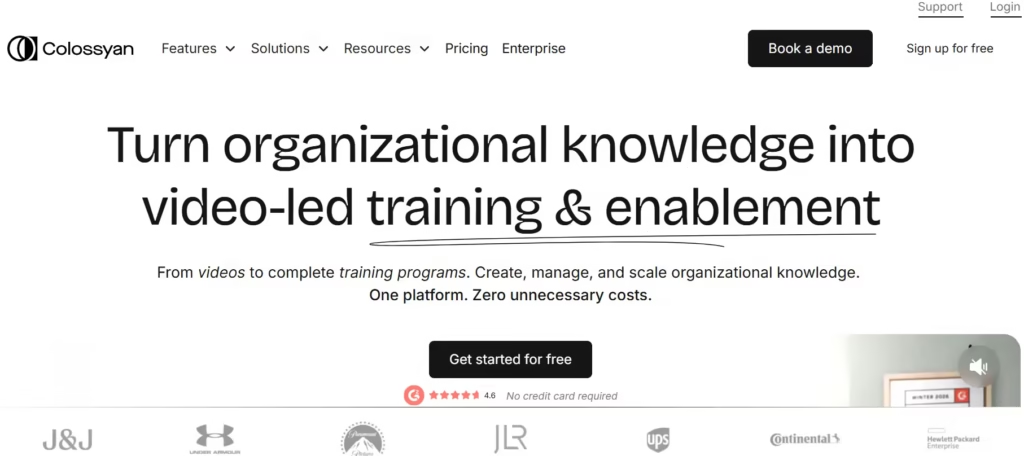
Colossyan isn’t trying to serve everyone. The platform is purpose-built for workplace learning and development, and it shows in every design decision. Alongside standard AI avatar generation, it offers scenario-based video features that transform dry compliance content into something employees might actually watch.
L&D teams and HR departments consistently gravitate toward it for exactly that reason. Reviews on G2 highlight the collaborative workflow tools, which let multiple team members contribute to a project simultaneously. This is a genuine operational advantage for large organizations.
One reviewer in particular states:
“I really appreciate that Colossyan Creator’s website doesn’t shut down on me, and it saves my information constantly, without overburdening my tablet. The conversation mode is great for my podcast-style AI videos, letting me put multiple avatars in the same scene with natural eye contact and reactions…”
Other reviews sum up that Colossyan’s avatar selection is professional and diverse. This matters in an inclusive workplace communication.
Pro: Exceptional for corporate training and L&D workflows, with collaborative editing and strong localization built in.
Con: The narrow workplace focus makes it a poor fit for creative or marketing-led video production.
7. VEED.io (All-in-One Browser Tool)
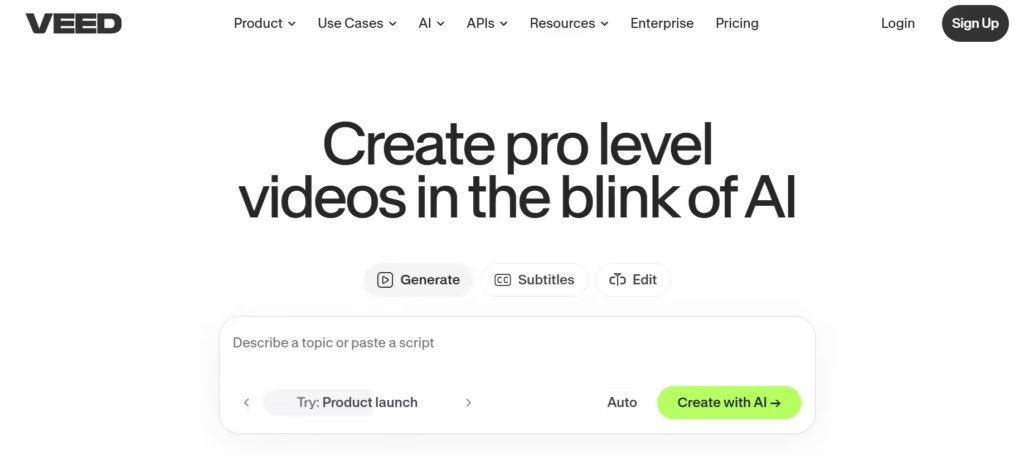
VEED.io’s feature set is broader than most people expect. It has AI avatars, auto-subtitles, noise removal, screen recording, video compression, and direct social media export, all from the browser, no installation required.
After running test videos through VEED’s free tier, the auto-subtitle accuracy was on par with paid tools at higher price points, which is a meaningful result for creators watching their costs.
TechRadar has recognized VEED among the top online video tools for enhancing and editing existing videos. The AI avatar feature has improved steadily with recent updates. It, however, still trails behind dedicated avatar platforms like Synthesia and HeyGen in terms of realism and lip-sync precision.
For everything else, editing, subtitles, and quick social content, VEED punches well above its price point. It’s the tool you recommend to someone who needs to do a bit of everything without specializing in any one area.
Pro: Genuinely versatile browser-based editor with fast, accurate AI subtitles and strong all-around value for creators.
Con: Avatar realism still lags behind dedicated platforms, not the right choice if photorealistic presenters are the priority.
8. Hour One (Broadcast-quality Videos)
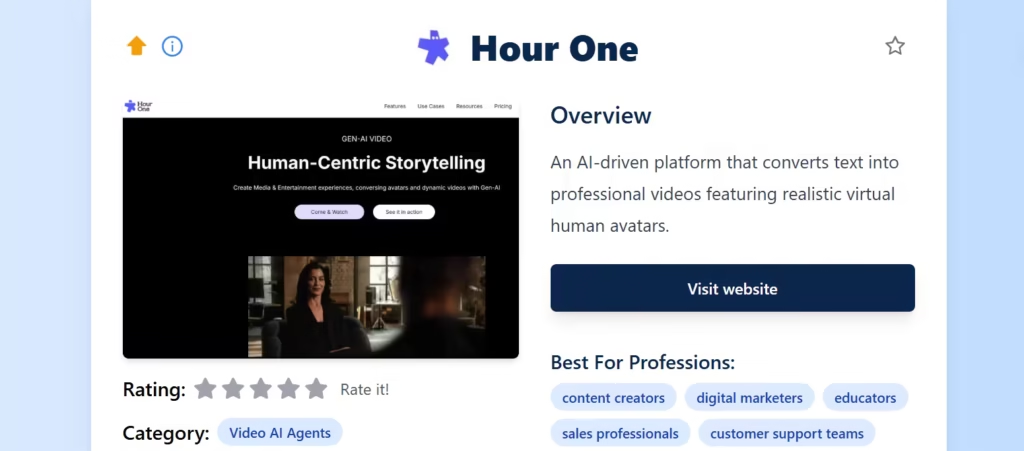
Hour One is the most visually impressive tool on this list, and also the most expensive. The platform converts text scripts into presenter videos using AI avatars that genuinely approach broadcast quality. It’s built for e-learning, media production, and financial services, industries where production value directly affects credibility.
Hour One has been rated by G2 as one of the best video generators. And the reasons are not far-fetched. Hour One is consistently realistic with avatar creation, and custom avatar creation is available for brands that need a proprietary digital spokesperson. Workflow integrations with enterprise platforms like Salesforce and Workday tell clearly who this product is for.
Here’s the take on the pricing: for most small and mid-sized teams, the cost-to-value ratio doesn’t hold up. This is especially true when tools like Elai.io or Synthesia’s standard tier can deliver comparable results at a fraction of the price.
Hour One makes sense for large organizations with high production volume and genuine broadcast-quality requirements. For everyone else, it’s hard to recommend when the alternatives are this capable.
Pro: Best-in-class avatar realism with strong enterprise integrations and custom digital spokesperson functionality.
Con: Enterprise pricing is difficult to justify for most teams when capable alternatives exist at significantly lower cost.
Which Tool Should You Actually Use?
Synthesia and Hour One lead on avatar realism. But the pricing only makes sense for organizations spending serious money on video content every month. If you’re not at that scale, you’re overpaying.
Murf and Pictory are strong, but they’re complementary tools, not true HeyGen replacements. Colossyan is excellent, but only if corporate L&D is your core use case. For most readers coming from HeyGen, the real choice comes down to two options.
If custom avatars and presenter-style videos are your priority, Elai.io offers the best value-to-performance ratio on the list. It delivers competitive lip-sync accuracy, supports custom avatar cloning, and costs a fraction of Synthesia.
If you need a broader toolkit, subtitles, editing, screen recording, and decent avatar support, VEED.io is the smarter starting point, especially for individual creators or small marketing teams operating under $500/month. Start with one of those two and scale up to Synthesia only once the volume justifies it.
That being said, most platforms on this list offer free trials. Test before you commit, but go in with a clear sense of what you actually need, not just what sounds impressive.
