

HeyGen and Synthesia are the two most talked-about AI avatar video platforms right now.
Both let you create professional presenter-style videos without a camera, a studio, or a video editing background. You write a script, pick an avatar, and the AI generates a video of that avatar delivering your message with lip-synced audio.
That is where the similarity ends.
After spending several weeks testing both platforms and talking to teams who use them daily, here is what I found: HeyGen wins on avatar realism, language reach, and value for individual creators. Synthesia wins on enterprise reliability, structured editing, and compliance. And neither one is the obvious choice for everyone.
This article breaks down every meaningful difference so you can pick the right one for your actual situation.
What Is HeyGen, and What Is It Best At?
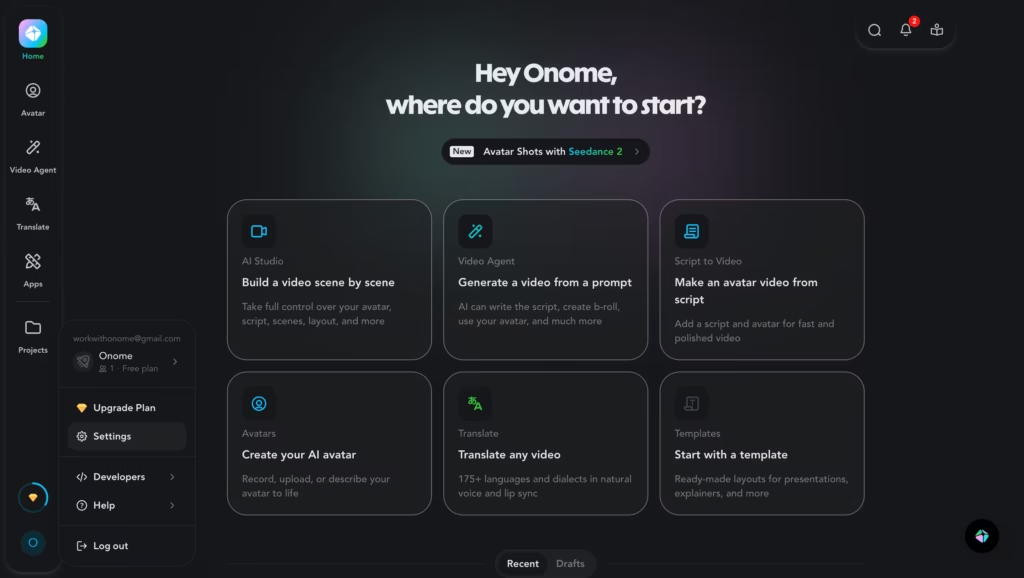
HeyGen was founded in 2020 and has grown into one of the fastest-moving platforms in the AI video space. G2 named it the #1 Fastest Growing Product of 2025. It currently serves over 85,000 businesses ranging from solo YouTubers to large marketing teams.
HeyGen’s strongest card is avatar quality. Its Avatar IV engine produces digital presenters with micro-expressions, natural eye movement, subtle head tilts, and lip-sync that holds up even in close-up shots.
If you have ever watched an AI avatar video and thought “something feels off,” Avatar IV is the response to that problem. It is the most realistic avatar engine on the market right now.
Beyond that, HeyGen covers 175+ languages with over 1,000 voices, supports real-time video translation with lip-sync intact, offers voice cloning, and recently added Sora 2 and Veo 3.1 integration for AI-generated B-roll footage inside videos. Custom avatars (a digital version of you built from a photo) start at $99 as a one-time add-on on the Creator plan.
What Is Synthesia, and What Is It Best At?
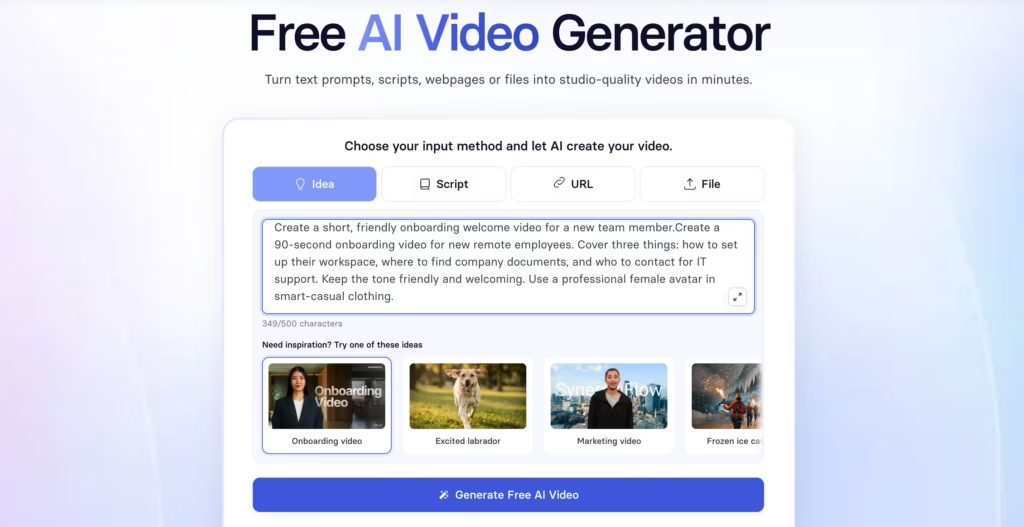
Synthesia launched in 2017 and has built its reputation on one thing: being the platform that large organizations trust. It runs on over 50,000 teams, including a significant portion of Fortune 100 companies.
It holds SOC 2 Type II, GDPR, and ISO 42001 certifications. Its editors are comfortable with scale.
Synthesia’s built-in editor is genuinely its strongest feature, and it does not get enough credit. It functions more like a lightweight video editing suite than a simple text-to-video tool.
You get scene management, PowerPoint-to-video conversion, a branded share page, interactive branching scenarios, and real-time collaboration with comments. For a team of 10 people creating training content together, that workflow advantage is real.
Synthesia also has the largest stock avatar library: 240+ avatars with the new Express-2 engine adding natural micro-expressions, blinking, and subtle head movement.
The platform supports 140+ languages for narration, and its one-click translation feature (converting an existing video into multiple languages) is a consistent highlight in enterprise reviews.
HeyGen vs Synthesia: Feature-by-Feature Comparison
| Feature | HeyGen | Synthesia |
|---|---|---|
| Stock avatar library | 120+ avatars | 240+ avatars (largest in the industry) |
| Avatar realism | Avatar IV: best-in-class micro-expressions | Express-2: natural, polished, trustworthy |
| Languages | 175+ languages, 1,000+ voices | 140+ languages |
| Custom avatar cost | $99 one-time (photo-based, Creator plan) | $1,000/year for Studio Express-1 (annual plans only) |
| Voice cloning | Yes, on paid plans | Yes, paired with custom avatar |
| Video translation (lip-sync) | Yes, 175+ languages, all paid plans | Yes, 140+ languages, Enterprise only for full access |
| Built-in editor | Templates-based, drag-and-drop, intuitive | Scene editor with timeline controls, PowerPoint import, branching |
| Team collaboration | Business plan ($149/month) | Creator and above (real-time comments, workspaces) |
| SCORM export | Yes, starting from the free plan | Enterprise only |
| 4K export | Yes (Business plan and above) | No (maxes at 1080p) |
| AI-generated B-roll | Yes (Sora 2 + Veo 3.1, added 2026) | AI Playground with Veo 3.1 + Sora 2 (Enterprise) |
| SOC 2 Type II | Yes (Business tier) | Yes (all plans) |
| Starting price (annual billing) | $29/month (Creator) | $18/month (Starter) |
| Content moderation | Standard filters | Strict; may block medical/biotech content with stock avatars |
| Free plan | 1 videos/month, video up to 3mins watermark, 720p | 10 min/month, 9 avatars, watermark |
| Best for | Creators, marketers, sales teams | Enterprise L&D, HR, corporate communications |
How Do Their Pricing Models Actually Work?
Pricing is where both platforms get confusing, so let’s slow down.
HeyGen Pricing
HeyGen has two pricing options: a standard subscription and a premium credit pool. Basic videos do not touch your credits.
Advanced features like Avatar IV and lip-sync translation consume premium credits from a separate monthly allowance.
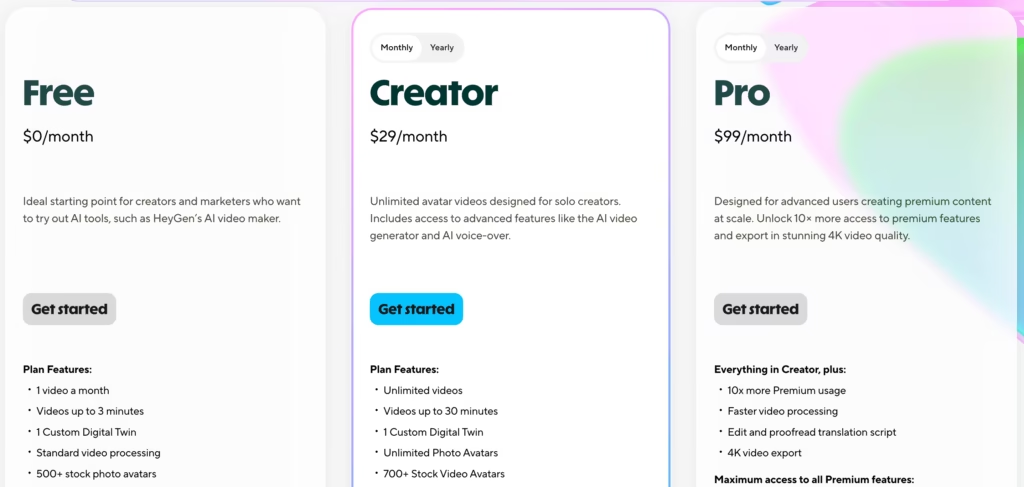
Watch the credit math. Avatar IV consumes 5 premium credits per minute. The Creator plan’s 200 monthly credits cover only 40 minutes of Avatar IV video.
If Avatar IV is your main reason for using HeyGen, you will hit that ceiling faster than you expect.
Synthesia Pricing
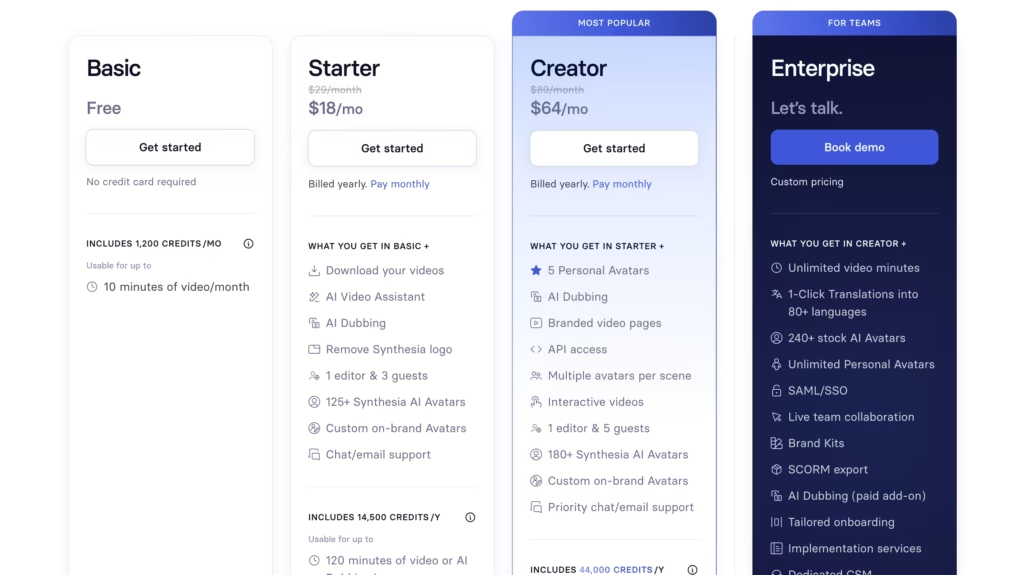
Synthesia’s pricing model is simpler but has its own traps. You pay by video minutes per month, not credits. One minute of generated video costs one credit.
The jump from Starter to Creator is steep. You go from 10 minutes to 30 minutes and pay $60 more per month.
There is no middle tier. A small team producing more than a handful of short videos per month will almost certainly need Creator, and many L&D teams will quickly end up needing Enterprise for the SCORM export and unlimited minutes they need to function properly.
If you want a high-quality custom Studio avatar on Synthesia, that is a $1,000 per year add-on on top of your plan. HeyGen does the same thing for $99 as a one-time purchase.
My honest take on the pricing
HeyGen’s Creator plan at $29/month is the better value for individual creators and small teams.
You get unlimited video creation, 175+ language access, and avatar quality that beats most competitors at this price point. The premium credit system is frustrating, but manageable if you understand it upfront.
Synthesia’s Starter plan at $18/month looks cheaper until you realize 10 minutes of video per month is almost nothing for any real business purpose.
Most teams land on Creator at $64/month annually, which is where the real cost-per-minute math becomes competitive with HeyGen. For enterprise teams, Synthesia’s pricing becomes opaque once you reach the sales call stage.
Who Should Pick HeyGen?
Pick HeyGen if any of these fit your situation:
You are a content creator, marketer, or sales professional who needs realistic-looking avatar videos on a regular basis. HeyGen’s Avatar IV produces presenters that hold up on Instagram, TikTok, YouTube, and sales outreach emails. The realism matters in those contexts.
You need to translate existing videos into multiple languages quickly. HeyGen’s real-time translation with lip-sync across 175+ languages is the best in the market at this tier and it is accessible without an enterprise contract.
You want a custom avatar of yourself without paying $1,000 per year. HeyGen’s photo-based custom avatar at $99 one-time is genuinely accessible.
You need 4K output. Synthesia does not offer 4K at any price. HeyGen does on the Business plan.
Who Should Pick Synthesia?
Pick Synthesia if any of these fit your situation:
You work inside a large organization producing training videos, compliance content, onboarding material, or internal communications.
Synthesia’s workflow is built specifically for this. The PowerPoint-to-video converter, interactive branching scenarios, real-time collaboration tools, and SCORM export (Enterprise) all serve L&D teams in ways HeyGen does not.
Your organization needs compliance certifications. Synthesia holds SOC 2 Type II, GDPR, and ISO 42001. HeyGen holds SOC 2 Type II on the Business tier and GDPR compliance, but has not published ISO 42001.
Neither has confirmed HIPAA compliance as of March 2026, which is worth flagging for healthcare buyers.
You want the widest possible avatar choice from a single library. Synthesia’s 240+ stock avatars give you more variety out of the box.
Your team collaborates on video in real time. Synthesia’s editor supports comments, version control, and multiple editors simultaneously at a lower plan threshold than HeyGen.
What Are the Real Weaknesses of Each Platform?
Every comparison article glosses over this part. Here is what I actually noticed during testing.
HeyGen’s credit system is genuinely confusing. Even experienced users have been caught off guard by how quickly Avatar IV consumes the 200 monthly credits on the Creator plan. HeyGen added upfront cost estimates before generating premium content in February 2026, which helps, but the underlying structure remains opaque to new users.
Synthesia’s content moderation is strict to the point of being a problem for some industries. Multiple verified reviews on G2 (including from healthcare and biotech teams) describe getting legitimate corporate content rejected because it was labeled “medical related.”
Synthesia’s moderation blocks stock avatar use for anything it classifies as medical content, even when the content contains no diagnosis, treatment guidance, or health claims.
Affected users reported being pushed toward a $1,000/year custom avatar add-on to resolve the issue. For organizations in regulated industries, this is a meaningful operational risk.
Neither platform has published HIPAA compliance documentation. This gap is significant for healthcare and financial services buyers. According to an independent analysis by Colossyan (a competitor), this gap exists despite growing demand from those sectors. Verify directly with sales teams before committing if compliance is critical.
Synthesia’s video minute caps are tight. The gap between Starter (10 minutes) and Creator (30 minutes) with no middle tier means teams either underpay and run out of minutes or overpay for headroom they use inconsistently.
Quick Decision Guide
| Your situation | Pick |
|---|---|
| Running a faceless YouTube channel or social media presence | HeyGen |
| Creating personalized sales outreach videos | HeyGen |
| Need realistic Avatar IV quality for marketing | HeyGen |
| Translating videos into 30+ languages with lip-sync | HeyGen |
| Producing L&D, compliance, or onboarding training at scale | Synthesia |
| Corporate team that edits video together in real time | Synthesia |
| Large org needing ISO 42001 or SOC 2 Type II compliance | Synthesia |
| Need 4K video output | HeyGen |
| Need SCORM export for LMS | Synthesia (Enterprise only) |
| Budget under $25/month | Synthesia (Starter at $18 annual) |
| Need a custom avatar without spending $1,000/year | HeyGen |
| Working in healthcare or biotech | Neither (until HIPAA is confirmed) |
FAQs
1) Which is cheaper, HeyGen or Synthesia?
Synthesia’s Starter plan at $18/month annually is cheaper than HeyGen’s Creator plan at $24/month annually.
But for most real-world use cases, both platforms land in the $29 to $89 per month range depending on your volume needs. Synthesia’s tighter video minute caps mean many users end up on higher tiers sooner than they expect.
2) Which has better avatar quality, HeyGen or Synthesia?
HeyGen’s Avatar IV produces more realistic avatars for high-impact, viewer-facing content like social media videos and sales outreach.
Synthesia’s avatars are polished and authoritative, but optimized for corporate trustworthiness rather than jaw-dropping realism. If avatar realism is your top priority, HeyGen wins.
3) Can I use HeyGen or Synthesia for free?
Both offer free plans. HeyGen’s free plan gives you 3 videos per month with watermark and 720p quality. Synthesia’s Basic plan gives you 10 minutes of video per month with a small set of 9 avatars and watermark. Neither is suitable for ongoing business use.
4) Does HeyGen support SCORM?
Yes. HeyGen includes SCORM integration starting from the Creator plan. Synthesia reserves SCORM export for Enterprise customers, which is one of the reasons L&D teams comparing these two often end up calling HeyGen’s value proposition stronger at the self-serve tier.
5) Which platform is better for enterprise teams?
Synthesia has a stronger enterprise track record. It serves the majority of Fortune 100 companies, holds more compliance certifications, and its collaborative editor was designed for team workflows. HeyGen is catching up, but Synthesia has a longer history in structured enterprise deployments.
6) Can HeyGen and Synthesia both translate videos into other languages?
Yes, both offer video translation. HeyGen covers 175+ languages with lip-sync on all paid plans. Synthesia covers 140+ languages, but full 1-click translation with all features is typically available at the Enterprise tier. For multilingual content at scale without an enterprise contract, HeyGen is the more accessible option.
