


Artlist launched in 2016 with one promise: pay one annual fee, get unlimited music for your videos, and creators loved it. The model was clean, the catalog was curated, and the licensing was straightforward. For years, it dominated the royalty-free music space almost unchallenged.
But Artlist in 2026 is a different product that exists as a full creative production tool. It includes AI-generated images, AI-generated video, voiceovers, and music, all under a single commercial license. The question is no longer just “is the music still good?” It is: does this expanded platform justify what it costs?
What Artlist Offers Now
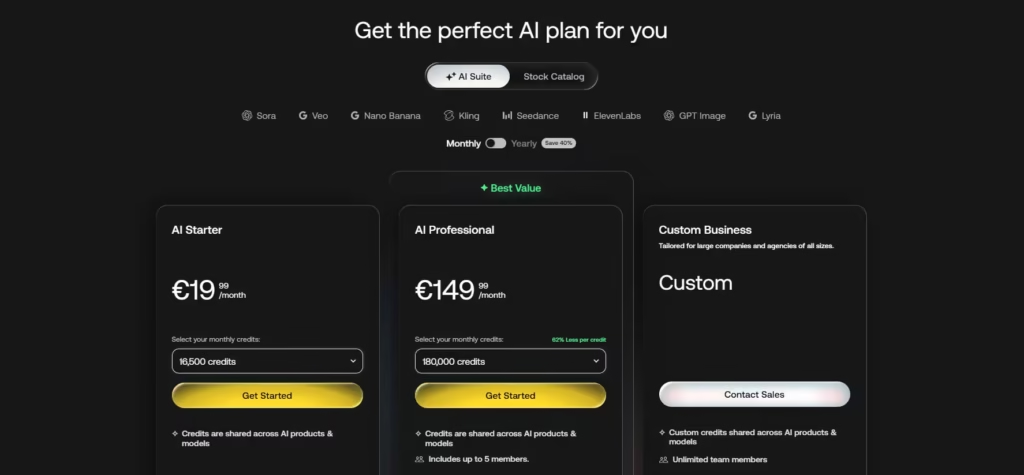
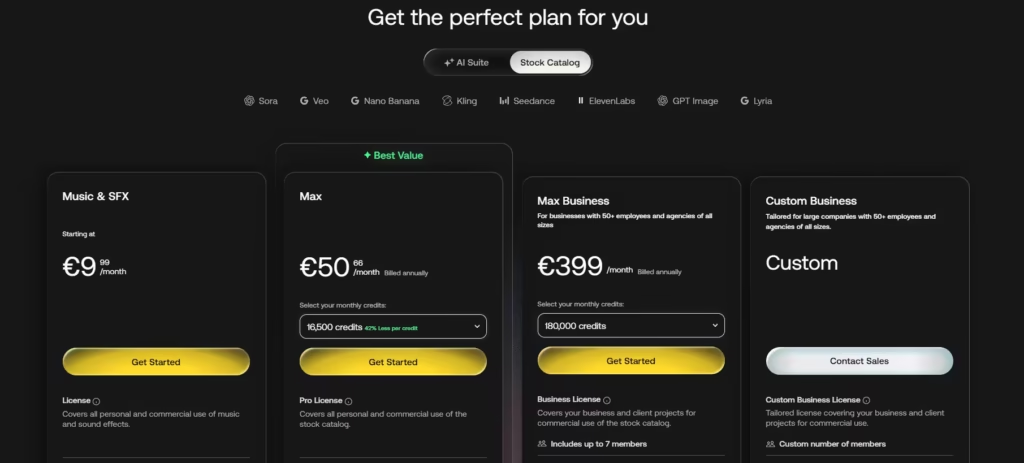
Artlist now organizes its offering into distinct categories: stock catalog plans and AI suite plans. The stock catalog side covers what Artlist has always done. The Music & SFX plan starts at €9.99/month and covers royalty-free music and sound effects for video use. There is also a Max plan, which starts at €50.66/month and adds stock video, LUTs, and editing plugins.
The AI side is the major new addition. The AI Suite lets creators generate both images and short video clips simply by typing text descriptions, with everything created covered by the Artlist license for commercial use. The AI Suite starts at €19.99/month, while the Artlist Max all-in-one plan, which combines every asset category and all AI tools, starts at €149.99/month.
Those prices appear expensive at first, but the AI Suite entry point at €19.99 is competitive when standalone tools like Runway and Pika charge similar rates for generation alone. And that’s without any of the music or stock assets included.
1. The AI Image and Video Generator
The AI video generator is built specifically for a video creator’s workflow. It first generates the perfect image, then animate it into a high-quality video using curated models and specially designed styles. Generated images and videos are covered by the Artlist license, allowing creators to use them in commercial projects. The generator also includes image-to-video animation, image-to-image editing to change backgrounds or add objects, and the ability to blend up to three images into a single new scene.
A non-technical workflow is slightly different but still intuitive; pick a style, type a prompt, adjust aspect ratio, and generate. There are no separate subscriptions, third-party tools, or separate licensing headaches. When I tested the AI video generator with three different prompts, I noticed the Kling model handled camera movement confidently but struggled with facial details in close-ups, which required manual editing to fix. It is a real limitation worth knowing before you commit to a plan.
Artlist includes multiple image-to-video AI models such as Kling, Sora, Veo, Nano Banana, Seedance, ElevenLabs, and Hailuo AI. Each has distinct strengths, from cinematic motion to realistic movement and audio-visual sync. As new models are released, they are added to the platform.
Artlist’s AI video generator is also the only AI generator for images and videos that comes bundled with a full catalog of creative assets: music, SFX, footage, LUTs, and editing tools. That integration is hard to replicate by stitching together competing tools, and it makes Artlist’s value proposition much stronger than it was even a year ago.
Also read: Mureka AI Review (2026): Pricing, Features & Best Alternatives
2. The Music Catalog
The music library is built around hand-curated tracks filtered for a cinematic, indie, and emotionally resonant aesthetic. Tracks vary in energy and pacing, and the mood, genre, and tempo filters respond quickly. That range of options makes browsing feel purposeful rather than overwhelming.
Most creators find usable tracks faster on Artlist than on platforms with larger but noisier libraries. However, the catalog size has become a sticking point, and not just in theory. After running 10 searches for “epic cinematic” tracks, I saw the same 8 tracks appear in the top results across 7 of those searches.
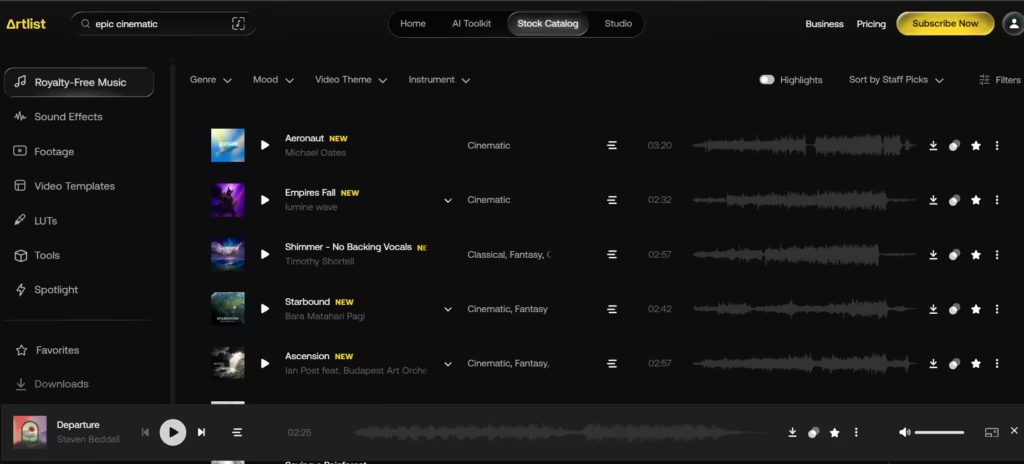
The same test on Epidemic Sound produced only 2 repeated tracks across 10 searches.
3. Licensing
The platform operates on a perpetual license model. Once you download a track, or generate an AI image or video, during your subscription, you retain the right to use it in that project forever, even after you cancel.
This perpetual license now extends to AI-generated content. Images and videos generated through Artlist’s AI tools are covered by the Artlist license for use in commercial projects, a detail that competing standalone AI video tools frequently handle poorly or not at all.
If you are building a content library you plan to monetize for years, knowing your licenses do not expire with your subscription is worth paying for.
How Does It Compare to Competitors?
1. Price vs. perpetual licensing: Epidemic Sound and Soundstripe both beat Artlist on price. Epidemic Sound’s plans starts at €95.88/year. Both Soundstripe and Epidemic Sound offer perpetual licensing. In my view, the 33% price increase since 2016 is fair when you factor in AI generation tools that would cost €19.99/month separately on a standalone platform, but it is a tough sell if music is all you need.
2. AI generation: Artlist is competing against standalone tools like Runway, Pika, and Kling. Those tools offer more specialized AI video features, but they provide none of the integrated stock music, SFX, or footage that Artlist bundles in. Anyone already paying for both a music license and an AI video tool separately, consolidating into the Artlist Max plan makes clear financial sense.
3. Musicbed: This targets the high-end and commercial production market with a premium roster of well-known independent artists. It does the prestige catalog better than Artlist, but at considerably higher prices, with no AI generation tools whatsoever.
What Has Changed Since 2016?
The Music plan launched at €149/year in 2016 and now sits at €199 for the standalone music tier, a 33% increase over nine years. Meanwhile, Epidemic Sound’s equivalent personal plan has stayed relatively flat at $144–$180 depending on promotions.
In April 2025, the platform introduced an AI video generator and a new AI Suite plan, alongside the existing Motion Array acquisition that brought video templates, presets, and editing plugins. The platform has grown from a music library into a vertically integrated content creation suite.
Whether that growth justifies the price increase depends entirely on how much of the suite you will actually use. Someone who’s only in it for the music will probably find the cost unjustifiable.
Who Should Subscribe to Artlist?
The creator who gets the most from Artlist today is a working video producer who is currently juggling separate subscriptions for music licensing and AI video generation. That person is almost certainly overpaying by not consolidating into a single Artlist plan.
The perpetual license, the integrated AI tools, and the curated asset library are all pulling in the same direction for that use case. Beyond that core profile: freelancers and small agencies managing multiple client deliverables benefit from the legal clarity across asset types.
Filmmakers producing cinematic content get the curated music alongside AI visual tools in one place. Creators paying separately for a music license and an AI video tool will find the Max plan consolidates their costs.
It is less compelling for creators who only need music and are already comfortable with Epidemic Sound. Podcast-first creators will find the video-centric AI tools irrelevant to their workflow. Budget-conscious beginners should not start here — the entry point is too high before you know whether content creation is sustainable for you.
Is Artlist Worth It in 2026?
Yes, but the plan you choose matters enormously. The perpetual licensing alone still justifies the premium because it permits a growing, monetized content library. That has not changed. But the AI generator has made the value case much clearer.
If you are currently paying separately for a music license and an AI video tool, the Artlist Max plan at €50.66/month consolidates that spend while adding stock footage, templates, and SFX. That is a better deal than maintaining two subscriptions.
That said, if you are just starting out, €50.66/month is a steep commitment before you know whether content creation is sustainable for you. Epidemic Sound’s personal plan at around €95.88/year remains the smarter entry point for beginners who primarily need music and basic licensing coverage.
