
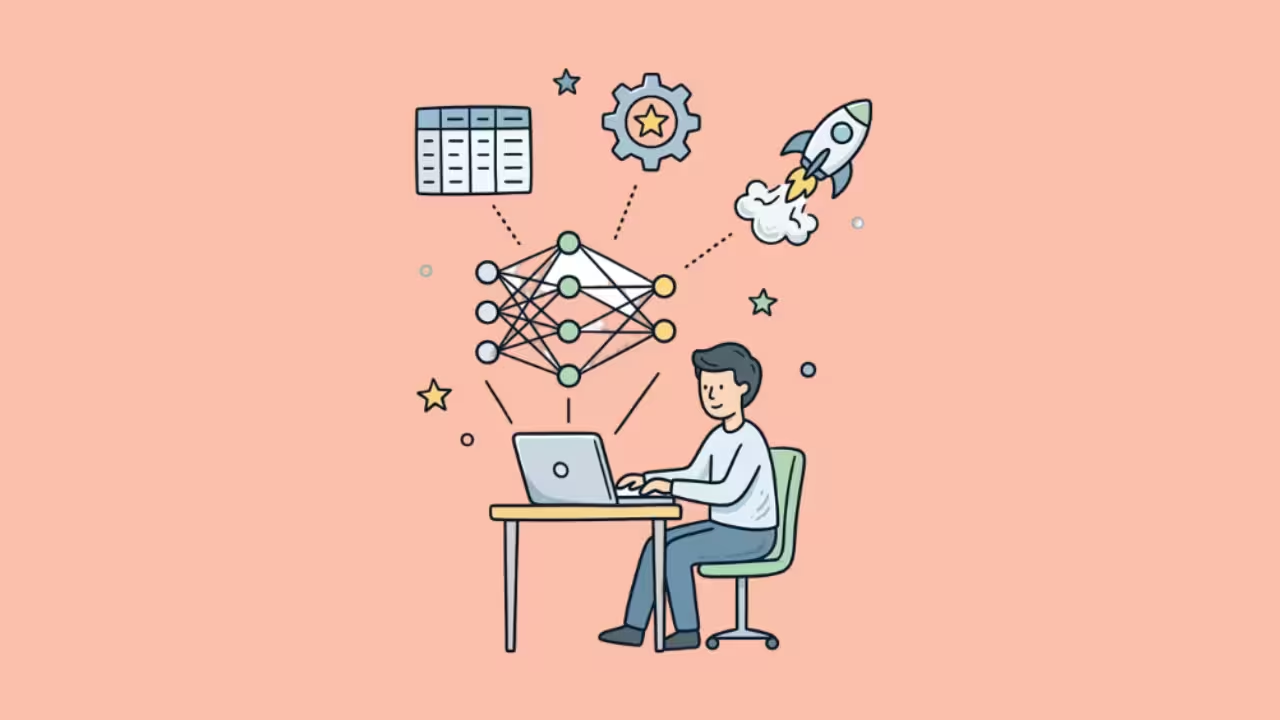

As autonomous systems start to handle more real work, the focus naturally moves beyond models and prompts into how everything is set up behind the scenes. What this means is that you will be dealing with an AI that responds to instructions, while also working within a system that needs structure, clear rules, and practical ways to operate. Because of this, governance and organizational design need to become part of the system itself, because it’ll shape how autonomy will work in practice.
Why Legal Structure Matters in Autonomous Systems
When autonomous operations are used in real business settings, there needs to be something stable behind the actions being taken. A legal structure, such as a limited liability company, gives that stability because it creates a clear home for decisions, actions, and responsibilities. In the early stages, many founders use this Northwest Registered Agent discount to bring costs down a bit while still getting the structure properly set up. You will usually see this matter most when systems start touching real-world outcomes like payments, contracts, or external services.
Long-Running Workflows and Multi-Agent Coordination
That same need for structure will become even more important as these systems move beyond single actions into longer workflows. Autonomous systems will be most helpful when they can run on their own for a long time. What this means is that instead of completing one task at a time, they will continue a workflow step by step, sometimes over days or even weeks. Each stage then will build on the previous one, so the system keeps working from where it has already left off, and not starting again from the beginning. When multiple agents are involved, the process will become even more advanced. This basically means that different agents will take on different roles, such as planning as well as carrying out tasks, checking results, or handling problems. They will share information in an organized way so nothing is lost or repeated. One agent may divide a task into smaller steps, another will complete them, and another will verify the results before the workflow continues. The main idea behind all of this is of course coordination, which simply means that each part will need to understand its role and stay connected to the overall goal without needing constant human supervision.
Memory Across Sessions and Operational Continuity
For autonomous systems to be truly useful, they will also need to remember what has been happening beyond just one interaction. This is where memory will become important, not only as storage, but as a way to keep track of context over time. The system won’t treat every new session like a fresh start, it will just carry forward important details so it can continue working with an understanding of what has already happened. It’ll get to work off of past decisions as well as finished tasks, and patterns that have helped guide future actions. In practice, this means that memory will usually work in layers. Some information will only be useful for the current task and will stay short term, while other information will have been stored for later use when needed. The system actually decides what is important enough to keep and what can be ignored. Over time, what this’ll do is it will create a sense of continuity, and the agent will not just react in the moment, but will get to build on what it has already learned and done.
What Changes When All This Clicks
What matters most in all of this is that these AI systems are built well enough to actually work properly in everyday situations. For that, they’ll need clear rules and a way to keep track of what they’ve already done so they don’t lose their place or make the same mistakes again. If engineers and professionals in this arena construct these systems well, there’s no doubt it will be practical to rely on them, which is really what turns AI from something interesting to test out into something people can actually depend on to help get real work done.
