
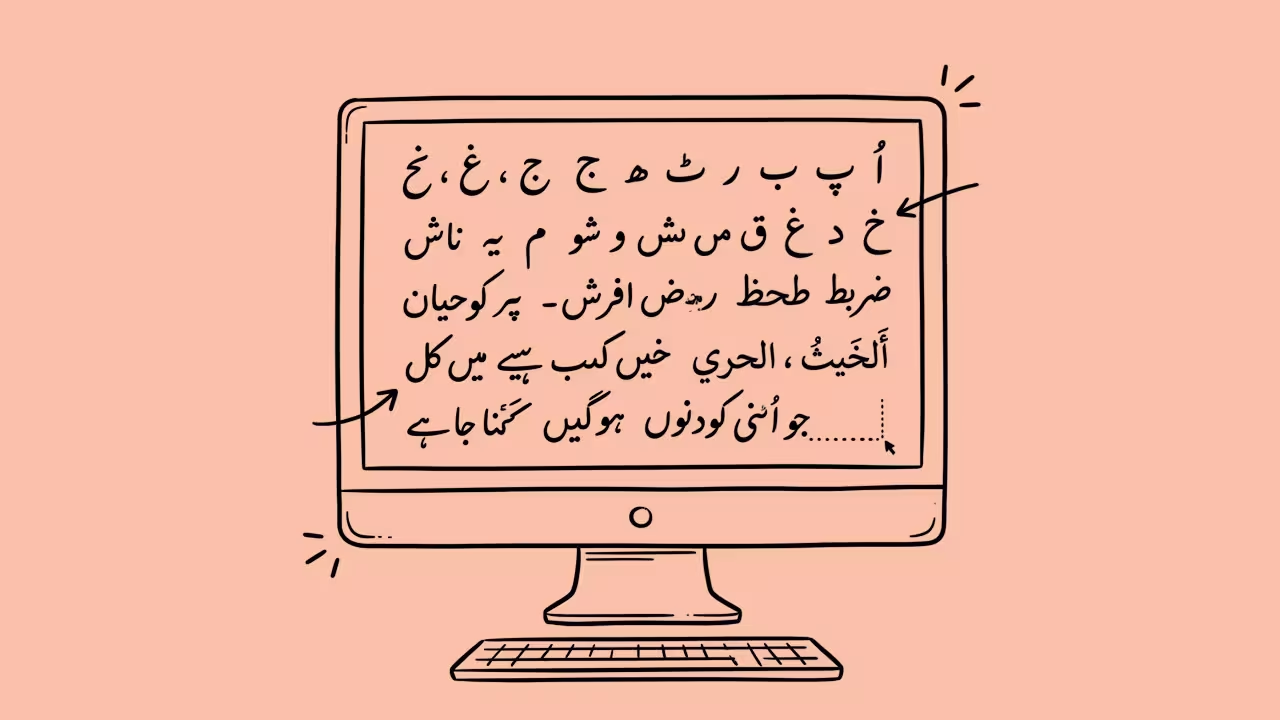

Ask Perplexity a question in Urdu or Arabic, and it will usually answer you fluently, and with sources. But the app itself may still greet you in English. That gap between what Perplexity’s AI can do and what its interface actually supports is the part most guides skip. This one doesn’t.
How Perplexity AI Handles Multiple Languages
Perplexity doesn’t run on one custom-built model. It combines several large language models from providers like OpenAI, Anthropic, and Meta, each trained on massive multilingual datasets. That’s why Perplexity can understand and generate text in dozens of languages that it was never specifically localized for.
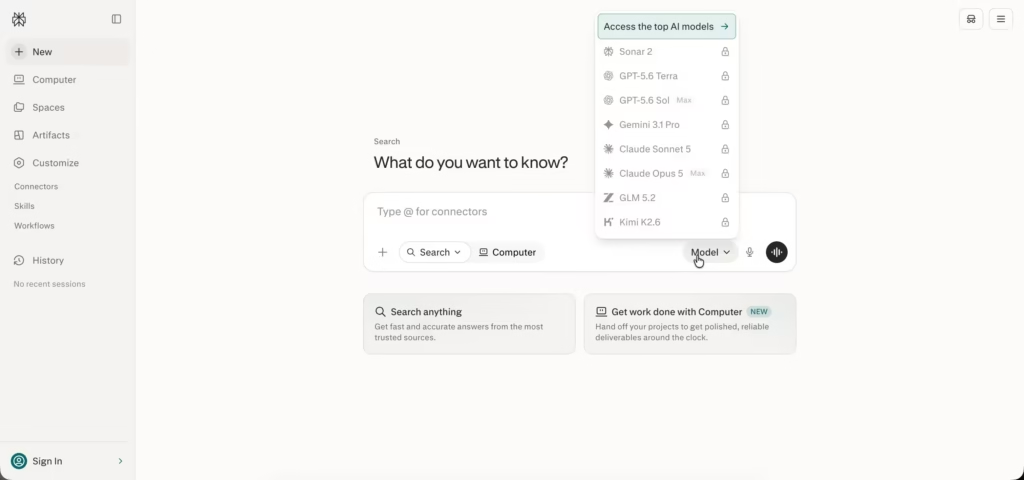
The multilingual ability comes bundled in from the model layer, not from Perplexity building it from scratch. This explains a lot of the confusion online. The AI’s language ability and the app’s localization are two separate layers, and they don’t move at the same pace.
Interface Language vs Preferred Response Language
Perplexity’s Help Center has two settings. The interface language controls menus and buttons, and is inferred from your browser or OS. Although this can be overridden in the settings dropdown. The preferred response language controls only what language the AI writes its answers in.
These settings run independently. You could keep an English interface and still get every AI answer back in Urdu or Arabic. Assuming that both are linked is the most common mix-up users report.
Also read: Best AI Language Translation Tools
Perplexity AI’s Arabic Support
Arabic speakers typically hit a hurdle here. The underlying AI handles Arabic competently; it’s a well-represented language in training data, so questions asked in Arabic typically come back as coherent, cited answers.
Perplexity’s official iOS App Store listing lists dozens of localized interface languages, including Arabic. This is a recent addition giving users complaints from last year; one App Store reviewer had called out the app “still does not support the Arabic language” despite Arabic’s global reach. Given that Arabic has roughly 460 million speakers, that’s a conspicuous omission for a tool positioning itself as a global research assistant.
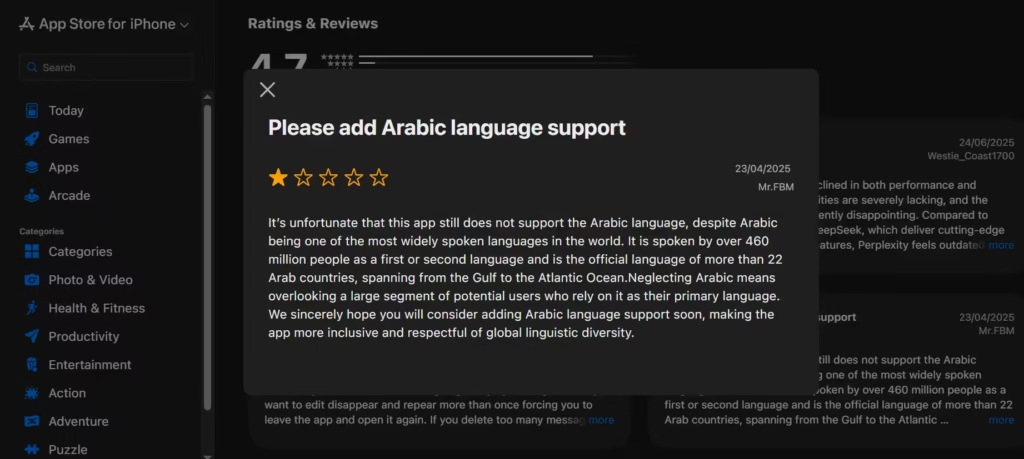
Thankfully, Perplexity has listened to its users and has now made the language accessible.
Perplexity’s Urdu
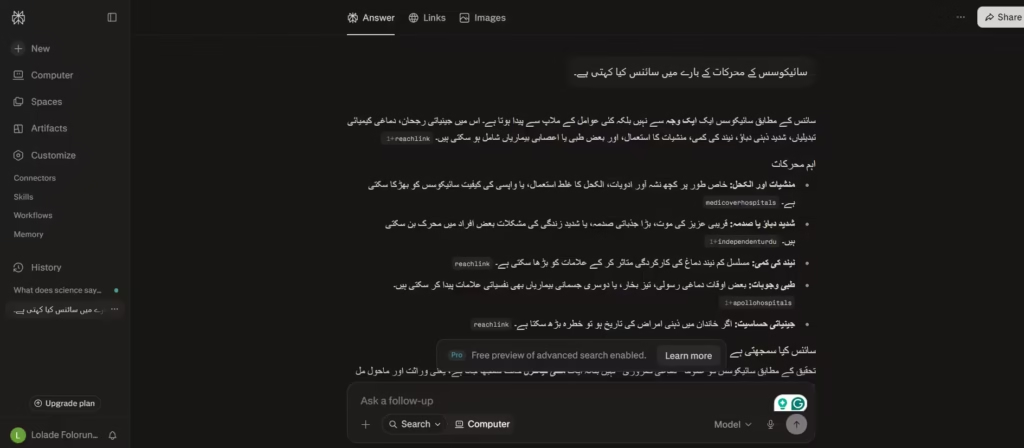
Unfortunately, Perplexity’s App Store listing doesn’t include Urdu among its supported interface languages. Users can, however, get AI responses in their language. While great, a better option would be Urdu set as an interface language, as it would reduce translation inconsistencies significantly compared to letting Perplexity auto-detect.
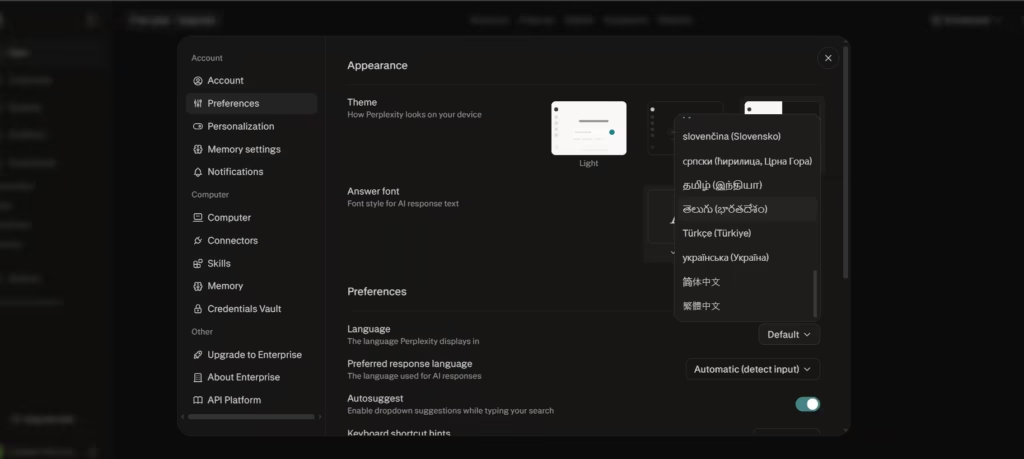
Mere interface languages also carry the risk of thinning out in technical and niche subject matter, simply because far less specialized source material exists in Urdu for the AI to retrieve and cite. Therefore, English is still better for depth.
Limitations
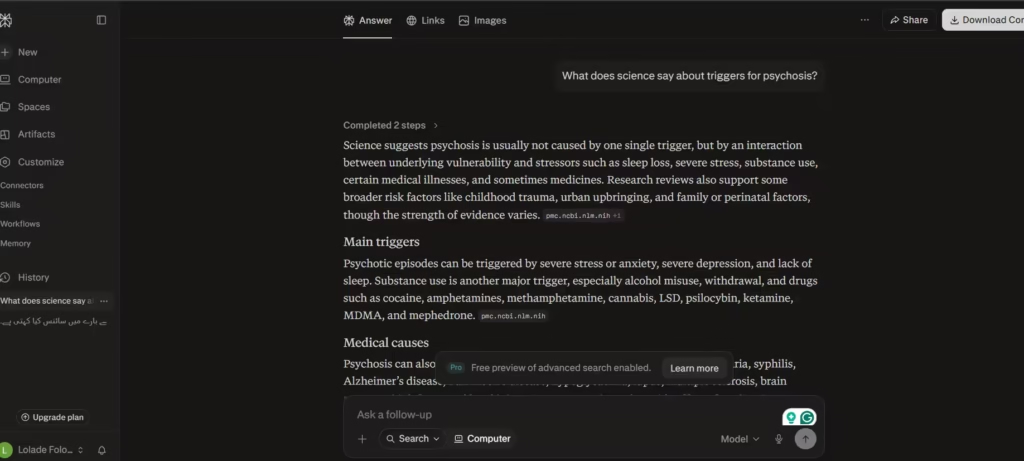
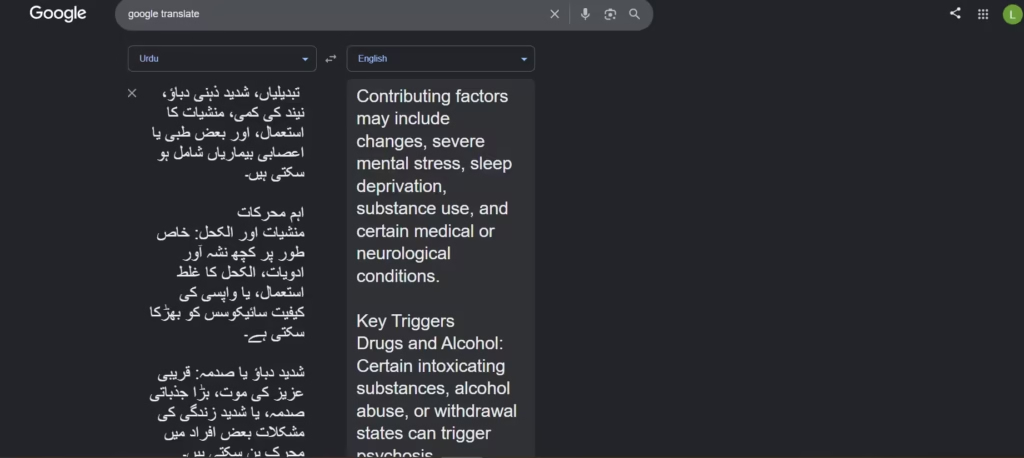
A few gaps show up consistently in how users describe the experience. Answer quality tracks the available source material; if few quality Arabic or Urdu sources exist on a given topic, Perplexity leans on English sources and translates, and nuance can slip in that process. When I tested queries about psychology and science in Urdu, Perplexity consistently pulled from English sources and translated, which cut out key information that I needed.
Some browser extensions advertise expanded voice-language support for Perplexity, claiming triple-digit language counts. These are unofficial third-party add-ons, not native Perplexity features, so treat those numbers skeptically until you’ve confirmed them against Perplexity’s own documentation.
And the interface-versus-response distinction bears repeating one more time: full Arabic support, in the sense most people mean it, doesn’t exist yet. Fluent Arabic answers do.
Getting Better Results in Urdu and Arabic
Set your preferred response language explicitly in your profile rather than trusting auto-detection. It’s a one-time fix that removes a common point of failure. Since Perplexity doesn’t support Urdu, a good route to go is to prompt in English and then make translations. That way, all information is captured.
Also, use standard vocabulary over heavy slang or dialect in prompts. That’s what the training data rewards. If you need region-specific coverage, say so directly in your query rather than assuming Perplexity will prioritize local outlets on its own. And check the citations on every answer; they’re your fastest way to verify a translated or synthesized claim against the source.
A Different Language
Perplexity’s multilingual ability is strong at the model level, stronger than most competitors bother to advertise. But the Urdu interface gap is hard to defend for a company chasing global reach, especially when a language so widely sits unlocalized while smaller-market languages already have full support.
In my view, the lack of Urdu interface localization is an oversight for a tool aiming for global reach, especially when smaller markets already have full support. Until Perplexity closes that gap, Urdu users get excellent AI answers wrapped in an app that still doesn’t fully speak their language.
