
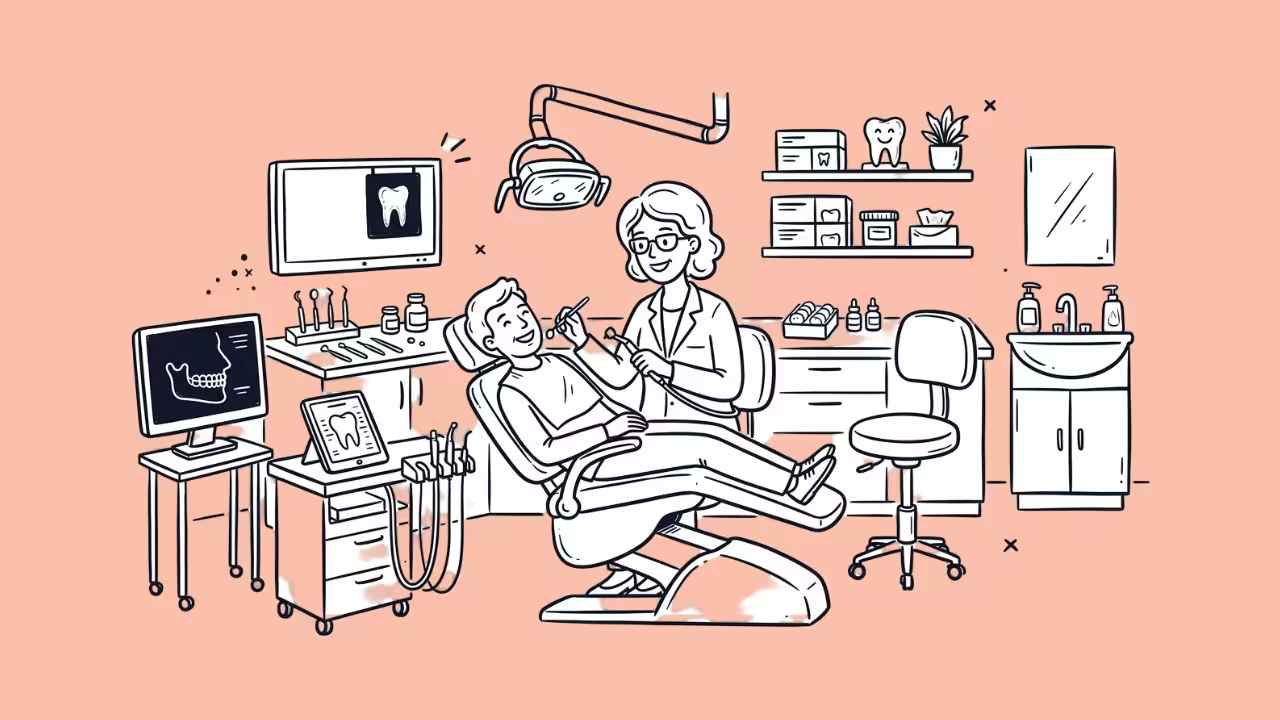

Dental AI has found its way into practices. Dentists use it to catch cavities, measure bone loss, and speak to patients with more confidence.
Overjet AI, especially, is one Dental AI that keeps surfacing in these conversations. Below, we cut through the marketing myths, walk through how Overjet’s technology actually works, and give a direct answer on cost.
How Dental AI Works
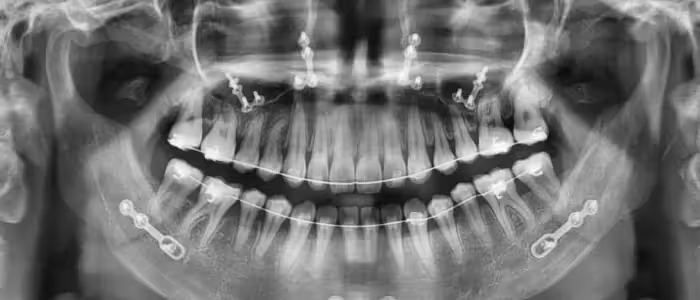
Dental AI platforms train machine learning models on thousands, sometimes millions, of annotated radiographs. In use, the software scans an X-ray, flags patterns that match known disease markers like decay or bone loss, and overlays those findings directly on the image, usually with color-coded markers.
The whole process takes seconds. Dentists can therefore get a consistent second read on every image, not just the ones a rushed morning schedule happens to catch. Still, the software doesn’t diagnose anything on its own. It flags issues that the dentist confirms. It’s like spell-check for radiographs, not autocorrect.
Common Myths About Dental AI
1. AI will replace dentists.
No platform on the market makes final clinical calls. AI surfaces data; the dentist interprets it and signs off.
2. AI isn’t accurate enough for real practice.
That claim aged out years ago. Several platforms now carry FDA clearances for detecting bone loss, caries, and calculus, meaning regulators reviewed their performance against clinical benchmarks before approval.
3. Only big DSOs benefit.
Consistency helps a single-chair office just as much as a 40-location group, especially when a newer associate is still building confidence in their reads.
4. Integration is a nightmare. Most platforms are cloud-based and plug into existing imaging systems within days, not months.
5. It’s just a gimmick. Case acceptance data says otherwise, and we’ll get specific about that in a moment.
How Overjet AI Works
Overjet, founded in 2018, built its models specifically for dental radiographs instead of adapting general-purpose imaging software. That shows up in its regulatory track record. The FDA cleared Overjet’s Dental Assist for bone-level measurement in 2021, then cleared Caries Assist for detecting and outlining tooth decay, then cleared an image-enhancement tool that sharpens blurry X-rays without erasing clinical detail.
Together, these clearances make Overjet the first and only platform cleared for both caries detection and bone level measurement.
Overjet AI is also easy to use. A hygienist captures a bitewing or periapical X-ray as usual. Overjet analyzes it in real time and overlays findings, such as decay depth or the percentage of bone loss around a tooth. The dentist reviews each marker, confirms or dismisses it, and uses the visual to walk the patient through the diagnosis chairside.
Overjet has also moved beyond pure imaging. Its Voice product handles ambient note-taking, and its insurance tools support eligibility checks and claims documentation. In short, Overjet no longer positions itself as an X-ray add-on. It’s angling to cover the whole visit, from imaging to documentation to billing.
Also read: Best AI Medical Scribe for Clinical Notes | Freed
Is Overjet AI Worth the Cost?
Overjet doesn’t publish flat pricing, so quotes vary by practice size and feature bundle. Reported figures across buyer forums range from roughly $500 per month for a single-location practice to several thousand dollars monthly for larger, multi-location groups with advanced analytics.
Because none of this is standardized publicly, get a direct quote before you budget anything.
Now, the actual return. Overjet reports that customers see a 10 to 20 percent increase in case acceptance within a few months of implementation. Its 2025 patient survey put the average customer’s case acceptance lift closer to 25 percent, alongside 85 percent of surveyed patients saying they’d feel more confident in a diagnosis if they could see the problem themselves. Those numbers come from Overjet, not an independent audit, so treat them as a directional benchmark rather than a guarantee for your specific patient base.
Here’s the real question to ask before signing anything: what’s actually costing you money right now? If your practice already has strong case-presentation skills and low insurance denials, the ROI case is thin.
Overjet is selling consistency, documentation, and patient-facing clarity, not diagnostic ability a trained dentist doesn’t already have. If, instead, you’re dealing with inconsistent diagnoses across providers, slow claims, or a case acceptance rate that lags behind where it should be, the math shifts fast, and the subscription can pay for itself well within a year.
Is Overjet AI the Best Tool for Dentists?
Overjet isn’t the only Dental AI tool. Pearl built its reputation on live chairside detection for a wide range of conditions and posts strong precision numbers on complex cases. VideaHealth leans on academic research partnerships and reports a sizable cut in missed early-decay diagnoses.
Denti.AI forgoes pure imaging analysis in favor of automating charting alongside radiograph review, which appeals to practices drowning in documentation. Overjet’s edge is its regulatory compliance: it holds more FDA clearances than any competitor in this category, covering caries detection, bone-level measurement, and image enhancement.
It also has the deepest footprint among DSOs and dental insurers, which matters if growth or payer relationships are part of your plan. In my opinion, Overjet makes the most sense for DSOs with inconsistent provider diagnoses, but solo practitioners confident in their X-ray reads will struggle to justify the monthly cost.
