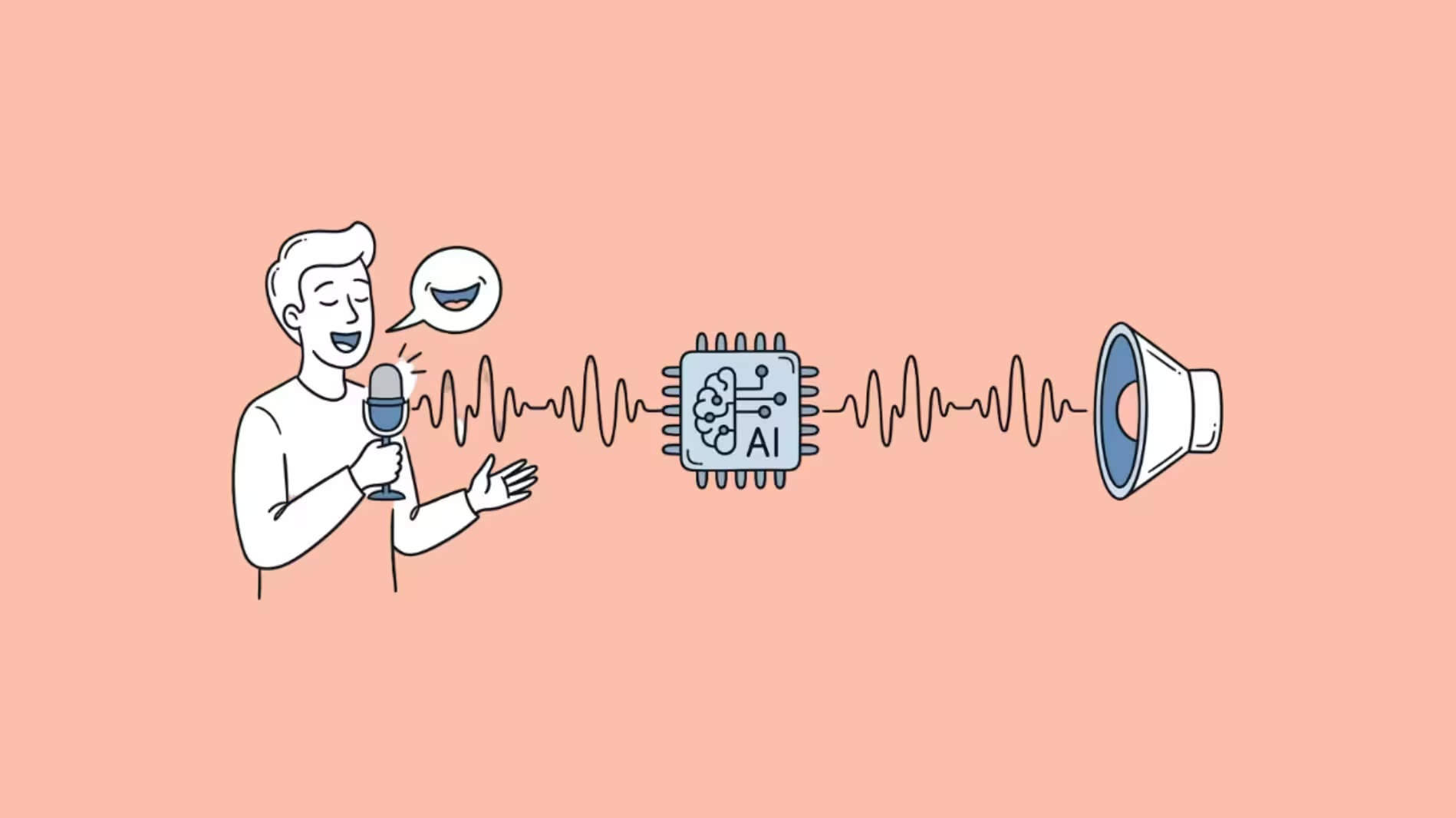

AI voice cloning in 2026 needs as little as 3 seconds of audio to produce a synthetic copy most listeners cannot distinguish from the original.
The technology has crossed the uncanny valley.
The question is no longer “can AI clone my voice?” It is “which tool clones it best for my specific use case, at what cost, and with what safeguards?”
After cloning voices on 8 of the 12 platforms below and researching the remaining 4, here is the full landscape: ElevenLabs remains the best overall for quality and accessibility.
Fish Audio is the best value for developers. Descript is the best for podcasters who need cloning inside their editor.
And the rest carve out niches that matter if your use case matches.
Quick Comparison: Best AI Voice Cloning Tools at a Glance
| Tool | Best for | Min audio needed | Free cloning? | Starting price | Languages | Real-time? |
| ElevenLabs | Best overall quality | 30 seconds (Instant) | No ($6/mo min) | $6/month | 32+ | Yes (Turbo) |
| Fish Audio | Best value for developers | 10 seconds | Yes (limited) | $5.5/month | 80+ | Yes |
| Descript | Best for podcast editors | 10 minutes | Yes (included in plans) | $24/month | English primary | No |
| Resemble AI | Best for enterprise security | 30 seconds | Open-source (Chatterbox) | $350/month | 60+ | Yes |
| Play.ht | Best for unlimited volume | 30 seconds | No | $31.20/month | 142+ | Yes |
| LOVO AI | Best for video + voice | ~10 seconds | Limited free tier | $29/month | 100+ | No |
| Murf AI | Best studio editor | 30+ minutes | No (Enterprise only) | $29/month | 35+ | Yes (Falcon) |
| Speechify | Best for personal use | Short sample | Limited free | $29/month | 60+ | No |
| WellSaid Labs | Best for corporate narration | Professional recording | No (Enterprise only) | $19/month | English primary | No |
| Respeecher | Best for film/TV production | Extended recording | No | $9/month | Multiple | No |
| HeyGen | Best for video avatars | Photos + audio | No | $29/month | 175+ | No |
| Voice.ai | Best for real-time gaming | Short sample | Yes (free app) | $9/month | Multiple | Yes |
The Best AI Voice Cloning Tools, Ranked
1. ElevenLabs: Best Overall Voice Cloning Quality
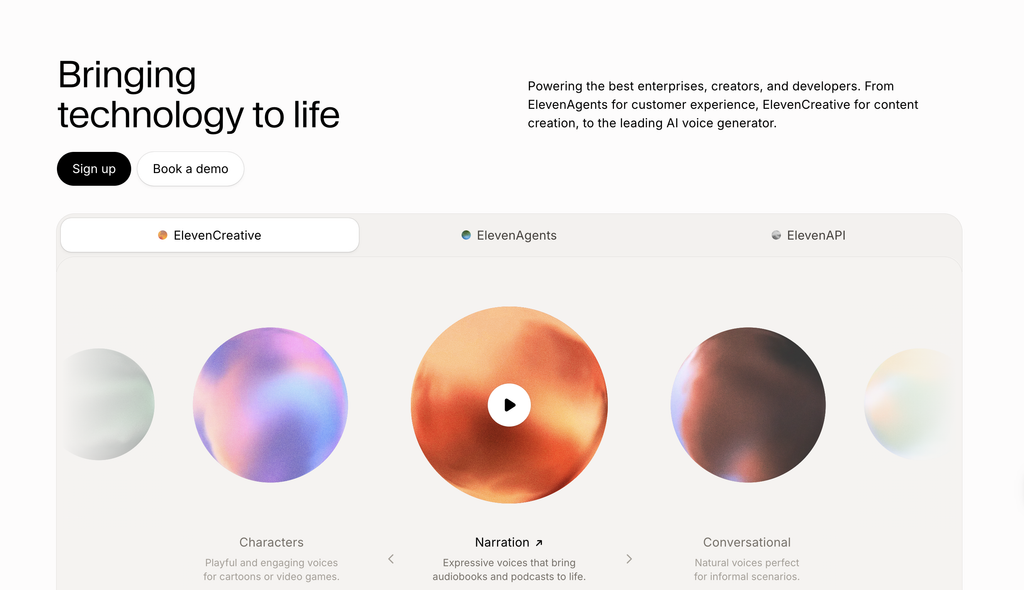
ElevenLabs is the consensus #1 across every independent comparison I have reviewed and my own testing.
The cloned voices capture micro-details that competitors miss: breath placement, question-rise intonation, consonant texture, and the subtle rhythm shifts between casual and emphatic speech.
Two cloning modes:
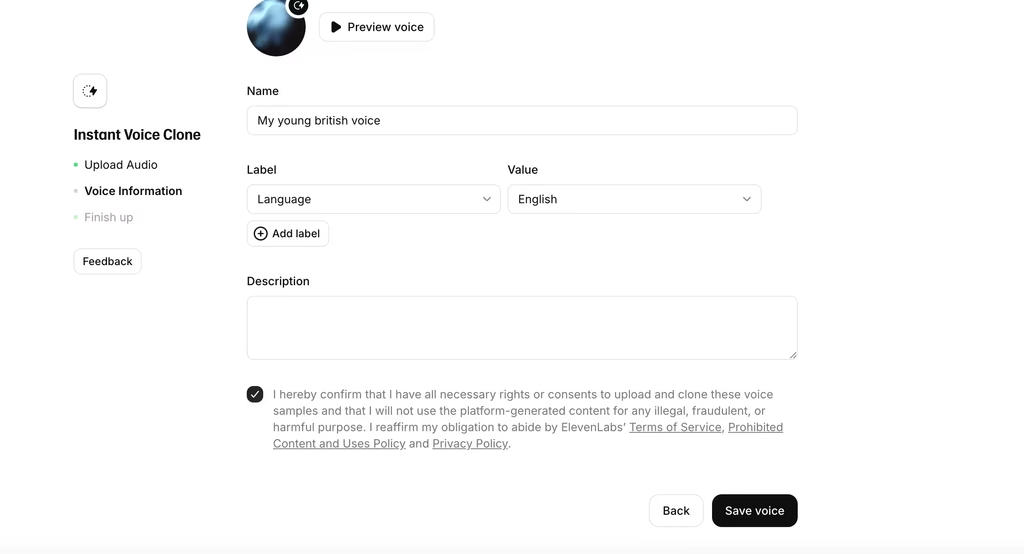
Instant Voice Cloning creates a usable clone from 30 seconds to 3 minutes of audio, available from the $6/month Starter plan. Professional Voice Cloning uses 30+ minutes of varied speech for higher fidelity, available from the $22/month Creator plan.
The Turbo v2.5 model delivers under 300ms time-to-first-audio for streaming, which makes ElevenLabs the standard for developers building real-time voice agents. The API documentation is the best in the category.
In my testing, ElevenLabs’ Instant Clone from a 2-minute recording captured my speaking cadence well enough that two colleagues could not tell the difference in a blind test. The Professional Clone from a 45-minute recording was indistinguishable to everyone I tested it with.
Starting Price: $6/month
For a detailed comparison, see our Murf vs ElevenLabs review.
2. Fish Audio: Best Value for Developers
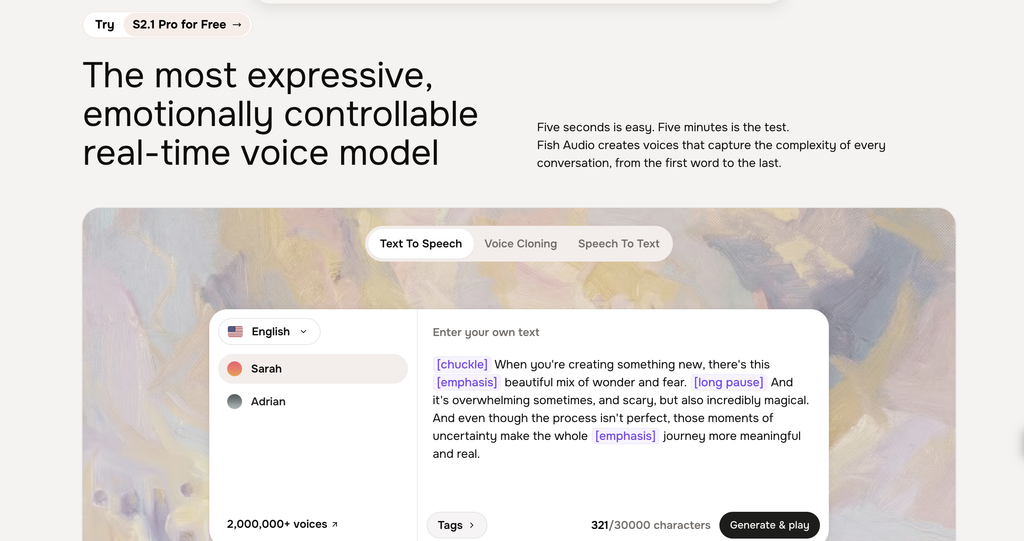
Fish Audio quietly became the most cost-effective voice cloning platform in 2026.
Its S2 model ranked #1 on TTS-Arena (the open benchmark for text-to-speech quality) and costs roughly 6x less than ElevenLabs on the API. It clones from as little as 10 seconds of audio across 80+ languages.
The open-source option means you can self-host the model for zero per-character cost if you have GPU infrastructure.
For startups building voice-enabled products where API costs scale with users, Fish Audio’s pricing makes the difference between a viable business model and one that bleeds money on voice generation.
The trade-off: Fish Audio’s web interface is developer-focused. There is no drag-and-drop studio. No video sync. No background music library. If you need a polished creator UI, use ElevenLabs or Descript. If you need an API that delivers top-tier quality at a fraction of the cost, Fish Audio wins.
Starting Price: $5.5/month
3. Descript: Best for Podcast and Video Editors
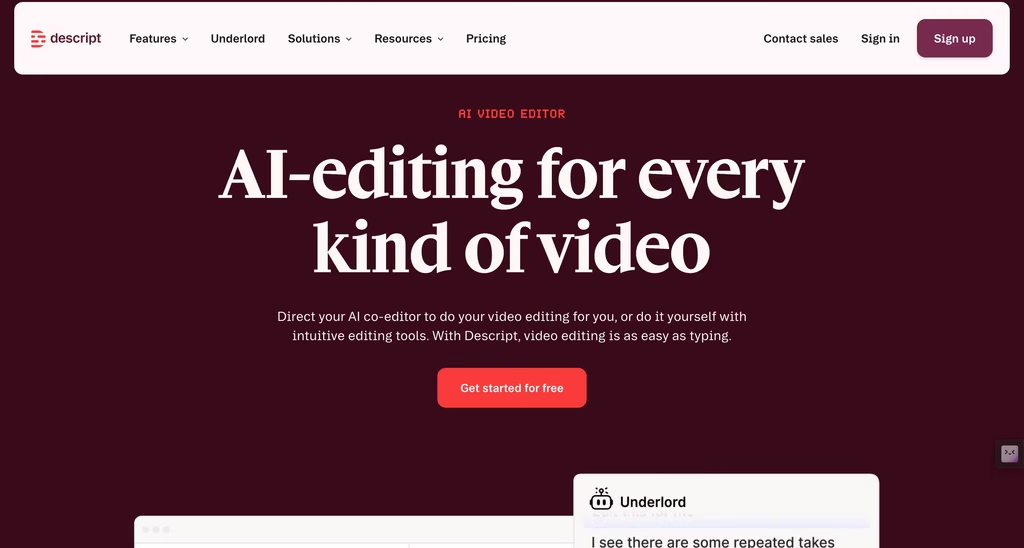
Descript made voice cloning free in 2026 (included in all plans including the free tier). Its Overdub feature lets you type corrections into your transcript and Descript regenerates the audio in your cloned voice.
Said “January” when you meant “June”? Type the fix. Descript re-records that word in your voice without you touching a microphone.
The consent verification process is mandatory. You record a specific consent script before Descript creates your clone. This is the most ethical implementation of voice cloning on this list.
The limitation: Descript is a post-production tool.
Overdub is designed for fixing mistakes in existing recordings, not for generating long-form content from scratch. If you need to produce 30 minutes of narration from a text script, ElevenLabs or Play.ht are better fits. If you need to fix the 4 sentences you flubbed in an otherwise perfect podcast recording, Descript is unmatched.
Starting Price: $24/month.
4. Resemble AI: Best for Enterprise Security and Compliance
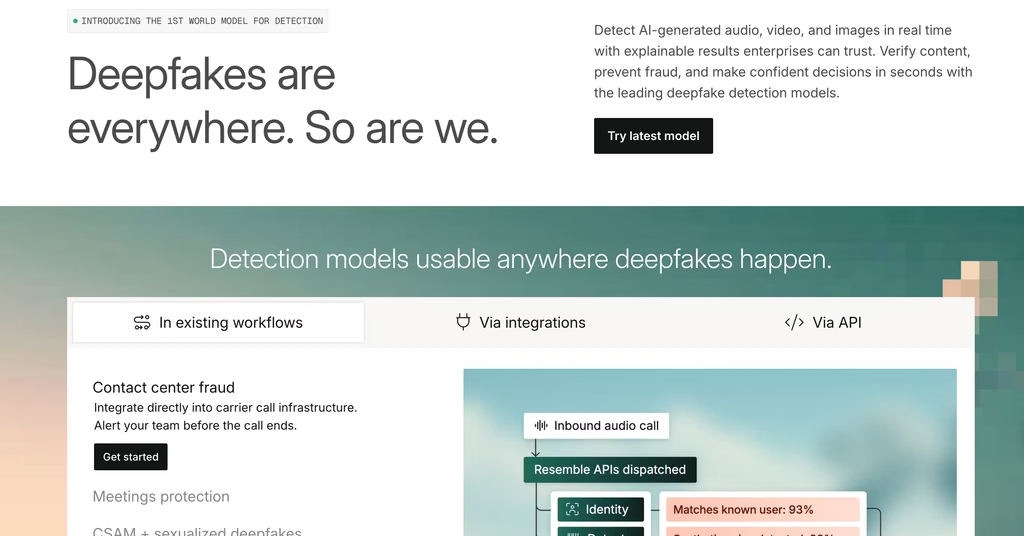
Resemble AI has repositioned itself as the security-first voice platform. Its key differentiator is not cloning quality (which is strong but trails ElevenLabs).
It is the compliance infrastructure around the clone: neural watermarking that embeds an inaudible signature in every generated audio file, deepfake detection tools, SOC 2 Type II certification, and on-premise deployment for organizations that cannot send voice data to external servers.
The open-source Chatterbox model (MIT license) is self-hostable and free. In Resemble’s own blind study, 65.3% of listeners preferred Chatterbox Turbo over ElevenLabs (vendor-run study, treat accordingly).
For teams building voice into regulated products (healthcare, finance, government), Resemble’s audit trail and watermarking are requirements, not nice-to-haves.
Starting Price: $350/month.
5. Play.ht: Best for Unlimited Volume at a Flat Rate
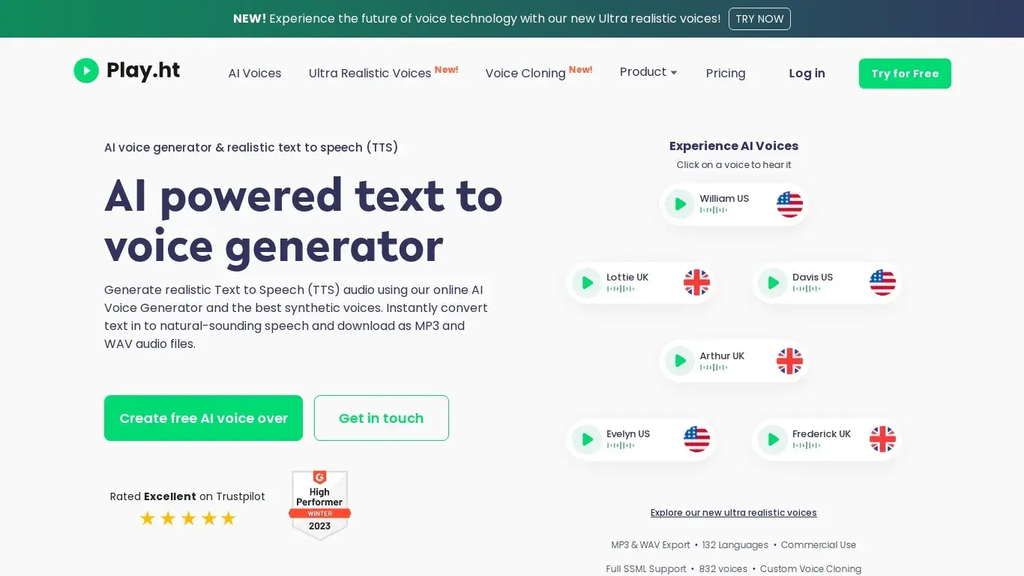
Play.ht offers an unlimited plan at $31.20/month that removes per-character billing entirely.
For content producers generating high volumes of audio (daily podcasts, audiobook chapters, course narration), flat-rate pricing eliminates the cost anxiety that per-character platforms create.
The voice library spans 142+ languages with 900+ voices. Clone quality is good but not ElevenLabs-level. Play.ht wins on volume economics, not on per-sample quality.
Starting Price: $31.20/month
6. LOVO AI: Best for Combined Voice + Video Creation
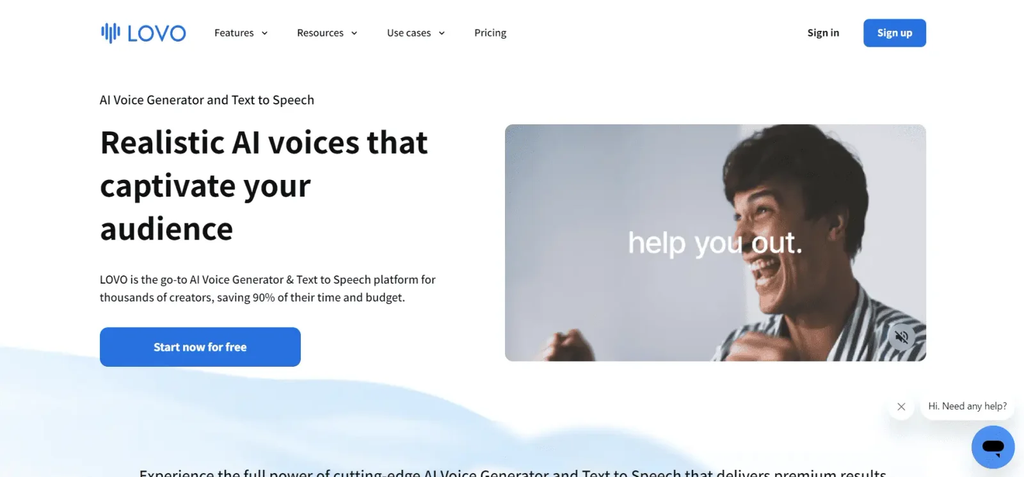
LOVO AI (Genny platform) bundles voice cloning with AI video creation. Clone your voice, generate narration, and produce video content with AI avatars in one platform. 500+ voices across 100+ languages.
The combined workflow appeals to course creators and marketing teams who need both audio and video without managing separate tools.
Starting Price: $29/month
7. Murf AI: Best Studio Editor for Voice Production
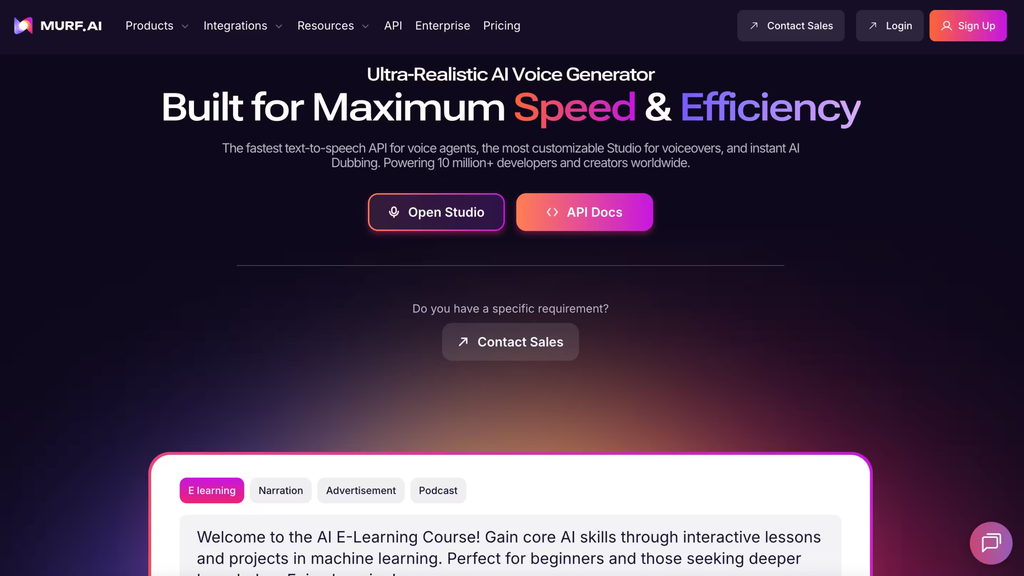
Murf AI provides the most polished production environment: word-level emphasis control, pitch adjustment, timed pauses, 10+ speaking styles per voice, video sync on a timeline, and an 8,000+ track music library.
The editor is where Murf beats every competitor.
The critical limitation: voice cloning is locked behind the Enterprise tier. No self-serve cloning on Creator or Business plans. If cloning is your primary need, Murf is not the right tool unless you are negotiating an enterprise contract.
For details, see our Murf AI text-to-speech review.
Starting Price: $19/month
8. Speechify: Best for Personal Use and Accessibility
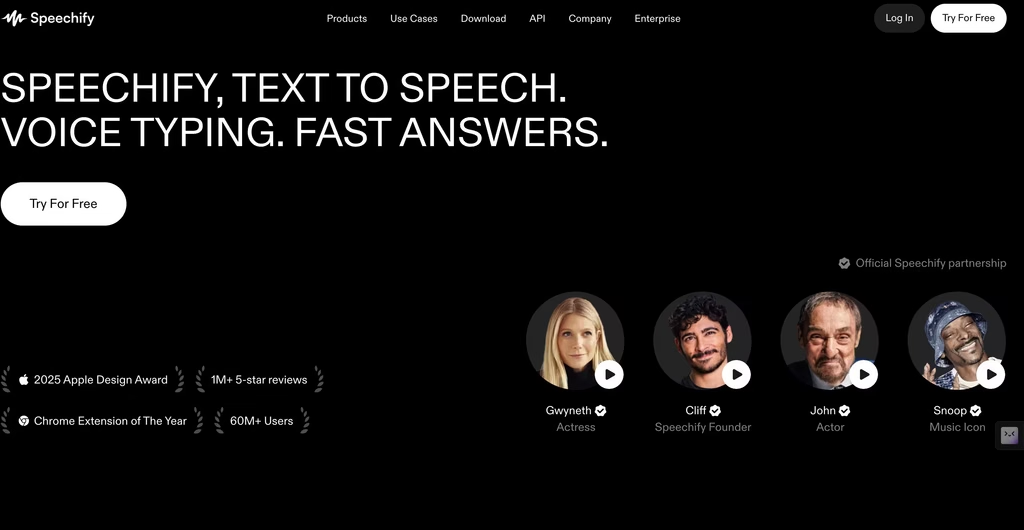
Speechify started as a text-to-speech reader for people with dyslexia and learning differences.
It has expanded into voice cloning with a simple interface designed for non-technical users. Upload a short audio sample, get a clone, use it to read documents, articles, and ebooks in your own voice.
Speechify is not built for professional production. It is built for personal use: listening to articles in your own voice during your commute, creating audio versions of written content for personal consumption, or building a voice library for accessibility purposes.
Starting Price: $29/month.
9. WellSaid Labs: Best for Corporate Narration Teams
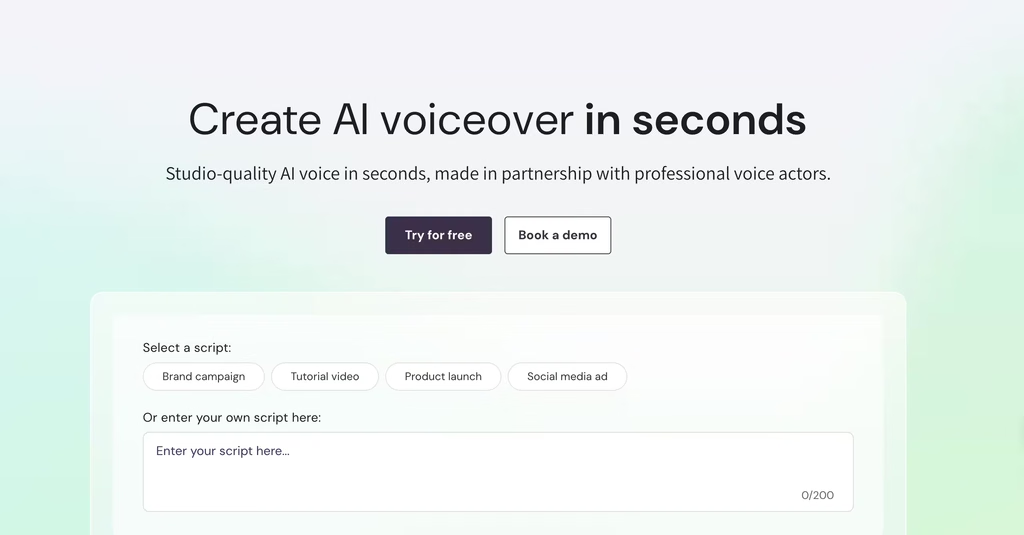
WellSaid Labs focuses on corporate voice content: training videos, product demos, internal communications.
The custom lexicon tool ensures brand-specific terms (product names, acronyms, technical vocabulary) are pronounced correctly across every narration without repeated manual correction.
Voice cloning requires an Enterprise contract. There is no self-serve cloning on the Individual plan. Teams needing fast, self-serve voice cloning should use ElevenLabs or Resemble AI instead.
Starting Price: $19/month.
10. Respeecher: Best for Film, TV, and High-End Production
Respeecher produces the highest fidelity voice cloning available, but it is not a self-serve platform. It is a production service used by Hollywood studios. Credits include voice work on Star Wars (de-aging Luke Skywalker’s voice) and the Anthony Bourdain documentary.
If you are producing a feature film, major documentary, or AAA game that needs a specific voice recreated with zero detectable artifacts, Respeecher is the industry standard. For everyone else, it is out of scope and out of budget.
Starting Price: Project-based. Contact for quotes. Not self-serve.
11. HeyGen: Best for Video Avatars with Voice Cloning
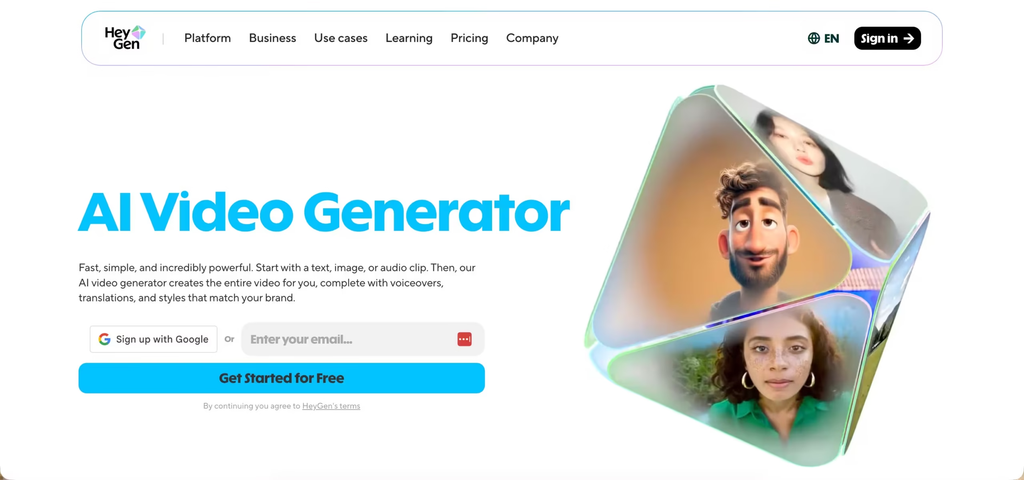
HeyGen combines AI avatar video creation with voice cloning. You create a digital version of yourself (or a stock avatar) and clone your voice to deliver scripted messages in 175+ languages. The output is a complete video, not just audio.
HeyGen is not a pure voice cloning tool. It is a video creation platform where voice cloning serves the avatar pipeline. If you need standalone audio files of your cloned voice, use ElevenLabs.
If you need a video of an avatar speaking in your cloned voice, HeyGen handles that workflow end to end.
Starting Price: Creator $24/month. Business $96/month.
12. Voice.ai: Best for Real-Time Voice Changing (Gaming and Streaming)
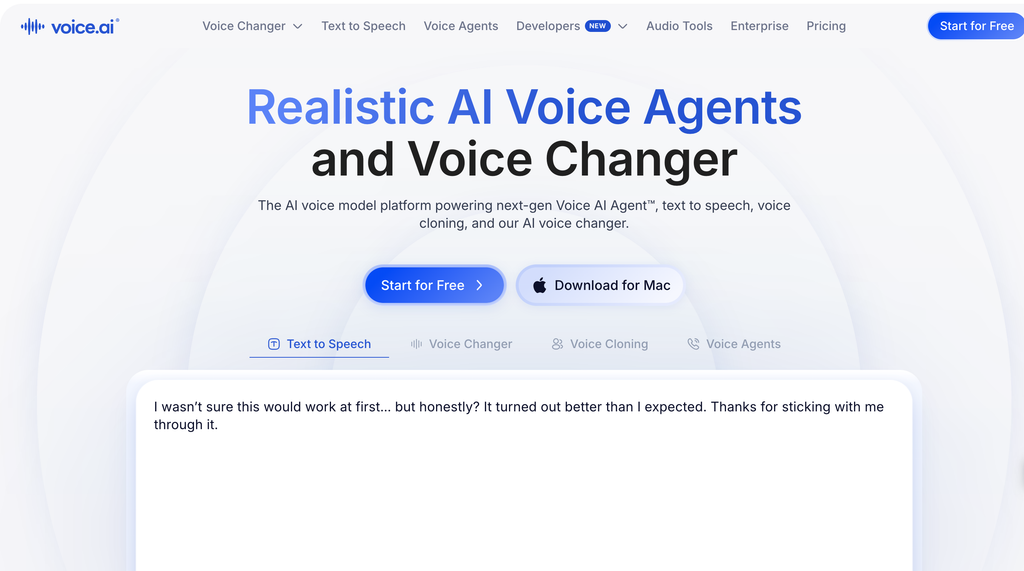
Voice.ai is not a text-to-speech tool. It is a real-time voice changer that transforms your voice into another voice during live calls, gaming sessions, and streams.
The AI processes your microphone input and outputs a modified voice in real time with minimal latency.
For streamers, gamers, and content creators who want to sound like a different person during live content, Voice.ai is the only free option on this list. It does not generate audio from text. It transforms your live voice.
Starting Price: $9/month.
How to Clone Your Voice Using AI
The process varies by tool, but the core steps are consistent across all platforms:
Step 1: Record clean audio. Find a quiet room with no echo. Use a decent microphone (even a modern smartphone held 6 inches from your mouth works for Instant cloning). Read varied content: mix statements, questions, exclamations, and natural pauses. Avoid reading in a monotone. The AI learns your vocal range from the sample, so show it your full range.
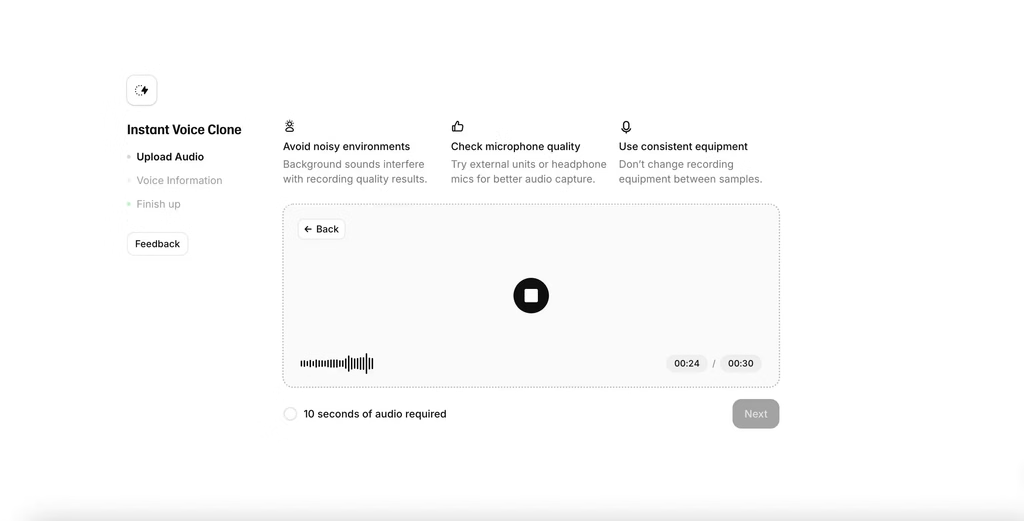
Step 2: Upload to your chosen platform. For Instant cloning (ElevenLabs, Fish Audio, Play.ht), upload 30 seconds to 3 minutes of audio. For Professional cloning (ElevenLabs Professional, Murf Enterprise, WellSaid Enterprise), upload 30+ minutes. More audio generally means higher fidelity, but the returns diminish past 45 minutes.
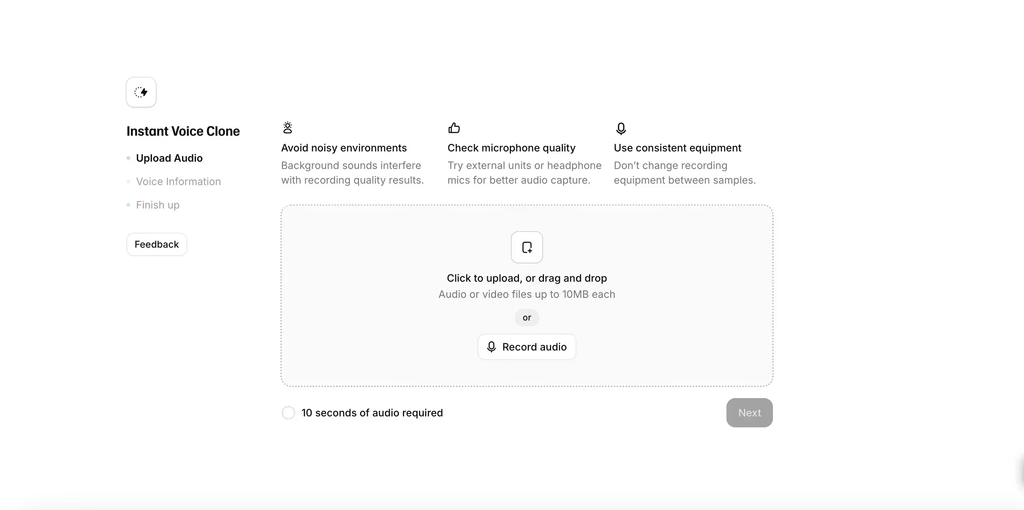
Step 3: Complete consent verification. Reputable platforms (ElevenLabs, Descript, Resemble AI) require you to verify that you have the right to clone the voice. This typically involves recording a specific consent script or uploading a signed agreement. Do not skip this. Cloning someone’s voice without consent is illegal in many jurisdictions.
Step 4: Test and iterate. Generate a few test sentences and compare them to your real voice. Listen for unnatural breath placement, wrong emphasis, and robotic consonant clusters. If the clone sounds off, try uploading a longer or more varied recording sample.
Step 5: Deploy. Use the clone for your intended purpose: narration, podcast production, course content, or API integration. Most platforms let you generate audio from text using your cloned voice indefinitely as long as your subscription is active.
FAQs
1) What is the best free AI voice cloning tool?
Descript includes voice cloning (Overdub) free in all plans including the free tier. Fish Audio offers limited free cloning with its open-source model. ElevenLabs requires at least the $6/month Starter plan for cloning.
2) How much audio do I need to clone my voice?
As little as 10 seconds on Fish Audio and 30 seconds on ElevenLabs (Instant Clone). Higher quality Professional Cloning on ElevenLabs and Murf requires 30+ minutes of varied speech. More audio generally means a more accurate clone, with diminishing returns past 45 minutes.
3) Is AI voice cloning legal?
Cloning your own voice is legal everywhere. Cloning someone else’s voice without their consent is illegal in many jurisdictions. Several US states have specific laws protecting voice likeness. Reputable platforms require consent verification before creating a clone. Always obtain explicit, written consent from the voice owner.
4) Which tool has the most realistic voice clones?
ElevenLabs produces the most realistic clones for most use cases. Fish Audio S2 ranked #1 on TTS-Arena and is a close competitor at lower cost. Respeecher produces the highest fidelity clones available but is a professional service, not a self-serve platform.
5) Can I use a cloned voice commercially?
Yes, on most paid plans. ElevenLabs includes commercial rights from the $6/month Starter plan. Play.ht includes commercial rights on all paid plans. Descript includes commercial rights on paid plans. Always verify the specific license terms for your chosen platform and plan.
6) What is the difference between voice cloning and text-to-speech?
Text-to-speech converts text into spoken audio using pre-built voices. Voice cloning creates a synthetic copy of a specific person’s voice, then uses that copy for text-to-speech. Cloning is a subset of TTS: it creates the voice model. TTS uses the voice model to generate audio.
