

Students now use AI constantly. A 2026 survey of 1,054 UK undergraduates found that 94% use generative AI to support assessed work. In fact, 12% include AI-generated text directly in their submissions. Teachers want answers, and AI detectors promise them.
However, a wrong flag can damage a student’s trust for a long time. In one Stanford study, detectors flagged more than half of essays by non-native English speakers as AI-written.
This guide covers 9 free AI detectors for teachers. Each tool overview includes usage limits and notes on accuracy. You will also get a simple routine for what to do when a detector flags a paper.
TL;DR: Start with GPTZero for everyday checks, Copyleaks for long essays, and Pangram when a result is disputed.
How These AI Detectors Were Chosen
A free AI detector is only useful if its limits fit your workload, so every tool below has a free option and publishes its caps. Vendor accuracy claims often look impressive. However, independent benchmarks tend to show lower real-world performance. Therefore, this list leans on independent research and published limits.
Free limits also change often, so confirm them on each site before you rely on them. Also, it’s not uncommon for tools to be taken off the market, so check that a detector still exists before you build a routine around it.
Free AI Detectors
| Tool | Free Allowance | Best For |
| GPTZero | About 10,000 words monthly | Everyday classroom checks |
| Pangram | A few scans daily | Disputed cases |
| Originality.ai | 2,000 words, 3 scans daily | Moodle or Google Classroom users |
| QuillBot | 1,200 words, 6 scans daily | Quick checks without sign-up |
| Scribbr | 1,200 words, unlimited checks | Repeated quick checks |
| Sapling | 2,000 characters per query | Short answers |
| ZeroGPT | 15,000 characters per check | First glances only |
| Grammarly | 10,000 characters per check | English-language essays |
| Origin by GPTZero | Free Chrome extension | Writing-process evidence |
1. GPTZero
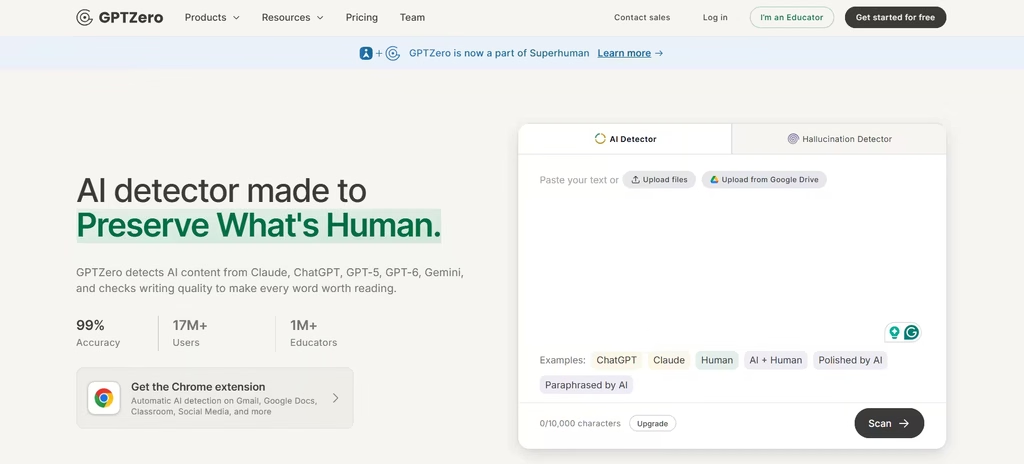
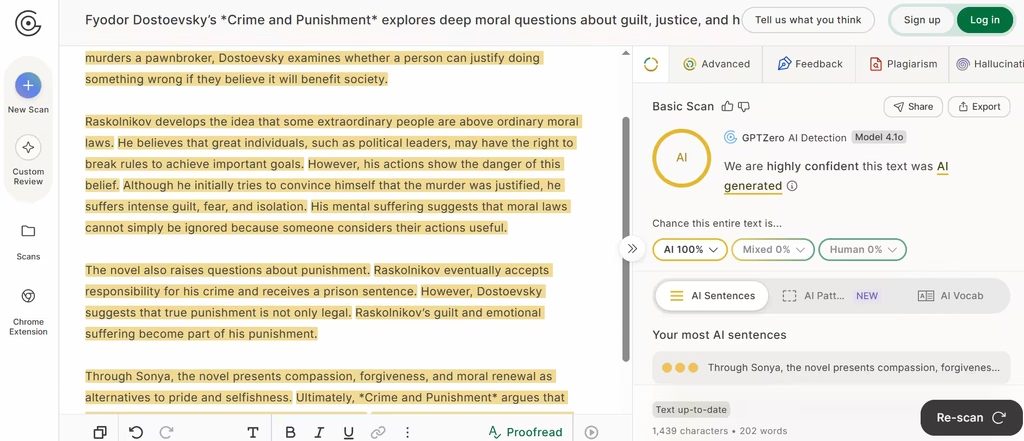
GPTZero was built with educators in mind. Aside from being an AI checker, it also has an attached hallucination checker tool. Its free plan includes sentence-level highlighting, as I saw in my testing. Every sentence of my ChatGPT-generated text had been highlighted as AI text. That made me see exactly which passages triggered a flag.
GPTZero’s pricing page lists the free allowance at 10,000 words per month. The company also says its student-work model leans toward avoiding false accusations.
A University of Chicago Booth study found that GPTZero, Originality.ai, and Pangram all kept false positives below 1%. That sounds reassuring, but in practice it still means roughly one honest student in a hundred could be flagged, which is why you should treat every score as a lead, not a verdict.
No detector is perfect. Save your monthly words for borderline papers, not routine screening. Keep GPTZero as your go-to because the sentence highlighting gives specific evidence to discuss with students.
2. Origin by GPTZero
Origin focuses on process, not prose. This free Chrome extension for Google Docs replays how a document was written. It shows typing patterns, edits, deletions, and pasted text. A single paste looks very different from several drafting sessions.
That process evidence can be fairer than a percentage. It also gives students a way to show their work. To use this tool, ask students to draft in Google Docs from the start.
3. Pangram
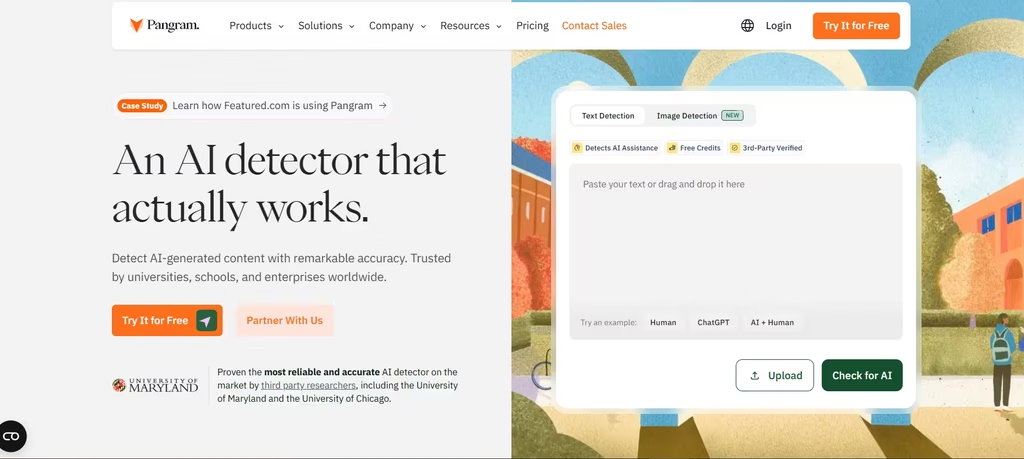
When a paper is disputed, Pangram is the tool I would run second. It focuses on avoiding false flags. In the same University of Chicago research, it was the only detector that met a strict false positive cap of 0.5% without losing accuracy. Its free plan is small, however. I was given a 20-credit allowance and charged 1 credit per 100 words.
I checked the same ChatGPT text, and the results agreed with what GPTZero reported: 100% AI-generated.
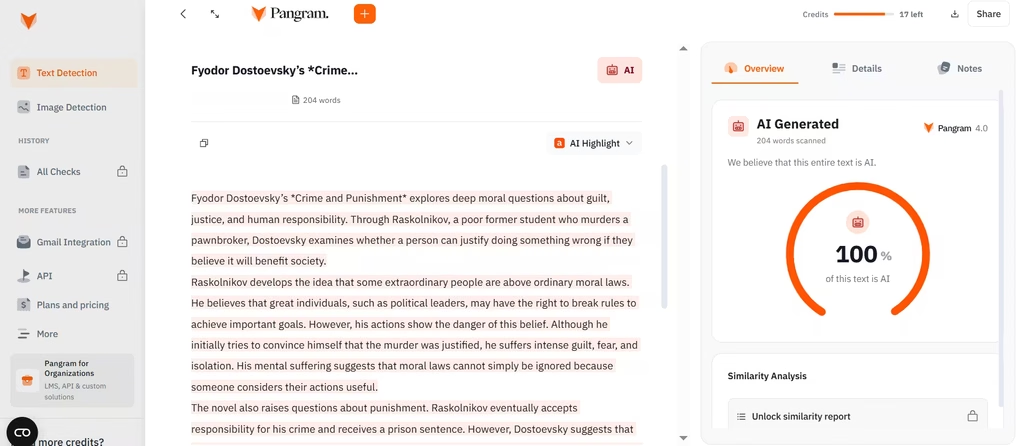
Depending on your work volume, I’ll advise you to reserve the credits for getting a second opinion on one disputed essay, not for a full class set. Save those scans for high-stakes cases.
4. Originality.ai
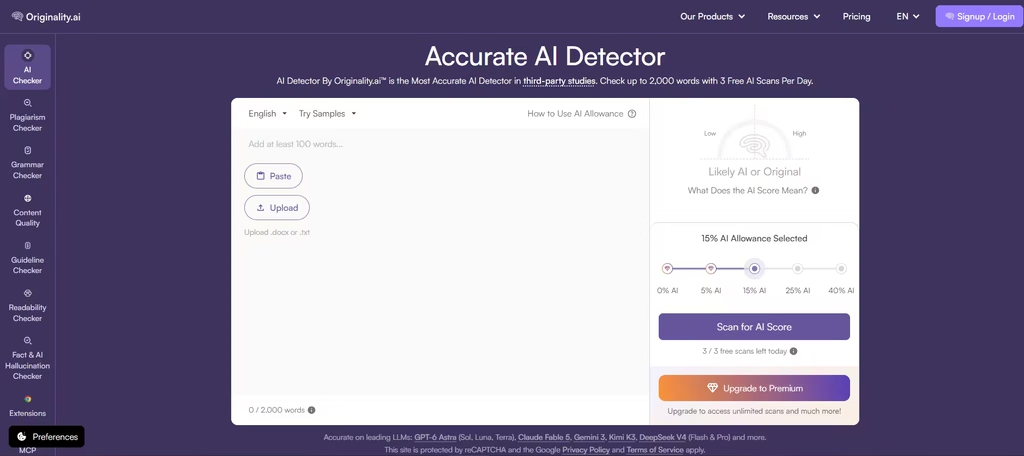
Originality.ai gives you up to 2,000 words and three free scans per day. You do not need an account.
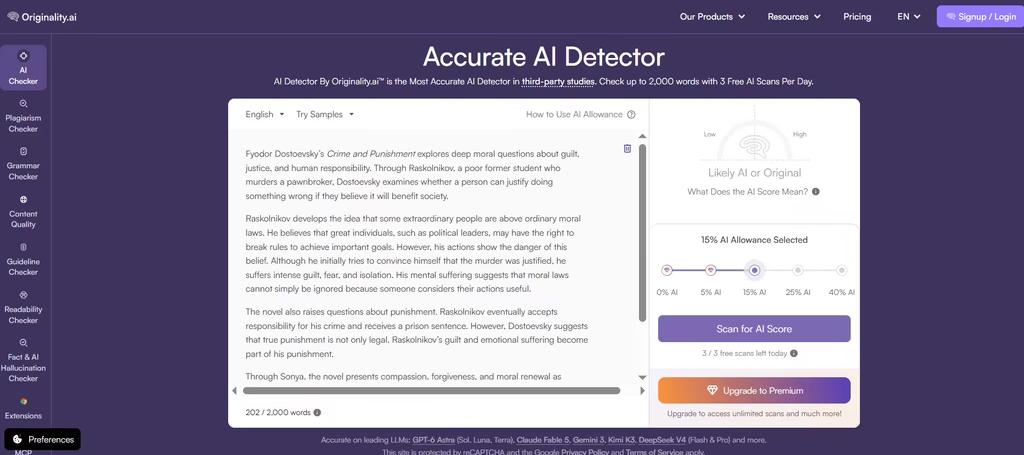
There are other features within the tool that can be used to access students’ work. There are plagiarism, grammar, and fact & hallucination checkers. The company also lists a Moodle plugin and Google Classroom support. Although great, this tool does come with some privacy concerns: text pasted into the free checker may be used for training, so remove student names first.
Note: Originality.ai itself says an AI score should never stand alone in academic disciplines.
5. QuillBot
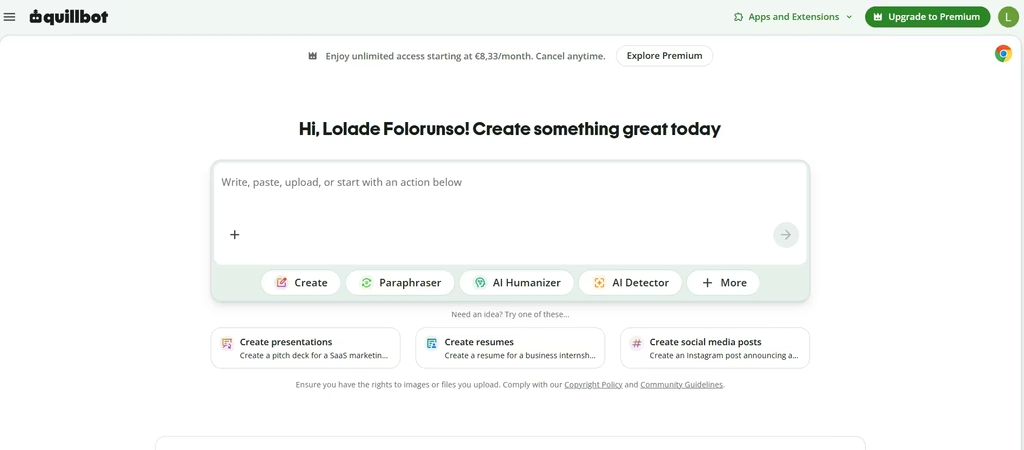
Not every AI-assisted essay is fully generated, and QuillBot is the free detector that tries to show the difference. It checks up to 1,200 words per scan, with up to six scans per day. You do not need an account. Results separate AI-generated, AI-refined, and human-written text.
In my testing, the text was scored as “100% AI-generated,” while other categories stayed at zero.
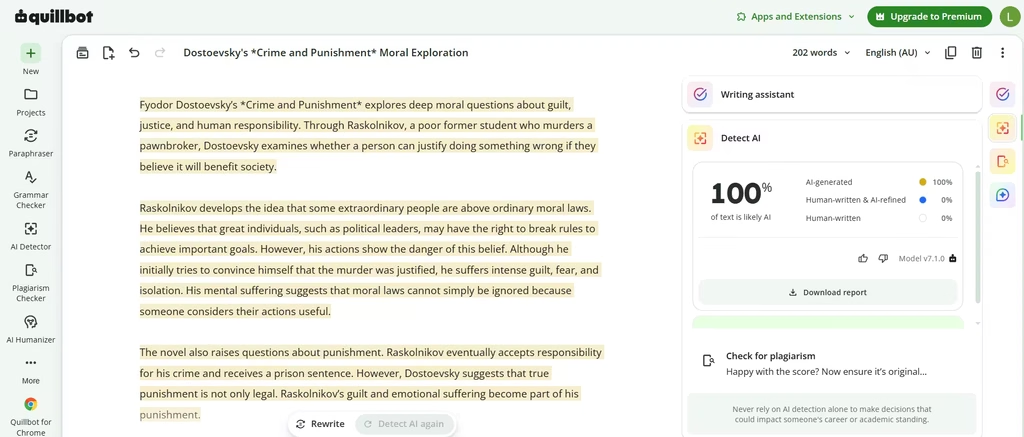
The AI-refined label is the useful part: it separates a student who polished their own draft from one who generated the whole essay. However, QuillBot also sells paraphrasing tools, so keep that commercial context in mind when you read its results.
6. Scribbr
Scribbr offers unlimited free checks of up to 1,200 words each, with no sign-up.
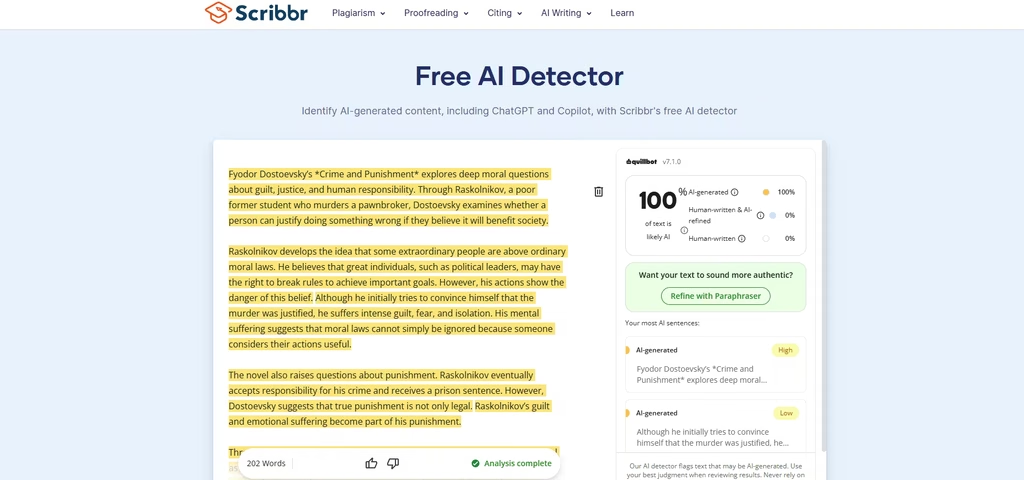
It labels text as AI-generated, AI-refined, or human-written. However, Scribbr states that its free version detects GPT-2, GPT-3, and GPT-3.5 text with only average accuracy. Its premium version covers GPT-4.
Note that Scribbr runs on QuillBot’s engine, and the two brands share a parent company. Treat them as one opinion, not two.
7. Sapling
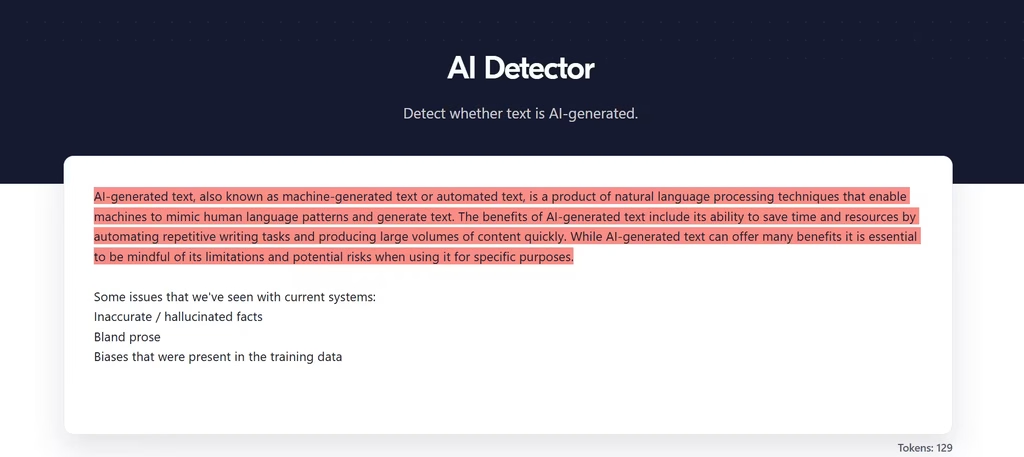
Sapling is the tool I would reach for with short responses. It checks up to 2,000 characters per query for free. That equals a few short paragraphs. It suits discussion posts, short answers, and exit tickets. Sapling says accuracy improves after roughly 50 words. Sapling, just like other detectors on this list, also warns that no detector should work as a standalone check. Teachers should take that warning seriously.
8. ZeroGPT
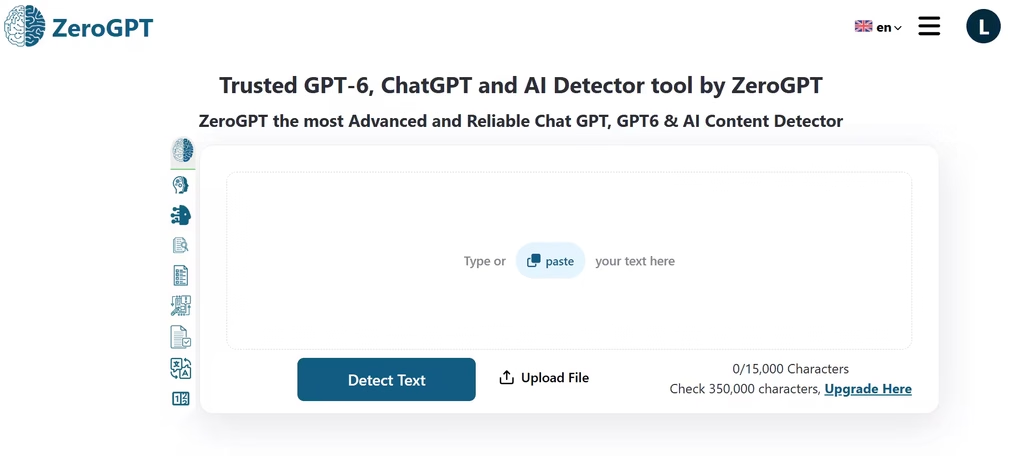
ZeroGPT allows up to 15,000 characters per check and does not require sign-up. However, independent testing summarized by Fast.io reports false positive rates between roughly 15% and 33%, depending on the text. Those rates sit far above the sub-1% figures the Chicago study reported for GPTZero, Originality.ai, and Pangram, although the studies differ.
In my own testing, I found ZeroGPT to be the most lenient tool on this list. Where there is a 100% congruence on other tools, ZeroGPT reported 85.6%.
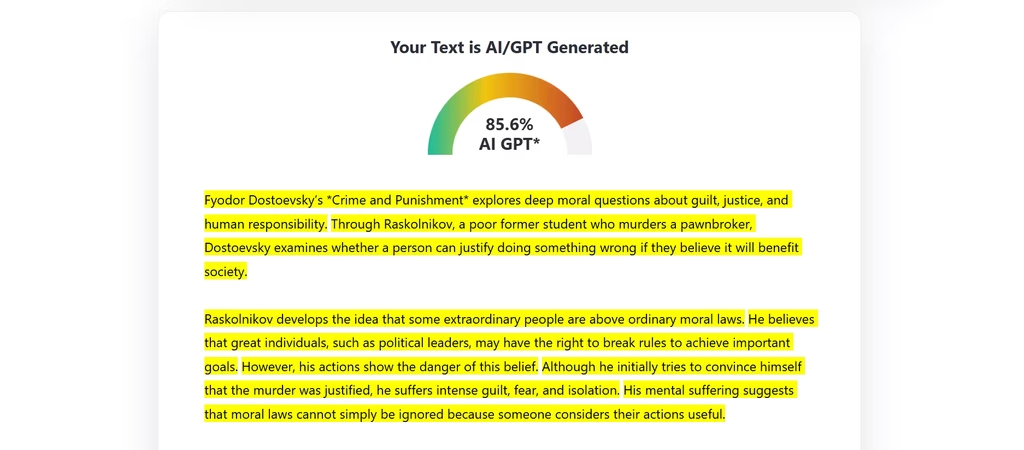
Use ZeroGPT for a first glance only, never as evidence. I would never rely on it for anything that matters.
9. Grammarly
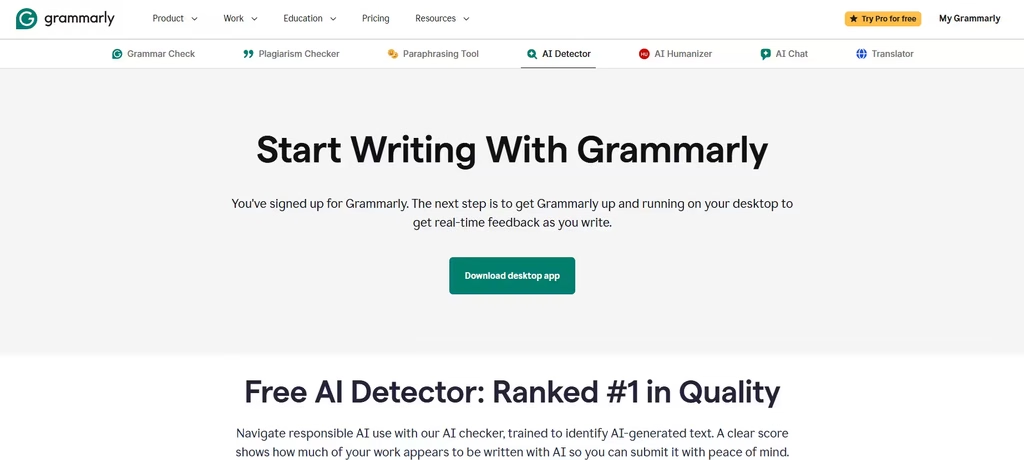
Grammarly’s free, in-browser detector analyzes up to 10,000 characters at once. It supports English only, and it also runs inside Google Docs and Microsoft Word. Grammarly says its detector ranks first on the independent RAID benchmark.
But findings from Originality.ai warn that AI-assisted editing, including some Grammarly features, can trigger false positives. Ask students how they used such tools before you conclude.
My ranking: GPTZero is my daily driver, Copyleaks is my backup for long essays, Pangram is my tiebreaker for disputed cases, and Origin is what I use when the stakes are high. I would never use ZeroGPT for anything weighty.
Also read: Top AI Tools for Students: Improve Your Learning
How to Use AI Detectors Fairly
AI detectors estimate probability, but they cannot prove authorship. Most rely on how predictable a text seems, so formal human writing can look suspicious. Length is also a key factor. In the Chicago research, all three commercial tools lost accuracy on passages under 50 words.
The same can be seen with paraphrasing and grammar mistakes. Benchmarks summarized by Fast.io found accuracy fell 15 to 30 percentage points on lightly paraphrased or human-edited text. And a 2023 Stanford study ran seven detectors on 91 essays written by non-native English speakers.
The detectors classified more than half of those essays (61.22%) as AI-generated. All seven flagged 18 essays, and at least one flagged 89 of 91. By contrast, the same detectors handled essays by US-born eighth-graders almost perfectly.
Put these findings together, and the pattern is clear. Detectors struggle at the edges: short passages, formal prose, edited text, and second-language writing. Those edges are where many real students write.
A score, then, can point you toward a conversation, but it cannot settle one. I once had a student whose essay was flagged at X% because she wrote in formal, citation-heavy prose. The conversation that followed taught me more than the score ever could.
Given all these, the best way to go is to build a fair process instead. When a paper gets flagged, start with curiosity. Ask the student to explain their argument, sources, and choices. Then compare that explanation with the draft history. This protects honest students while still taking misconduct seriously.
