
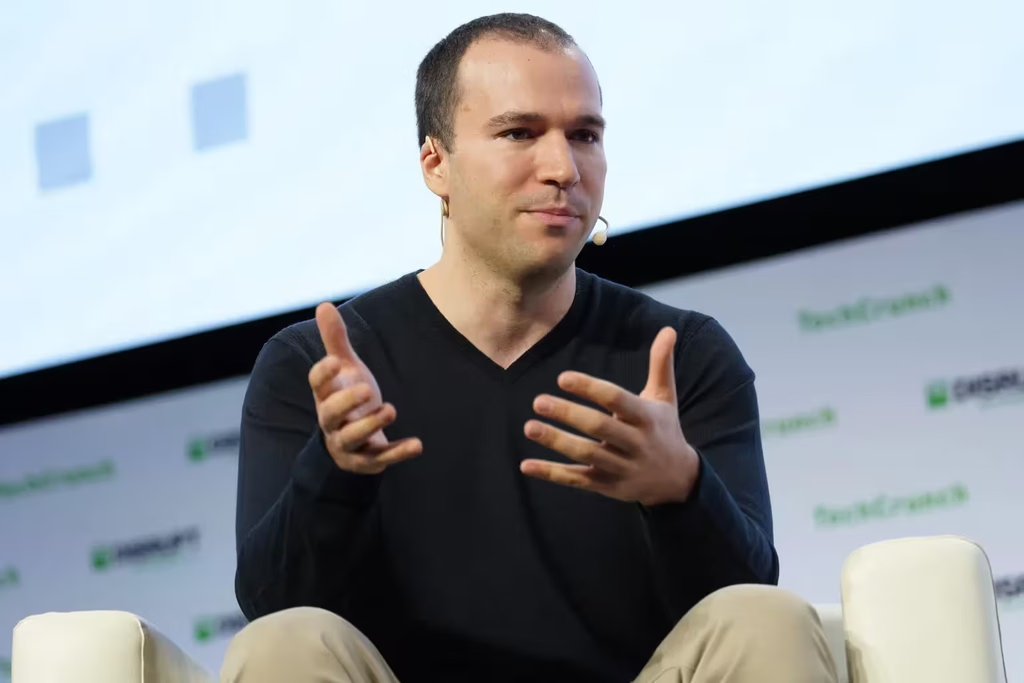
Greg Brockman, the company’s co-founder and president, says OpenAI could be ready to go public in 2027.
Brockman spoke on Wednesday, November 4, at a Wall Street Journal tech conference. The interviewer asked him directly whether OpenAI would be ready for an IPO next year.
His answer was “I think so. Yes.”
What’s behind his confidence? According to Brockman, it comes down to one thing: business customers.
Also read: OpenAI Wants $30 Billion More Before Going Public
IPO
An IPO, or initial public offering, is when a private company first sells shares on the stock market.
After that, everyday investors can buy a piece of the company. It’s a major step, and companies usually wait until their numbers look strong.
OpenAI has been open all year about wanting to go public only when the time feels right.
Brockman said he feels very good about the business and has never felt more sure about what the team is doing.
2026
Brockman called the first and second quarters of 2026 “pretty rough.” When it came to agentic coding, OpenAI “wasn’t even in the conversation,” he said.
Agentic coding means AI tools that can write, test, and fix code with less hand-holding from people.
Rival Anthropic had already won over many users in this space with its Claude Code tool.
OpenAI did have its own coding tool, called Codex. However, Brockman said nobody was really talking about it.
But instead of panicking, the team stayed focused. In his words, they “kept our heads down and executed.”
Q3
By the third quarter, OpenAI’s annualized revenue grew 70% from the quarter before.
Annualized revenue estimates how much a company would earn in a full year based on its current pace.
Brockman gave most of the credit to the enterprise side of the business, which doubled during that stretch.
“Enterprise” simply means selling to companies and organizations rather than to individual users. And this was the payoff from investments OpenAI had been making for a while.
Business Customers
Enterprise customers now bring in most of OpenAI’s money. Not long ago, that part of the business made up only about 30% of the company’s total revenue.
That doesn’t mean regular users are leaving. Brockman stressed that consumer revenue kept growing, but the business side has grown much faster.
As one example, he pointed to OpenAI’s recent partnership with JPMorgan Chase. It’s the kind of big-name deal the company is now landing more often.
For a long time, most people knew OpenAI for ChatGPT. As a result, companies saw it mainly as a consumer brand, which raised doubts.
Just a year ago, OpenAI wasn’t really in the enterprise game. Many companies would ask the same question when talks began: Is OpenAI truly committed to serving businesses?
Today, things are very different.
