
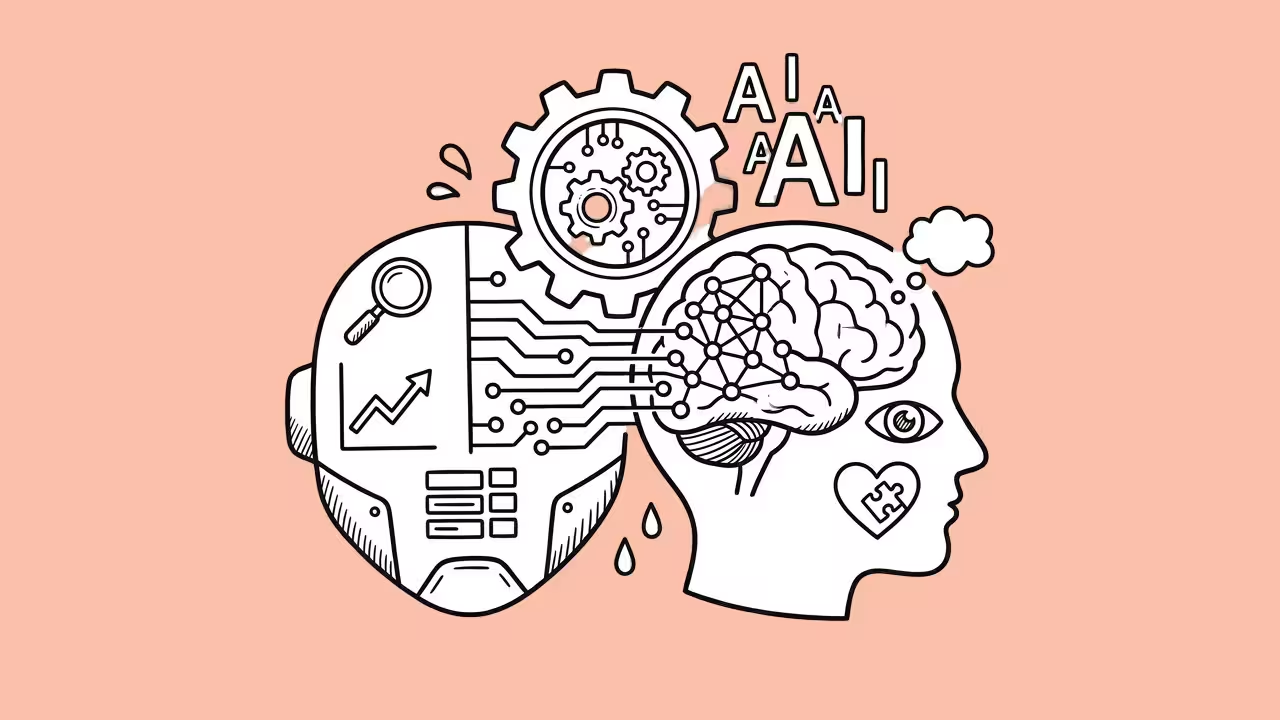

You sit down for a quick game. An hour later, you are still playing and enjoying every minute of it. This is not accidental or a game of chance. The interlinking of AI & psychology is what makes modern gaming platforms so compelling to return to.
AI now powers engagement systems calibrated to your specific preferences, learning what excites you, what challenges you at just the right level, and what keeps the experience feeling fresh. Understanding how this works reveals something worth appreciating: today’s best gaming platforms are built around you.
The Science of Engagement
Great gaming experiences are built on psychological principles that make playing feel rewarding, satisfying, and worth coming back to. Researchers have long studied what keeps people returning to an activity they enjoy. The core answer involves dopamine, a neurotransmitter linked to anticipation, reward, and the pleasure of achieving something.
B.F. Skinner’s foundational research on variable reward schedules demonstrated that unpredictable rewards produce stronger feelings of excitement than fixed ones. Gaming platforms have translated this insight into thrill.
When a game delivers an unexpected bonus or a rare reward drops after a run of near-misses, the brain responds with a spike of anticipatory excitement. AI makes this process precise, personal, and consistently well-timed, so the reward always lands when it matters most to you.
How AI & Psychology Combine
Game loops are the repeating cycles of action, feedback, and reward that mark every enjoyable game. Previously, game designers built these loops manually and tested them across broad audiences. Modern AI makes this a far more sophisticated process. Now, algorithms analyse individual behaviour live and adapt the experience accordingly.
For example, if a player is finding things tough, the AI gently eases the challenge to keep momentum going. If a player is in peak form, it raises the stakes to sustain that exciting edge-of-your-seat tension.
The goal is to keep every player in what psychologists call the “flow state.” That is the ideal zone between boredom and anxiety where enjoyment is at its highest.
Reward timing is another refinement. AI systems learn when a player is most engaged and ensure the next exciting moment arrives right on cue. This is intelligent pattern recognition applied to specific play styles, making sure every session has the kind of satisfying rhythm that makes time fly.
I tested this firsthand by playing a mobile game daily for some time while tracking session lengths and reward timing. By day four, the difficulty curve had adapted noticeably; more challenging stages appeared when I was on a confident streak, and bonus rewards arrived precisely when they felt most exciting.
The experience had shaped itself around how I play.
Recommendation Systems
Beyond game mechanics, AI recommendation engines ensure you always have something great to play next. Leading gaming and entertainment platforms use machine learning models that anticipate what you will enjoy before you have even searched for it.
These systems use collaborative filtering, content-based analysis, and deep neural networks to build a detailed picture of your preferences. Importantly, they do not just reflect what you already like; they help you discover what you did not know you would enjoy.
Research published in ‘Nature Human Behaviour’ has explored how recommendation algorithms identify patterns in user behaviour. They have been found to surface content that generates engagement and satisfaction.
I tracked this in action over time on YouTube, noting every recommendation surfaced on my homepage. After watching just two episodes of a true crime documentary, the algorithm had meaningfully reorganised my recommendations. It created a steady supply of video suggestions that I ended up enjoying.
A handful of early signals had unlocked a richer, more varied experience than I would have found browsing manually. This is personalisation working at its best. The platform learns from your choices, refines its understanding, and builds a discovery experience that feels curated specifically for you, because it is.
Familiar Formats
One particularly effective strategy in AI gaming is the use of familiar, accessible formats as welcoming entry points. Simple, structured games with clear rules reduce any barrier to getting started. They feel immediately comfortable and at ease.
Bingo is a perfect illustration. As a format, it is universally understood; the rules are effortless, the structure is satisfying, and the outcome is always clear. Online gaming platforms have taken this same concept and made it much more rewarding through AI personalisation.
Algorithms determine which variants best suit each player and when to introduce new formats. It also directs how to pace rewards in a way that matches individual preferences. The simplicity of the concept creates an inviting starting point, while AI optimisation ensures the experience grows with you.
This parallels how adult audiences engage with other organised digital pastimes, from strategy games to familiar formats such as how to play bingo online content, where clarity and repeatable structure matter more than novelty.
The familiarity that online games such as bingo provide is based on learned rhythm. The algorithm uses your first few sessions to build a picture of your play style, then uses that understanding to time rewards, introduce variety at the right moment, and ensure the game always has something new to offer.
Quizzes, card games, and puzzle formats all benefit from this same intelligent architecture. Over time, the game then becomes familiar enough to enjoy immediately and smart enough to keep surprising you.
Habit Formation
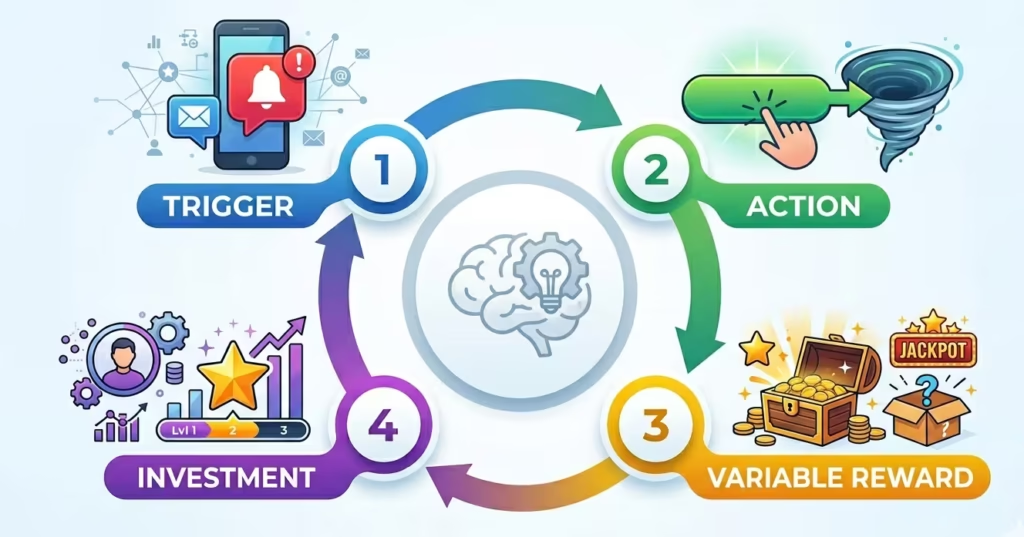
Nir Eyal’s Hook Model describes a four-stage cycle: trigger, action, variable reward, and investment. The best gaming platforms apply every stage of this cycle to create experiences that players want to return to.
Personalised prompts remind you at the right moment. Simple, frictionless actions get you into the game fast. Variable rewards keep each session exciting. And as your progress, achievements, and personalised content accumulate, the experience becomes more and more personal.
From testing habit-forming gaming apps myself, I noticed the most enjoyable ones create something that feels less like compulsion and more like a well-established routine. I would find myself opening a favourite game the way I reach for an evening cup of tea.
This was not because I felt I had to, but because it had become a genuinely pleasant part of my day. That is what successful engagement design feels like from the inside: not pressure, but a familiar ritual you actually look forward to.
Social Proof and Community
AI gaming is made richer by the social layer surrounding it. Gaming platforms highlight what friends are achieving, which games are trending, and what milestones the community is celebrating. The result is shared experiences and friendly competition that make playing feel connected.
Leaderboards, multiplayer challenges, and community events are all elements that bond players over shared goals. The AI ensures you see the social moments most relevant to you, a friend’s new high score, a community challenge that suits your play style, or a tournament starting in a game you love.
Ethical Design
AI engagement also comes with responsibility, and the best gaming platforms take this seriously. Younger players deserve thoughtful protections, and reputable platforms invest in robust and responsible gaming tools, session reminders, spend limits, and clear, accessible support resources.
I believe transparency here is not just a regulatory obligation, it is what separates player-first platforms from those that treat engagement as an end in itself. Players should be able to understand, at least in broad terms, how personalisation works and have meaningful controls to shape their own experience. The platforms that offer this openly are the ones worth trusting with your time.
Responsible design and compelling engagement are not opposites. The most respected platforms demonstrate that you can build experiences players love returning to without compromising their wellbeing, and that is a standard every good platform should be held to.
Designing for Enjoyment
The most exciting feature of AI gaming is its potential to wring more value out of every game experience. AI and psychology together have produced the most personalised, responsive, and rewarding gaming experiences ever available.
The recommendations, pacing, and rewards stem from your own choices, preferences, and play style. That translates to a carefully curated online space, tailored to your liking. It doesn’t get better than that.
