


Candy AI is a versatile conversational companion that enables users to interact with characters through text, voice, and image. It creates emotional connections and generates lifelike conversations that are enhanced by multimedia features.
However, users increasingly seek alternatives due to several reasons. The primary complaint centres on information recall, particularly the frustration of repeating personal details to an AI that seemingly forgets essential details. Others are due to steep subscription fees, occasional content restrictions, and limited character options.
These have caused users to gravitate towards other platforms that remedy their complaints. This article discusses the top alternatives that address what Candy AI leaves unfinished.
1. Replika

Replika is a tool where emotional companionship meets modern-day adaptive AI. It positions its characters as a judgment-free conversational partner rather than an uncensored roleplay engine.
Replika’s priorities are the psychological comfort provided by consistent, empathetic interaction. It develops a personality responsive to users’ communication style over time and learns gradually from conversations.
Features
- A memory-based learning that adapts personality to individual user interactions
- It has an emotional support dialogue calibrated for companionship rather than fantasy fulfilment
- A cross-platform availability spanning mobile and web interfaces.
- With its AR mode, users can interact with Replika in real-world settings via phone camera.
- All conversation history is preserved across sessions.
Pros
- It emphasises genuine emotional resonance without explicit content filtering.
- Replika is accessible through both free and paid tiers.
- The tool contains therapeutic elements to help with anxiety and loneliness, backed by real user testimonials.
- It values users’ privacy and allows users to control data sharing and avatar visibility.
Cons
- Its memory development moves more slowly than specialised alternatives.
- There are limitations to multimedia capabilities compared to competitors.
- The tool does not prioritise uncensored roleplay scenarios.
- Replika AI’s medium customisation options restrict character personality adjustments.
2. Anima AI
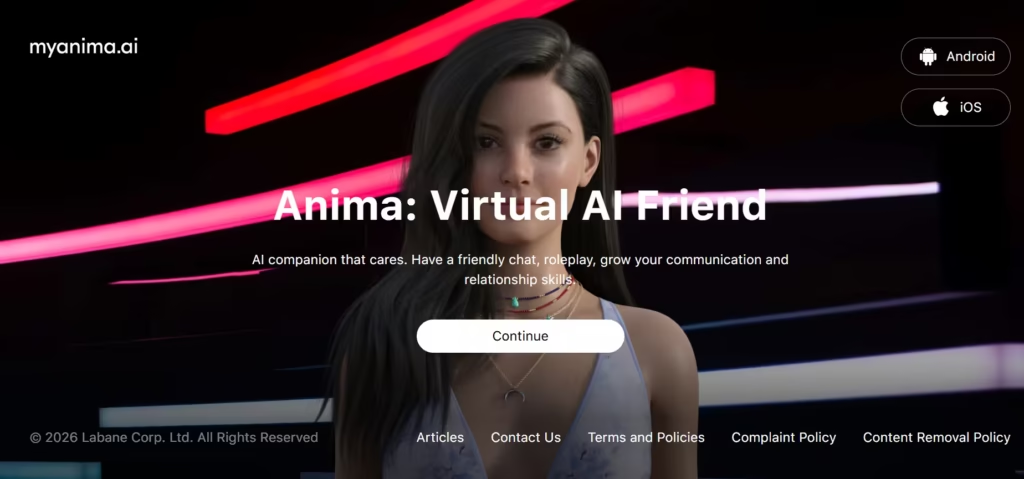
Anima AI goes against the status quo of conventional chatbots by blending empathy with flirtatious energy. Characters construct relationships through conversation and by mirroring user interests and communication patterns. It doesn’t impose predetermined character personalities; conversations are driven by the user’s preferences.
Features
- Anima AI has an adaptive conversation engine that responds to unique user interests.
- Multilingual support in over 10 languages, including Spanish and French.
- It uses text-based communication that’s been optimised for natural dialogue flow.
- Roleplay scenarios from fantasy, comedy, and mild flirtation.
- It uses NSFW mode, which unlocks explicit chats without filters, including custom scenarios.
Pros
- Anima’s strong authority score indicates its credibility.
- It has a moderate bounce rate, suggesting adequate user retention.
- With extended use, personalisation grows to be more sophisticated.
- The AI platform has an accessible and welcoming interface for newcomers.
Cons
- There are limitations to multimedia features restricting visual interactions.
- Its memory systems are less advanced than those of emerging competitors.
- Anima is primarily a conversation-focused tool without roleplay specialisation.
- It has minimal customisation controls over character development.
3. Soulmate AI

Soulmate AI provides photorealistic avatars, which in turn provide adaptive dialogue. The target audience of this platform is people who want relationship simulations with particular emphasis on emotional validation and companionship.
Soulmate AI generates conversations that progressively feel more intimate. Therefore, its users experience an increasing emotional connection through consistent interaction patterns.
Features
- It has relationship-progression mechanics that deepen interaction over time.
- Image generation creates custom visuals of users’ soulmates in any pose or outfit.
- Soulmate AI voice chat has an emotional tone detection for more nuanced replies.
- The roleplay library has thousands of pre-built scenarios, from fantasy worlds to everyday dates.
- With its personality customisation feature, it allows users to shape character traits.
Pros
- It has a strong focus on emotional narrative consistency.
- It has a flexible and customizable character dynamic.
- The app updates regularly and is responsive to user feedback.
- Soulmate AI has a privacy-conscious approach to user data.
Cons
- Soulmate AI lacks image generation capabilities
- Its memory system is less comprehensive than other platforms.
- Customisation requires significant user input for an optimal experience.
4. Nomi AI
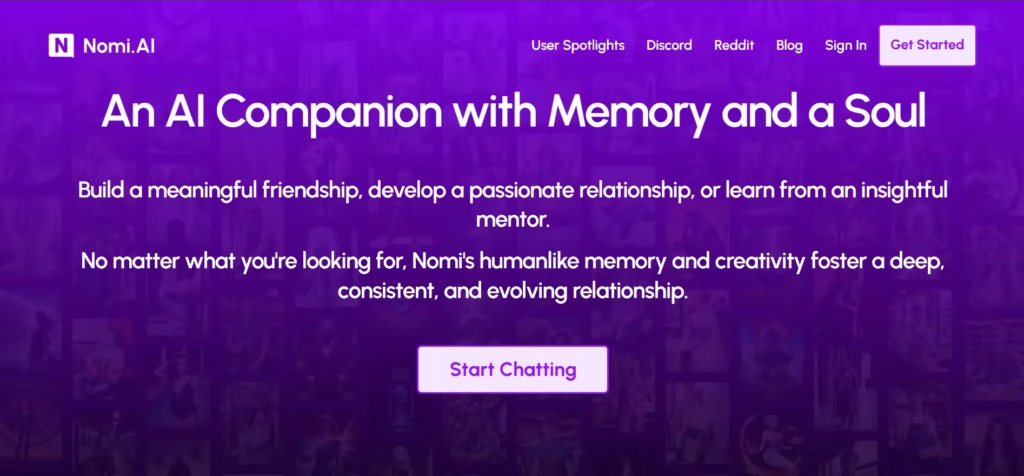
Nomi.ai records over 882,690 monthly visits, making it one of the largest and most specialised AI companion platforms. Its users get to create multiple “nomis” for every mood. Options are limitless – mentor, wild adventurer, sultry lover and more. A key distinguishing feature is the depth of conversation that feels less scripted than competitors.
Features
- An advanced conversational AI reducing repetitive response patterns
- It has real-time image editing and generation for various scene-building.
- Nomi AI’s long-term memory systems preserve conversation context across sessions.
- The AI platform has customizable features with personality trait adjustments.
- There are no NSFW filters, and all interactions rely on user-driven boundaries.
Pros
- Nomi AI’s significantly higher monthly traffic indicates strong market confidence.
- It has top-tier image generation, which delivers photorealistic results on demand.
- With its highly responsive conversation quality, users are assured of non-generic interactions.
- A strong memory architecture prevents context loss between sessions.
Cons
- The high bounce rate reveals user engagement challenges.
- There are image generation limitations or an absence.
- Its customisation interface requires a learning curve.
- The premium features include advanced memory functionality.
5. Character AI

Character AI is a great alternative because of its different interaction models. It turns chats into connections where users can create a shared experience. Its roleplay features are flexible, even across diverse scenarios.
Features
- The tool has extensive character creation tools supporting detailed personality configurations.
- With a community library featuring thousands of user-created characters, users can customise their bots.
- There are no explicit content filters on private conversations.
- It has a mobile and web app with real-time collaboration.
Pros
- It has a massive character variety through community contributions.
- Character AI strongly emphasises creative writing and storytelling.
- The free tier provides substantial functionality.
Cons
- It could display inconsistent memory between separate conversations.
- Some conversation quality fluctuates depending on character complexity.
- It has limited voice or image generation features.
- The customisation can feel overwhelming for new users.
Also read: Google and Character.AI Talk Settlement with Suicide Victims
6. Janitor AI

Janitor AI deliberately targets users frustrated by content filtering, positioning itself as the uncensored alternative for explicit roleplay. It attracts roleplay diehards who demand raw, boundary-pushing interactions. The platform strips away safety guidelines while maintaining conversation quality, appealing directly to people demanding unrestricted interaction.
Features
- Janitor AI allows unrestricted character creation without content filtering.
- It supports explicit and adult-oriented roleplay.
- The AI tool has a list of open AI-compatible models for customizable response styles and lengths.
- Developers have API access to build extensions.
Pros
- There are no content restrictions.
- Janitor AI creates a strong appeal for creative writers pursuing niche scenarios.
- It has a flexible character building through detailed lore configuration.
- With its active community, users can actively generate diverse character types.
Cons
- It has minimal safety features, which may alienate mainstream users.
- Janitor AI’s memory systems are less sophisticated than specialised alternatives.
- There are limitations to multimedia integration.
7. CrushonAI

Crushon AI is the ideal platform for unrestricted conversations with romantic and ERP undertones. It also has monetisation opportunities for creators. CrushonAI actively encourages custom character development without content filters.
Features
- A creator monetisation platform enabling income through popular characters.
- It’s custom character building with unrestricted content parameters.
- The text-based conversation prioritises dialogue quality.
- Users can create a collaborative bot with friends or colleagues.
- Crushon AI allows unlimited image and messaging requests.
Pros
- It has dual appeal for casual and professional users.
- Crushon AI has robust character customization unleashing creative potential.
- The monetisation pathway transforms hobbies into income streams.
Cons
- The image and voice generation that is available is not elite.
- Its memory systems are less refined than memory-focused competitors.
- The tool’s monetisation features add complexity to the interface.
8. Nastia AI
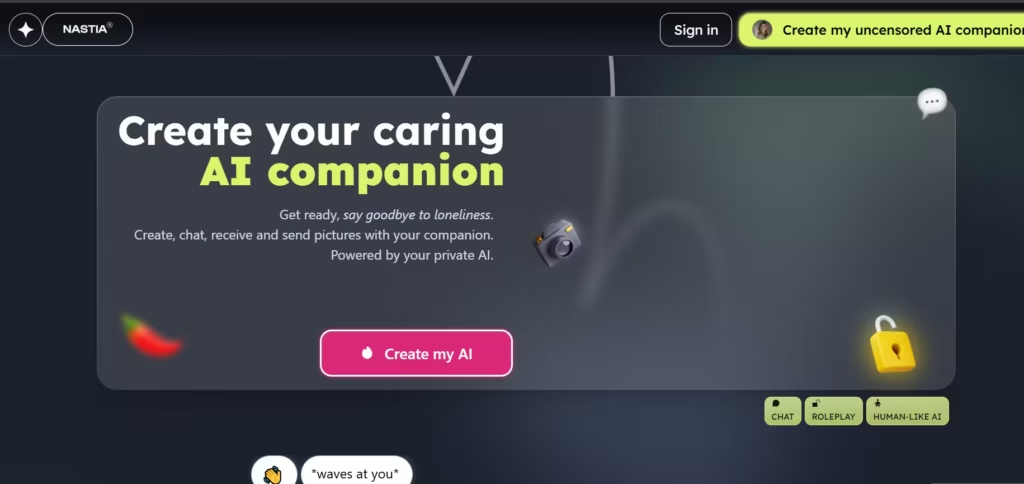
Nastia AI is a good environment for raw, unfiltered dialogue. It represents the emergence of platforms that emphasise sophisticated memory architecture and contextual understanding. Conversations are continuous; the AI remembers crucial personal details, relationship milestones, and conversational context in extended interaction.
Features
- It has an advanced long-term memory preserving personal details and context.
- Nastia AI provides contextual responses while referencing previous conversations.
- The tool allows unrestricted conversation parameters without content filtering.
- Based on interaction history, users can create persistent characters.
Pros
- Nastia AI solves the primary complaint about Candy AI’s memory limitations.
- The premium plan is affordable with robust free access.
- All conversation feels genuinely continuous across sessions.
Cons
- There are limited multimedia features compared to other platforms.
- It has a smaller user base and means fewer community resources.
- The memory complexity occasionally generates hallucinated details.
9. PepHop AI
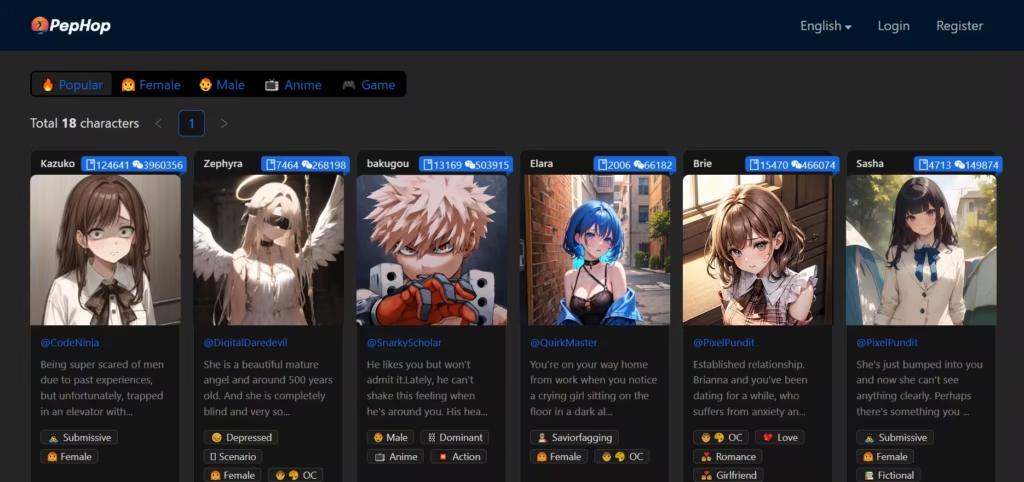
PepHop AI is characterised by lighthearted interaction. It is better suited for people who want brief, entertaining exchanges without a commitment to sustained character relationships. This is evidenced by its swipe-based interface, which accelerates conversation initiation. and appeals to those preferring quick engagement over roleplay.
Features
- It uses swipe-based character selection, enabling rapid interaction switching.
- PepHop AI’s lightweight conversation design is optimised for short exchanges.
- The tool’s basic voice capability supports voice acting in multiple languages.
- PepHop AI is affordable with a free ad-supported tier.
Pros
- It has an intuitive interface that requires a minimal learning curve.
- PepHop AI is perfect for casual users, avoiding emotional investment.
- The platform has affordable pricing that is ad-free.
Cons
- Its audio features lack sophistication compared to competitors.
- When conversation sessions are extended, responses become repetitive.
- The limited character customisation restrictions personal attachment.
10. Kuki AI

Formerly known as Mitsuku, this five-time Loebner Prize winner provides witty, factual chats. Kuki AI engages users through conversational entertainment, with an ample amount of personality and humour rather than romantic or explicit scenarios.
Features
- Kuki AI has a personality-driven conversational engine that emphasizes humor.
- It provides a real-time response to all conversations.
- The tool is strictly a text-based interaction without multimedia complexity.
- There is community integration via social sharing features.
Pros
- Its distinctive personality prevents robotic dialogue patterns.
- Kuki AI is accessible to users uninterested in romantic companion dynamics.
- It has an intuitive interface to create a reliable experience.
Cons
- The entertainment-first approach sacrifices emotional companionship.
- It has no memory features between separate conversations
- Image and voice generation features are absent.
Final Note
Candy AI’s multimedia prowess and audio/video features remain unmatched, yet the platform has its weaknesses. Each of these alternatives fills the areas that Candy AI might be lacking in. And although each tool seems promising in itself, there is no perfect tool. No single bot owns the market.
