


Google’s personal AI agent just learned to edit your photos, build albums, and schedule recurring library cleanups.
It’s useful. It’s also a perfect example of what’s wrong with how AI companies sell their products.
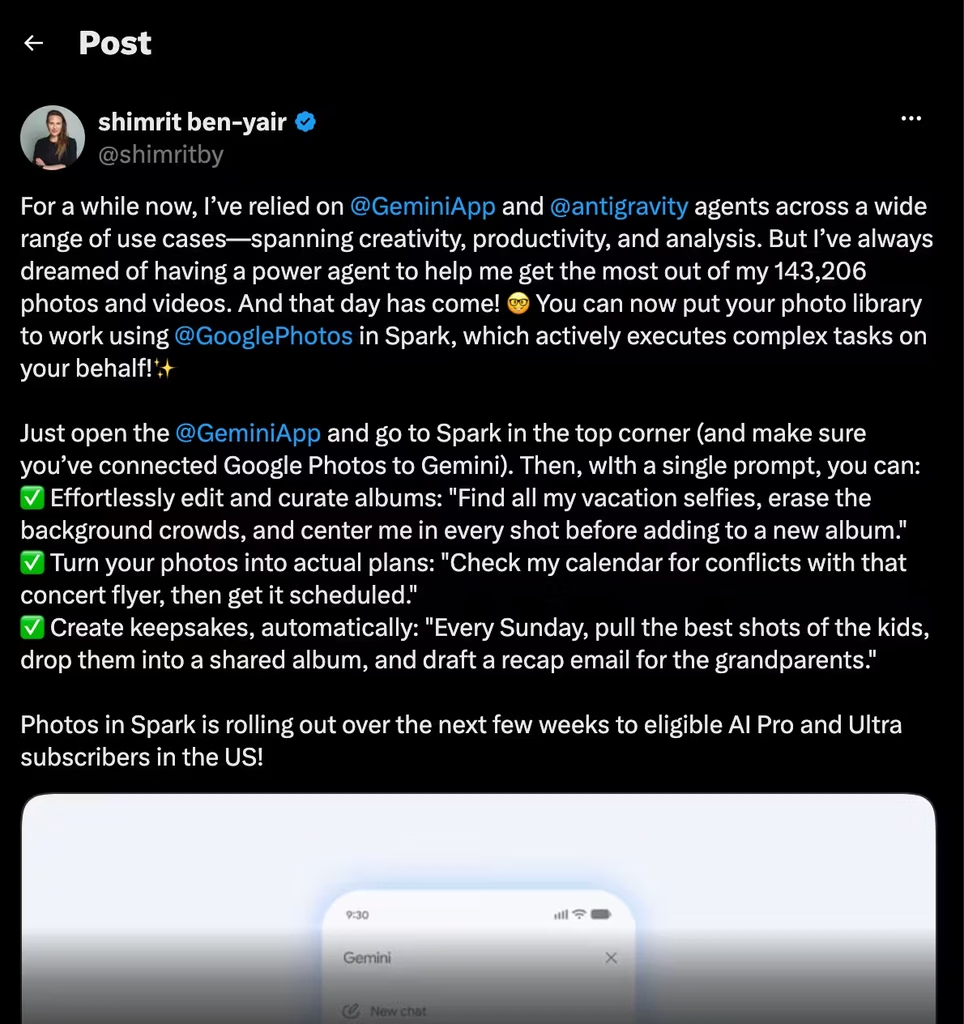
On Thursday evening, Google Photos lead Shimrit Ben-Yair shared on X that Gemini Spark can now connect to Google Photos and take action inside your library.
Not just search. Not just surface memories.
Actually do things: edit images, curate albums, create shared collections, turn concert flyer photos into calendar events, and run recurring background workflows that keep your library organized while you sleep.
“I’ve always dreamed of having a power agent to help me get the most out of my 143,206 photos and videos,” Ben-Yair wrote. “And that day has come.”
The feature is rolling out over the next few weeks to Gemini AI Pro and AI Ultra subscribers in the U.S. in English.
No word on international availability.
What Spark Can Actually Do With Your Photos
The capabilities list goes beyond what regular Gemini offers in Photos.
Standard Gemini can find photos based on people, places, and things. Spark can act on them. Here’s what it handles:
Search and curate. Find specific photos by subject, location, date, or event. Ask Spark for the best shots. Filter out duplicates.
Edit and create. Enhance quality, apply quick fixes, generate collages or stylized images. All edits create a new copy, so originals stay untouched.
Organize and share. Build new albums, add photos to existing ones, and send shared album links through Gmail, Docs, or Messages.
Schedule automations. Set up recurring tasks like automatically creating monthly highlight albums or sorting receipt photos into a folder every week.
The cross-app integration is where it gets genuinely clever.
You can tell Spark to check a photo of a local concert flyer and cross-reference it with your Google Calendar to see which nights you’re free.
Or have it build a weekly “What my camera ate this week” collage from your food photos and drop it into a shared album.
The “So What” Problem
Here’s where the article takes a turn.
These are nice features. Genuinely useful for people with massive, unmanaged photo libraries.
But on their own, they don’t feel revolutionary. Making a photo album isn’t hard. It’s just tedious. Automating tedium is valuable. It’s not the kind of thing that changes how people think about AI.
This week, OpenAI CEO Sam Altman told Bloomberg that the industry hasn’t done well communicating the benefits of AI to consumers, which has fed public backlash.
Announcements like Google Photos + Spark are part of the pattern he’s describing. Each individual feature is fine. But when every product update gets wrapped in “AI is transforming everything” language, consumers tune out.
The AI industry has a credibility problem with consumers.
Google’s Gemini has hit 1 billion users, but that number was achieved by embedding the technology into products people already use. Whether those users actually care about Gemini or even notice it is a different question.
Google’s Broader Spark Strategy
Google Photos is the latest in a growing list of first-party apps Spark can control.
It already connects to Gmail, Google Calendar, and other Workspace tools.
Google has been pushing Spark hard over the past couple of months, making it easier to access on mobile and steadily expanding what it can do.
Spark is only available on the Gemini mobile app and web right now. Desktop app integration is coming later.
To use it, connect Google Photos in Spark’s Connected Apps settings, toggle Spark on in the top corner of the Gemini app, and enter your prompt. You need a Gemini AI Pro or AI Ultra subscription.
For people who have 100,000+ photos sitting in Google’s cloud and no energy to organize them, this is genuinely helpful.
For the rest of the world, it’s another AI feature announcement in a long, long list of them.
Sometimes useful beats revolutionary.
This is one of those times.
