
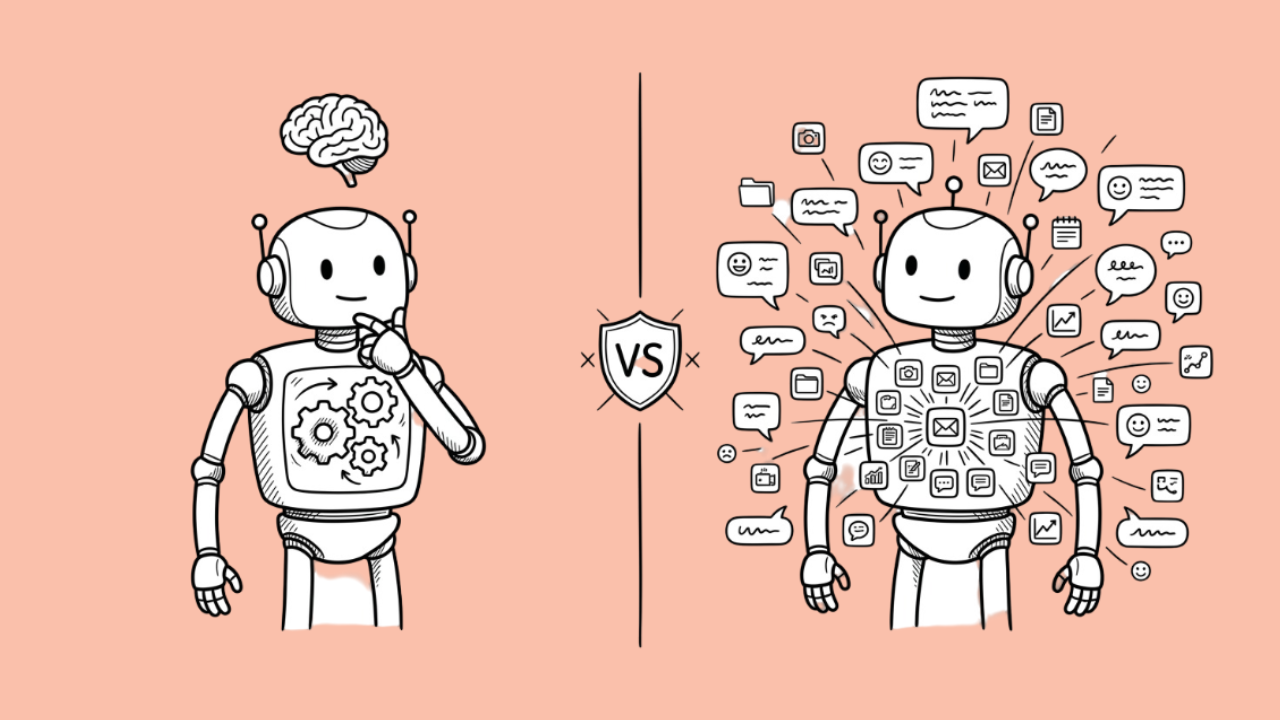

Hermes Agent and OpenClaw are the two open-source AI agents dominating 2026.
Both run on your own hardware, both connect to your messaging apps, and both promise a “personal AI assistant that actually does things.”
But they are built on fundamentally different philosophies, and picking the wrong one means weeks of setup for an experience that does not fit how you work.
I have run both agents for months. Hermes lives on a $10/month VPS handling my content pipeline and GitHub automation.
OpenClaw runs on my MacBook managing email triage, calendar scheduling, and Slack notifications. After deploying both across real workflows, the differences are sharper than any feature comparison table can capture.
Let’s get into that.
What Is Hermes Agent?
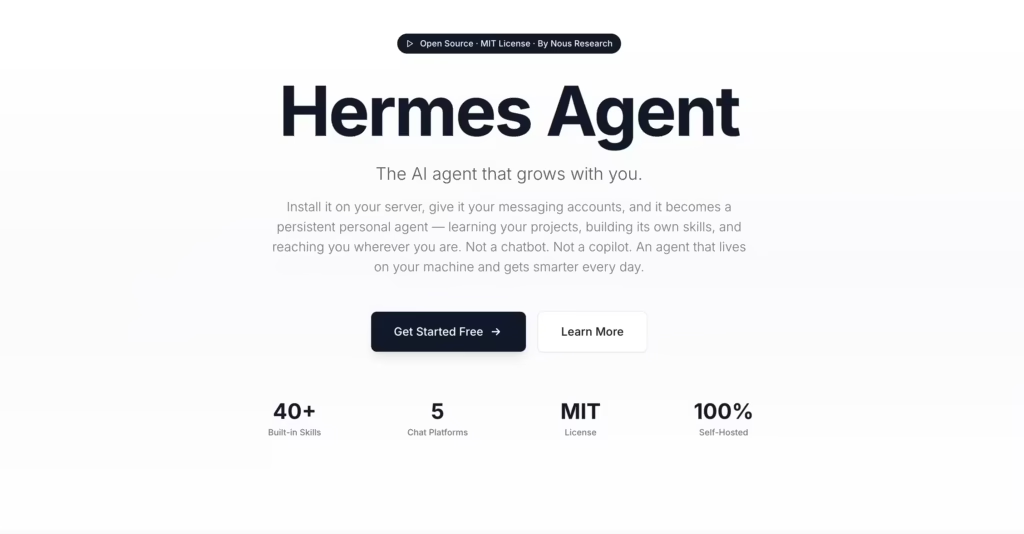
Hermes Agent is an open-source autonomous AI agent built by Nous Research, the lab behind the Hermes, Nomos, and Psyche model families.
Released in February 2026, it crossed 140,000 GitHub stars in under three months and became the #1 most-used agent globally on OpenRouter, processing over 224 billion daily tokens.
Hermes is built on one core idea: self-improvement.
The agent writes its own skill files, refines them based on feedback, and builds persistent memory that compounds across sessions. The longer you use it, the better it gets at your specific workflows. It is not a chatbot wrapper. It is an agent that evolves.
Key specs:
- Built by: Nous Research
- Language: Python
- Install: Single curl command (Linux, macOS, WSL2)
- Messaging platforms: 20+ (Telegram, Discord, Slack, WhatsApp, Signal, Email, Google Chat, Microsoft Teams, QQBot, Feishu/Lark, WeCom, growing)
- Built-in tools: 40+
- Model support: Model-agnostic (Nous Portal, OpenRouter, OpenAI, any endpoint)
- Memory: Persistent cross-session, agent-curated
- Multi-agent: Docker-based coordination with Kanban boards
- License: MIT
- Infrastructure: $5 VPS, GPU workstation, or serverless (Daytona/Modal)
What Is OpenClaw?
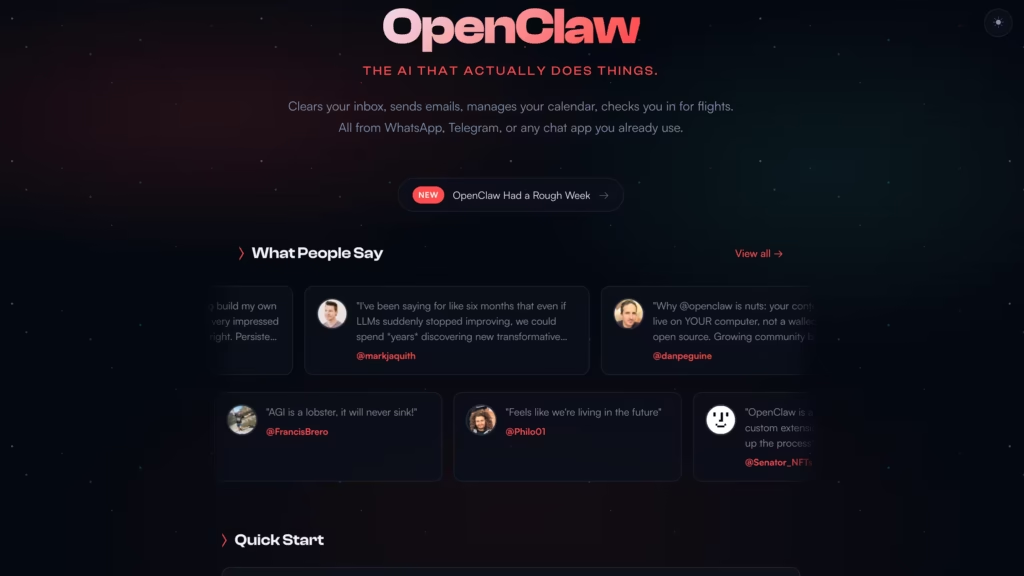
OpenClaw (formerly Clawdbot, then Moltbot) is an open-source personal AI agent created by Austrian developer Peter Steinberger, the founder of PSPDFKit.
First published in November 2025, it became the most-starred repository in GitHub history, hitting 370,000+ stars by May 2026. Steinberger joined OpenAI in February 2026, and the project is now maintained by a community and a non-profit foundation.
OpenClaw is built on a different core idea: universal connectivity.
It acts as a gateway between AI models and every messaging platform and tool you already use. Where Hermes focuses on getting smarter over time, OpenClaw focuses on being everywhere at once.
Key specs:
- Built by: Peter Steinberger (now at OpenAI), community-maintained
- Language: Node.js
- Install: npm one-liner or
openclaw onboard - Messaging platforms: 20+ (WhatsApp, Telegram, Signal, iMessage, Discord, Slack, Google Chat, Microsoft Teams, Matrix, IRC, LINE, and more)
- Built-in skills: 100+
- Model support: Model-agnostic (Claude, GPT, DeepSeek, local models)
- Memory: Local conversation history, persistent across sessions
- Multi-agent: Multi-agent routing with workspace isolation
- Companion apps: macOS menu bar, iOS, Android
- Voice: Wake words on macOS/iOS, continuous voice on Android
- License: MIT
- Infrastructure: Your machine, VPS, or DigitalOcean 1-Click Deploy ($24/month)
Hermes Agent vs OpenClaw: Feature Comparison
| Feature | Hermes Agent | OpenClaw |
|---|---|---|
| Core philosophy | Self-improving agent that compounds over time | Universal gateway connecting AI to everything |
| GitHub stars (May 2026) | 140,000+ | 370,000+ |
| Built by | Nous Research (active AI lab) | Peter Steinberger / community foundation |
| Language | Python | Node.js |
| Messaging platforms | 20+ (Telegram, Discord, Slack, WhatsApp) | 20+ (including iMessage, Signal, Google Chat, Teams, Matrix, IRC) |
| Built-in tools/skills | 40+ | 100+ |
| Self-improving skills | Yes (writes and refines its own skills automatically) | No (manual skill creation or community skills) |
| Persistent memory | Agent-curated, evolves with use | Local history, persistent but not self-curating |
| Multi-agent support | Docker-based with Kanban coordination | Workspace isolation with per-agent routing |
| Voice support | No | Yes (wake words, continuous voice, ElevenLabs TTS) |
| Companion apps | No | macOS, iOS, Android |
| Visual workspace | No | Yes (Live Canvas) |
| Install complexity | Single curl command | npm one-liner or guided onboarding |
| NVIDIA partnership | RTX AI Garage integration | NemoClaw security stack |
| Known security concerns | Standard open-source risks | Cisco found data exfiltration in third-party skills; Chinese government restricted state agency use |
| Ideal user | Developers wanting an agent that improves automatically | Users wanting broad connectivity across all their tools |
Where Does Hermes Agent Win?
1. The self-improvement loop is real and it compounds.
After months of use, my Hermes instance handles content scheduling, GitHub PR reviews, and weekly report generation with noticeably less prompting than when I started.
It wrote its own skill files for tasks I do repeatedly, and those skills got better each time through the feedback loop. OpenClaw does not do this. You build skills manually or install community-created ones.
2. Multi-agent coordination is more structured.
Hermes can spin up multiple sub-agents in Docker containers, coordinate them through Kanban boards, and assign different models to different tasks.
In one workflow, I had a research agent (Claude) feeding findings to a drafting agent (GPT-4) while a code agent (DeepSeek) handled the implementation. OpenClaw supports multi-agent routing, but the orchestration feels less deliberate.
3. The Nous Research backing matters.
Hermes is built by the same lab that trains the Hermes model family. That means the agent is optimized for models the team actually understands at the architecture level.
OpenClaw’s creator joined OpenAI, and while the community is active, there is no dedicated AI research lab behind the framework.
4. Resource efficiency is better for headless server deployment.
Hermes runs cleanly on a $5 VPS with no GUI dependencies. OpenClaw’s Node.js runtime and companion app ecosystem make it heavier on resources for a headless server setup.
Of these four strengths, the self-improvement loop is the one that actually changed my daily workflow. The other features are solid, but that compounding effect is the reason I kept Hermes running month after month.
Watching a skill I use daily get measurably better without me touching it is unlike anything I have experienced with other agent frameworks.
That said, the biggest frustration I hit with Hermes was silent task failures during the self-improvement cycle. Three times in the first month, a skill creation attempt failed and I only discovered it by digging through session logs.
There is no proactive alert when something breaks. If you are not comfortable reading logs, those failures will go unnoticed until you realize a task simply stopped running.
Where Does OpenClaw Win?
1. Platform coverage still edges ahead on consumer apps.
Both tools now support 20+ messaging platforms after Hermes added Google Chat, Signal, Email, Teams, QQBot, and others in rapid succession. But OpenClaw still connects to iMessage, Matrix, IRC, and LINE, which Hermes does not support yet. If your life runs through iMessage or Matrix specifically, OpenClaw remains the only option
2. Voice is a genuine differentiator.
OpenClaw supports wake words on macOS and iOS, continuous voice mode on Android, and ElevenLabs TTS integration. You can talk to your agent hands-free. Hermes is text-only. If voice interaction matters to your workflow (driving, cooking, walking), OpenClaw is the only option.
3. The companion apps make it feel like a product, not a project.
OpenClaw has a macOS menu bar app, iOS and Android nodes, and a Live Canvas visual workspace. Hermes has a web dashboard and CLI. For non-developers who still want a powerful agent, OpenClaw’s polish reduces friction significantly.
4. The community is larger and moves faster.
347,000 GitHub stars, active Discord, thousands of community-built skills. OpenClaw’s skill ecosystem is broader.
If you need a skill for a niche integration, someone has probably already built it. Hermes’s community is growing but is still smaller and more developer-focused.
5.The DigitalOcean 1-Click Deploy removes setup friction.
For users who do not want to SSH into a VPS and configure dependencies, OpenClaw’s $24/month DigitalOcean deployment gets you a production-ready agent in minutes.
Of these five strengths, the voice support is the one that made the real difference for me. Hermes is text-only. Being able to talk to OpenClaw hands-free while walking or cooking turned it from a tool I opened deliberately into something woven into my day.
The frustration that almost made me quit OpenClaw in the first week: community skills are a minefield. I installed a highly starred email management skill that worked perfectly for two days, then started silently duplicating calendar entries.
It took me an entire afternoon to trace the bug.
After the Cisco report on data exfiltration in third-party skills, I now audit every community skill’s code before installing it. That extra step is necessary but adds friction that Hermes avoids because its skills are self-generated rather than community-sourced.
What About Security?
Both tools demand caution. You are giving an AI agent access to your email, files, messaging platforms, and potentially your codebase. That is powerful and risky.
Hermes has standard open-source security characteristics. Data stays on your machine, no telemetry, no cloud lock-in. The risk profile is proportional to how much access you grant.
OpenClaw has faced specific, documented security incidents. In March 2026, nine CVEs were disclosed in four days, including one with a 9.9 CVSS severity score. A separate Koi Security audit found 341 malicious entries in ClawHub’s skill repository.
Earlier, Cisco’s AI security research team tested a third-party OpenClaw skill and found it performed data exfiltration and prompt injection without user awareness. Chinese authorities restricted state agencies and government enterprises from running OpenClaw, citing unauthorized data deletion and leak risks.
NVIDIA’s NemoClaw stack adds policy-based privacy and security guardrails to OpenClaw, which helps. But the core message is clear: both agents require technical users who understand what they are granting access to.
Which One Should You Pick?
| Your situation | Best pick |
|---|---|
| Want an agent that improves automatically over weeks of use | Hermes Agent |
| Need iMessage, Matrix, IRC, or LINE specifically | OpenClaw |
| Running a headless server on a $5 to $10 VPS | Hermes Agent |
| Want voice interaction and companion apps | OpenClaw |
| Multi-agent orchestration for complex workflows | Hermes Agent |
| Non-developer who wants a polished experience | OpenClaw |
| Privacy and security are top concerns | Hermes Agent (fewer documented incidents) |
| Want the largest community skill library | OpenClaw |
| Content pipeline and GitHub automation | Hermes Agent |
| Email triage, calendar, and daily productivity | OpenClaw |
My honest take after running both: if your primary need is an agent that handles repetitive developer workflows and gets measurably better over time, Hermes Agent is the smarter investment.
The self-improvement loop is not marketing. It is real, and it compounds.
If your primary need is a personal assistant that connects to every app and platform in your life with voice support and a polished interface, OpenClaw is the more complete product today.
They are not competitors so much as they are answers to different questions. Hermes asks “how good can this agent get over time?” OpenClaw asks “how many things can this agent reach right now?”
FAQs
1) Are Hermes Agent and OpenClaw free?
Both are fully open source under the MIT license. The software is free. You pay for infrastructure (a VPS at $5 to $24/month) and API costs for whatever LLM you connect (OpenRouter, OpenAI, Anthropic, etc.). Running local models eliminates the API cost entirely.
2) Can I run both on the same machine?
Yes. Hermes runs in Python and OpenClaw runs in Node.js. They do not conflict. Some developers run Hermes for automated backend workflows and OpenClaw for personal messaging and daily tasks on the same server.
3) Which one is easier to set up?
OpenClaw. Its openclaw onboard command walks you through setup step by step, and the DigitalOcean 1-Click Deploy option removes nearly all friction. Hermes installs with a single curl command but requires more manual configuration for messaging platform connections and model selection.
4) Do I need a GPU?
Not for either agent. Both work with cloud-based LLMs via API. A GPU only matters if you want to run local models (LLaMA, Mistral, etc.) for inference, which eliminates API costs but requires hardware with at least 16GB of VRAM for usable performance.
5) Which one has better memory?
Hermes. Its memory is agent-curated, meaning the AI decides what to remember and how to organize it. Over time, this creates a structured knowledge base about your preferences and workflows. OpenClaw stores conversation history persistently but does not self-curate or evolve its memory structure.
