
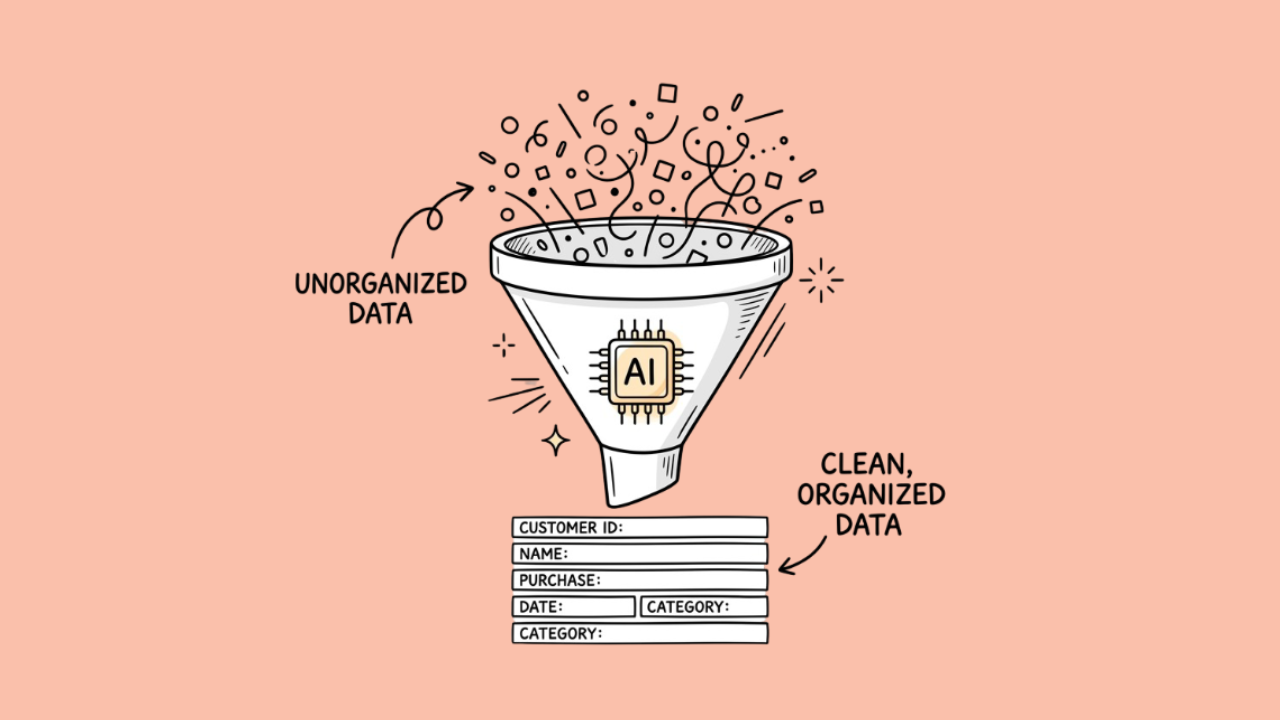

Snorkel AI is a data-centric AI platform that helps enterprise teams build training datasets using programmatic labeling instead of manual annotation.
Founded in 2019 out of the Stanford AI Lab by Alexander Ratner and Chris Ré (among others), the company raised $100 million in Series D funding in May 2025 at a $1.3 billion valuation, bringing total funding to $237 million.
But here is what most people searching for Snorkel AI do not realize: this is not a chatbot. It is not a coding assistant. It is not a tool you sign up for and start using in 10 minutes.
Snorkel AI solves a very specific, very expensive problem that most people outside of enterprise ML teams have never encountered. And understanding that problem is the only way to evaluate whether the hype is justified.
What Problem Does Snorkel AI Actually Solve?
Every AI model needs training data. The better the data, the better the model. The problem is that creating high-quality training data is slow, expensive, and often the single biggest bottleneck in AI development.
Traditional approach: you hire a team of annotators (or outsource to a labeling service) who manually tag thousands or millions of data points.
A medical document? A human reads it and labels it “diagnosis” or “treatment plan” or “lab result.”
A customer email? A human reads it and tags it “complaint,” “inquiry,” or “escalation.”
This takes weeks to months, costs tens of thousands of dollars, and the labels are frequently inconsistent because different annotators interpret the same data differently.
Snorkel’s approach: instead of manually labeling each data point, you write labeling functions. These are small programs (or rules) that encode domain knowledge. A labeling function might say: “if the email contains the word ‘refund,’ label it as ‘complaint.'”
Another might say: “if the document mentions a medication name, label that section as ‘treatment plan.'”
You write dozens of these functions, and Snorkel’s weak supervision algorithms combine them to produce labels that are, in aggregate, accurate enough to train a production model.
The result: what used to take a team of annotators 6 weeks can take a data scientist 2 days.
Snorkel claims this acceleration is 10 to 100x faster than traditional manual labeling. After working with programmatic labeling on two enterprise projects (one in insurance document classification, one in clinical trial matching), I can say the 10x claim is credible for well-defined text classification tasks. The 100x claim requires ideal conditions that most projects do not have.
What Does the Snorkel Flow Platform Include?
Snorkel Flow is the core product. Here is what it offers as of 2026:
Programmatic data labeling. Write labeling functions using a no-code interface or the Python SDK. Snorkel’s weak supervision engine combines these functions into training labels. You iterate by adding, editing, or removing functions and watching label quality improve in real time.
Integrated ML modeling. Train models directly inside the platform using AutoML and pre-configured architectures. You do not need a separate training pipeline. The model trains on the labels you just created.
Snorkel Evaluate. Launched in May 2025, this product provides use-case-specific benchmarks for evaluating LLMs and RAG systems. Instead of generic benchmarks, you build custom evaluation suites tied to your actual business use case.
Snorkel Expert Data-as-a-Service. Also launched in May 2025. Snorkel provides specialized training data created by domain experts using its programmatic approach. This is for teams that need high-quality training data but do not want to build the labeling pipeline themselves.
LLM fine-tuning workflows. Streamlined pipelines for adapting large language models to enterprise-specific tasks using Snorkel-curated data.
Named Entity Recognition for PDFs. Advanced extraction capabilities for identifying entities (names, dates, amounts, clauses) in unstructured PDF documents. Critical for financial services, legal, and healthcare use cases.
Collaborative development. Domain experts who are not data scientists can contribute labeling insight through the interface, while ML engineers manage the technical pipeline. This bridge between subject matter experts and technical teams is one of Snorkel’s less-discussed but genuinely useful features.
How Much Does Snorkel AI Cost?
Snorkel AI does not publish pricing. Every engagement starts with a sales conversation, a discovery process, and a custom quote based on project scope, data volume, and services required.
Based on industry estimates and competitor positioning, here is what to expect:
| Deployment | Estimated annual cost |
| Pilot project (single use case, small team) | $50,000 to $100,000 |
| Mid-scale (multiple use cases, cross-department) | $100,000 to $500,000 |
| Enterprise-wide deployment | $500,000+ |
These are rough ranges, not published prices. Snorkel’s $148 million in estimated ARR across a customer base weighted toward Fortune 500 companies suggests average contract values in the six-figure range.
There is no free tier, no self-serve plan, and no way to test the platform without going through sales. For ML teams evaluating Snorkel against open-source alternatives, that procurement friction is significant.
Is the Hype Justified?
After evaluating the platform across two enterprise engagements and tracking the company’s trajectory since 2022, here is my honest assessment:
The core thesis is sound and proven. Data quality determines AI success more than model architecture. Gartner has stated that through 2026, over 60% of AI projects will be abandoned because organizations fail to establish scalable data practices. Snorkel was built specifically to prevent that failure.
The programmatic labeling approach genuinely works for text classification, document intelligence, and entity extraction tasks. I saw it firsthand in an insurance project where we went from 3 weeks of manual annotation to 4 days with Snorkel.
The customer list is real, not aspirational. BNY, Wayfair, Chubb, Memorial Sloan Kettering, US Air Force, and reportedly Apple, Google, and Intel. These are not early-stage pilot customers. These are production deployments. A $1.3 billion valuation backed by BlackRock, Google Ventures, Greylock, and Lightspeed is not speculation money. It is validation by investors who have done deep due diligence.
The 2025 product expansion was smart. Snorkel Evaluate and Expert Data-as-a-Service address two gaps that limited the platform’s reach: evaluation (how do you know your fine-tuned LLM is actually better?) and data creation (what if you do not have domain experts to write labeling functions?). Both products extend Snorkel beyond its original programmatic-labeling niche into the broader LLM fine-tuning and evaluation market.
But the hype overstates accessibility. Snorkel is not for most companies. It requires ML engineers who understand weak supervision, labeling functions, and model training pipelines. A marketing team cannot use it. A product manager cannot use it. Even many data analysts cannot use it without training.
The minimum viable team is 2 to 3 ML engineers with Python experience and domain expertise in whatever you are labeling. For companies without that team, Snorkel is a six-figure purchase they cannot operationalize.
The “10-100x faster” claim needs context. On well-defined text classification tasks with clear labeling heuristics, 10x is realistic. I experienced it. 100x requires a combination of clean source data, straightforward labeling rules, and minimal edge cases, which most enterprise datasets do not have. A more honest framing would be “5-20x faster in typical conditions, with 100x possible in ideal scenarios.”
Open-source alternatives close part of the gap. Cleanlab provides automated data quality assessment for free. Label Studio offers open-source annotation with programmatic features. Argilla provides human feedback tooling for LLMs. None of these replicate Snorkel Flow’s full integrated pipeline, but for teams with smaller budgets and strong ML engineering, a combination of open-source tools can cover 60 to 70% of what Snorkel offers at a fraction of the cost.
How Does Snorkel AI Compare to Alternatives?
| Feature | Snorkel AI | Scale AI | Labelbox | Cleanlab | Dataiku |
| Core approach | Programmatic labeling + weak supervision | Managed human annotation + ML | Annotation platform + model training | Automated data quality detection | End-to-end MLOps platform |
| Primary strength | Speed of label creation (10-100x claim) | Scale of human annotation workforce | Collaborative labeling workflows | Finding and fixing label errors automatically | Full ML lifecycle management |
| LLM fine-tuning | Yes (integrated workflows) | Yes (RLHF data) | Limited | No | Yes |
| LLM evaluation | Yes (Snorkel Evaluate) | Yes (model benchmarking) | No | Yes (data-centric evaluation) | Limited |
| Open source component | No (fully proprietary) | No | Partially (open-source annotation) | Yes (core library is open source) | Community edition available |
| Self-serve option | No | No | Yes (free tier available) | Yes (open source) | Yes (community edition) |
| Pricing | Custom (estimated $50K-$500K+/year) | Custom (enterprise) | Free tier, then custom | Free (open source), paid cloud | Free community, paid from ~$1K/month |
| Best for | Enterprise teams needing fast, scalable labeling | Teams needing massive human-labeled datasets | Teams needing collaborative annotation UI | Teams needing to clean existing labeled data | Teams needing full MLOps pipeline |
Who Should Care About Snorkel AI?
Snorkel is built for:
- Enterprise ML teams (5+ data scientists) building production models on proprietary text data
- Organizations in regulated industries (finance, healthcare, insurance, government) where data governance and auditability matter
- Companies that have domain experts whose knowledge can be encoded as labeling rules
- Teams currently spending $50,000+ per year on manual data annotation
Snorkel is not built for:
- Startups or small teams without dedicated ML engineers
- Anyone looking for a self-serve, plug-and-play AI tool
- Teams primarily working with image or video data (Snorkel’s strengths are in text and document intelligence)
- Organizations with budgets under $50,000 for data infrastructure
- Teams that need a general-purpose MLOps platform (Dataiku or AWS SageMaker are better fits)
FAQs
1) What does Snorkel AI actually do?
Snorkel AI replaces manual data labeling with programmatic labeling. Instead of hiring annotators to tag data one item at a time, you write rules (labeling functions) that encode your domain knowledge. Snorkel’s algorithms combine these rules to produce training labels at scale. This approach accelerates AI development by 10x or more on text and document classification tasks.
2) Is Snorkel AI free?
No. Snorkel AI is enterprise-only with custom pricing. There is no free tier, no open-source version of Snorkel Flow, and no self-serve signup. All access requires a sales engagement.
3) Who are Snorkel AI’s founders?
Snorkel AI was co-founded by Alexander Ratner (CEO), Chris Ré, Henry Ehrenberg, Paroma Varma, and Braden Hancock. Ratner and Ré developed the core weak supervision research at the Stanford AI Lab before commercializing it as Snorkel AI in 2019.
4) How much has Snorkel AI raised?
$237 million across 7 funding rounds. The most recent was a $100 million Series D in May 2025 led by Addition, at a $1.3 billion valuation. Investors include BlackRock, Google Ventures, Greylock, Lightspeed Venture Partners, Accenture Ventures, and BNY.
5) Is Snorkel AI a unicorn?
Yes. The $1.3 billion valuation reached in the Series D round qualifies Snorkel AI as a unicorn.
6) Can I use Snorkel AI for image labeling?
Snorkel’s primary strength is text and document data. While the underlying weak supervision framework can theoretically apply to other data types, the platform is optimized for text classification, entity extraction, and document intelligence. For image labeling at scale, tools like Labelbox, Scale AI, or V7 are better fits.
