
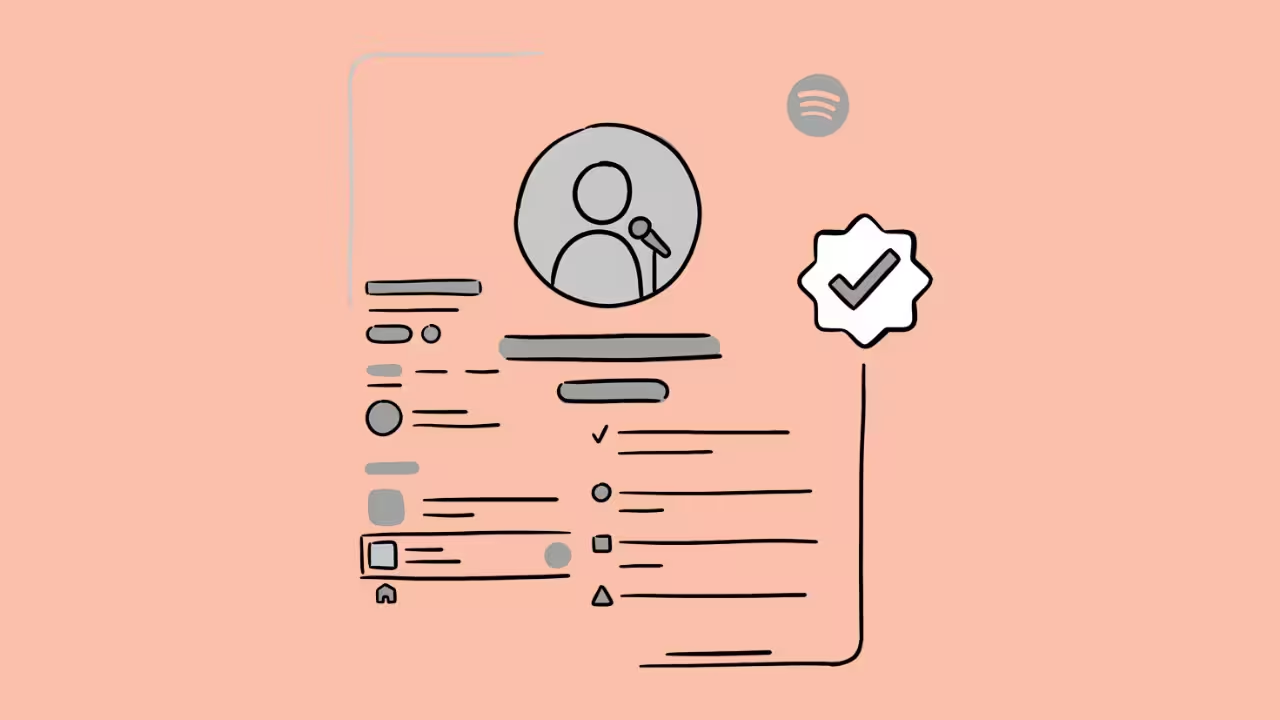

The world’s most popular music streaming platform is rolling out a verification badge to prove an artist is real.
Spotify is adding a “Verified by Spotify” badge to artist profiles. It shows up as a green checkmark and text beside an artist’s name.
This is to help listeners know whether they’re listening to a real human or an AI-generated persona.
The badge rollout is happening over the coming weeks. Spotify says it will cover “hundreds of thousands of artists” and that more than 99% of the artists listeners actively search for will carry the badge.
Verification Process
Spotify hasn’t laid out a simple checklist. Instead, it looks at a mix of signals. Linked social accounts, steady listener activity, merchandise, and concert dates all count.
Basically, anything that shows there’s a real person behind the profile. The company says it will prioritize artists with meaningful contributions to music culture and history.
It specifically called out “content farms” as what it’s trying to weed out. Those are accounts that flood the platform with mass-produced, often AI-generated tracks.
A Gap
The announcement has sparked real debate. Some critics point out an obvious gap: the badge proves the artist is human, but it says nothing about whether the music itself used AI tools.
Ed Newton-Rex, a vocal advocate for creators’ rights and former AI executive, warned the system could “punish real human artists who don’t have some of the markers the verification is based on,” like touring or selling merchandise.
His suggestion is to automatically label AI-generated music instead.
Nick Collins, a music professor at the University of Durham, called the move “unsurprising” given the heated debate around generative AI. But he also flagged a trickier challenge.
Professor Collins noted that AI use isn’t simply on or off. Music can land anywhere between fully handmade and fully AI-generated, with countless in-between cases.
A labeling system, he said, may end up favoring established commercial artists over new independent voices.
AI Music
Spotify has faced mounting pressure over AI content for years. Back in 2023, then-CEO Daniel Ek told the BBC he had no plans to fully ban AI-generated content from the platform.
That answer didn’t satisfy many users. Community forums have been flooded with requests, listeners asking for clear labels on AI songs.
Some even question why they should pay full price while the platform fills with machine-made music.
One developer in Leipzig even built his own tool to detect and block AI music on Spotify, filling a gap the company left open.
Velvet Sundown
In 2025, a band called The Velvet Sundown came under fire. They had 850,000 monthly listeners and a verified Spotify page.
Yet no one could find evidence that they had ever given an interview or performed live. Accusations spread fast.
People suspected the band and the music were entirely AI-generated. Their profile now openly describes them as a “synthetic music project… with the support of artificial intelligence.”
Their listener count has since gone down to 126,000. This shows just how easily fake artist personas could build a real following on the platform.
Problem Solved?
Not entirely, but it’s a start. The badge system gives listeners a clearer picture of who they’re supporting.
That matters, especially as AI tools get better and the line between human and machine creativity gets blurrier.
The bigger challenge is labeling the music itself. Spotify hasn’t gone there yet, and experts say that road is far more complicated.
