


Oboard OKR Software now connects its strategy execution workspace with AI assistants such as Claude, Gemini, and ChatGPT via the MCP server. It gives organizations an opportunity to analyze their performance, check alignment across all goals and teams, and make more informed decisions..
The update marks a practical step in Oboard’s evolution from an OKR tracking platform into an AI-enabled strategy execution platform. You no longer have to copy-paste goal updates into an AI chat, rewrite context from scratch, or ask teams to manually explain what is happening across the business, users can now connect their AI assistant to Oboard through the Model Context Protocol (MCP). That connection allows AI tools to work with real organizational data directly from Oboard, helping teams analyze execution progress, identify risks, summarize updates, and spot alignment gaps with less manual effort.
The AI Layer in Business Strategy Execution
AI is already part of how many teams write, research, report, and plan. But when it comes to strategy execution, most AI tools still face the same basic problem: they do not know what the company is trying to achieve unless someone tells them. That means users often have to paste OKRs, explain team structure, add recent updates, describe current blockers, and rebuild the same context every time they need useful output.
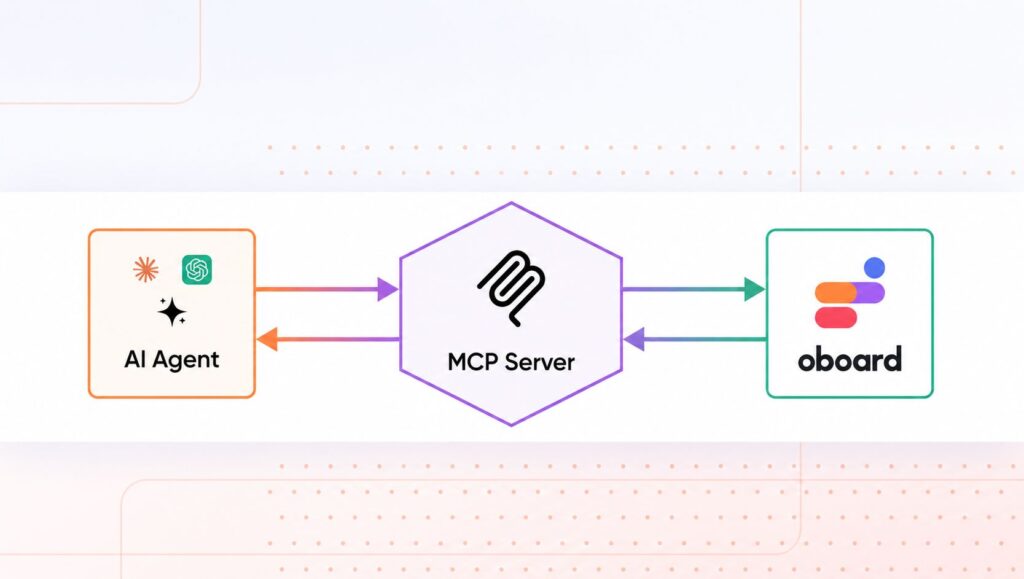
Oboard’s MCP integration is designed to remove that friction. With the new connection, an AI assistant can securely access live strategy data from Oboard and respond based on actual OKRs, KPIs, check-ins, progress updates, and ownership details. For teams using Oboard as their central OKR Software, this makes AI support more relevant to the way work is already being planned and tracked. The timing also fits a wider shift in the AI market. Anthropic introduced MCP as an open standard for connecting AI assistants to the systems where data lives, including business tools and other development environments.
What Teams Can Do With Oboard’s MCP Integration
Once connected, users can ask their AI assistant to analyze strategy and see how it connects to execution directly from their Oboard workspace.
For example, before a weekly review, a manager could ask the AI assistant to review current OKRs, check recent updates, identify goals that may be at risk, and explain why progress has slowed. Instead of starting from a blank prompt, the AI can pull from the actual execution data already stored in Oboard.
- Teams can also use the integration to:
- summarize recent OKR check-ins,
- find objectives or key results that are off track,
- review alignment across departments,
- compare progress against current KPIs,
- highlight teams with low update activity,
- and prepare faster leadership or business review summaries.
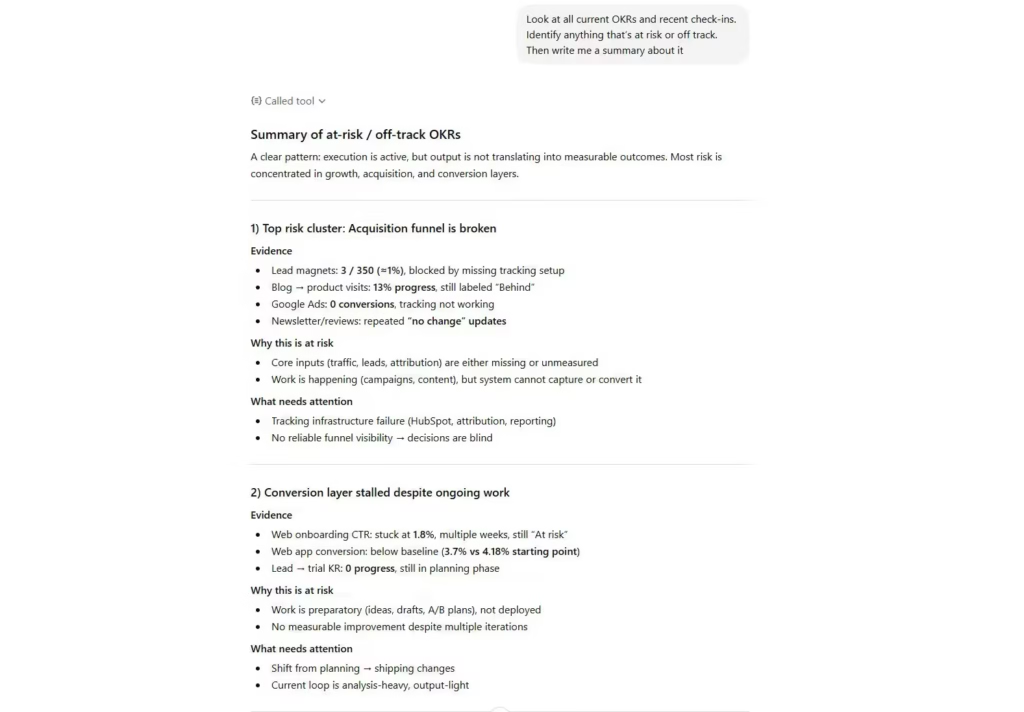
Example use case in ChatGPT
This is especially useful for organizations where strategy execution is spread across many teams, tools, and reporting habits. Even when the strategy is clear, leaders often spend too much time collecting updates before they can understand what needs attention. Oboard’s MCP integration makes that work easier by giving AI access to the execution layer itself.
Claude Skills for Faster AI Workflows
Alongside the MCP integration, Oboard has also introduced Claude Skills for common OKR workflows. These pre-built workflows help teams get started faster instead of creating every prompt manually. Users can run structured AI workflows for weekly OKR summaries, alignment analysis, check-in reports, and similar strategy execution tasks.
That makes the update more practical for teams that want the benefits of AI but do not want to spend time designing complex prompt systems from scratch. The goal is not to replace strategic judgment. It is to reduce the manual work that sits around strategy execution: gathering updates, formatting reports, checking alignment, and trying to understand where attention is needed.
You can visit Oboard’s blog to learn more about Claude Skills and how to download them.
Goal Tracking to AI Strategy Execution
The bigger story is that AI is starting to move closer to the systems where business decisions are made. For years, goal tracking software has helped companies align, and track goals. Now, with MCP-connected AI, those same systems can become more interactive. Teams can ask better questions about execution and receive answers grounded in live goal data rather than static documents.
As more companies experiment with AI agents and workflow automation, the most valuable tools will not simply generate more content. They will understand the business context behind the work. With its new MCP integration, Oboard is positioning itself in that next phase: helping teams connect strategy, execution, and AI in one system.
