
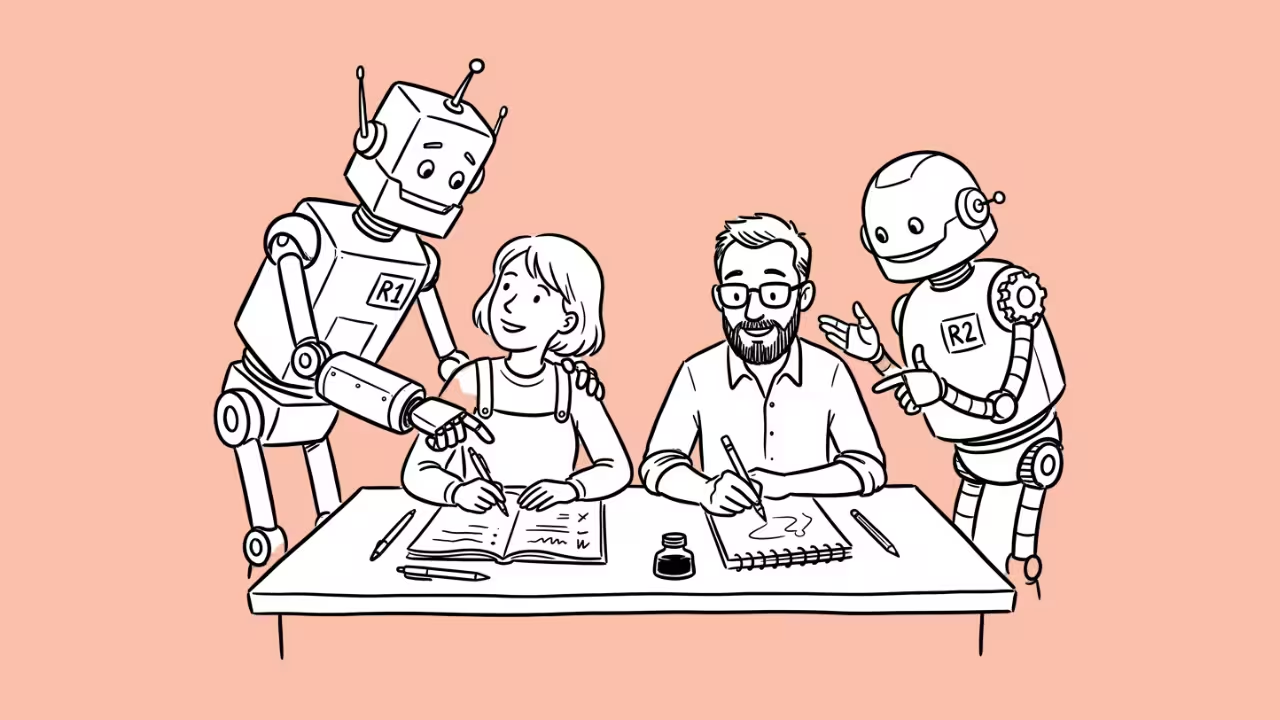

The first wave of AI assistants trained people to ask questions. Write this. Explain that. Summarise this page. Give me five ideas. For a while, that was enough to feel new. A chatbot that could answer quickly already looked like a major shift from search, forums, templates, and old productivity tools.
That phase is not over, but it is no longer the whole story. People are starting to expect more. They do not only want an answer in a chat box. They want help moving through the work itself.
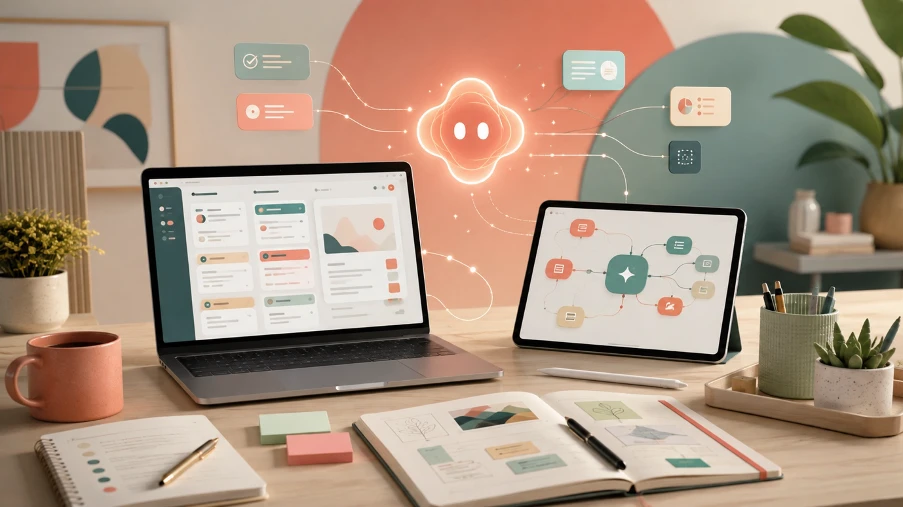
The assistant is becoming part of the workflow
A student may use AI to sort research notes before writing. A freelancer may use it to plan a client brief.
A founder may ask it to compare meeting notes, turn rough thoughts into a checklist, or clean up a messy email before sending. In that kind of daily use, an AI assistant becomes less like a novelty and more like a quiet work companion.
The change is subtle. People still type prompts. They still review the output. But the relationship with the tool feels different when it sits beside real tasks instead of only answering isolated questions.
That is where the market is moving.
Chatbots answer, companions help carry the task
AutoGPT has written about how AI agents are changing the expectation around software, moving from tools that simply respond to systems that can plan, use context, and help move a task forward. That idea explains why everyday assistants are changing too.
Most people may not need a fully autonomous agent running through their workday. In fact, many would not trust one yet. What they do want is something more useful than a blank chat window. They want help remembering context, shaping next steps, reducing small decisions, and keeping the work from feeling so scattered.
A chatbot can give a good answer. A practical companion helps the user get back to the job.
People are also forming habits around these tools
There is another side to this shift. As AI assistants become more present in daily life, people begin to treat them less like software and more like a familiar part of their routine. They ask for advice, rehearse conversations, test ideas, and sometimes return to the same tool because it feels easier than starting from scratch somewhere else.
An APA article on AI connection looks at the growing emotional and relational side of AI use. That matters even in a productivity conversation, because the most useful assistants are not only efficient. They are easy to return to.
This does not mean people should treat AI as a replacement for human judgment or real relationships. It does mean product designers, users, and businesses should be honest about how quickly these tools can become part of a person’s day.
The shift is happening in ordinary work, not only big projects
What makes this change interesting is how normal it has become. People are not always using AI for dramatic tasks. They are using it for the small parts of work that usually slow the day down. A messy note becomes a clearer plan. A rough idea becomes a first draft.
A long document becomes something easier to scan before a meeting. A user who once opened an assistant only when stuck may now keep it nearby for the simple reason that it reduces friction. That is a different kind of value. It is not about replacing expertise or making every task automatic. It is about helping people get through the dull middle of work, where most time is lost.
The assistant becomes useful because it sits close to the task, not because it tries to take over the whole job.
The best assistants still need boundaries
A work companion should make life easier without taking over the work. That balance is important. AI can help draft, organise, explain, compare, and simplify. It can also be confidently wrong, too eager to please, or too smooth in places where accuracy matters more than polish.
That is why everyday users are learning to keep a human hand on the wheel. Check the facts. Rewrite the important parts. Do not paste sensitive information carelessly. Use AI for momentum, not blind trust.
The strongest assistants will be the ones that respect that boundary. They will help without pretending to be the final authority.
Practical value will decide what lasts
The novelty around AI will fade. It already has in some places. What remains will be the tools that fit naturally into work people already do.
If an assistant helps someone finish a report faster, understand a dense document, organise a project, or think through a decision more clearly, it will stay. If it only produces more text to manage, people will move on.
That is the real movement from chatbot to companion. Not personality for its own sake. Not automation for every task. Just useful help, close enough to the work that people feel the difference.
