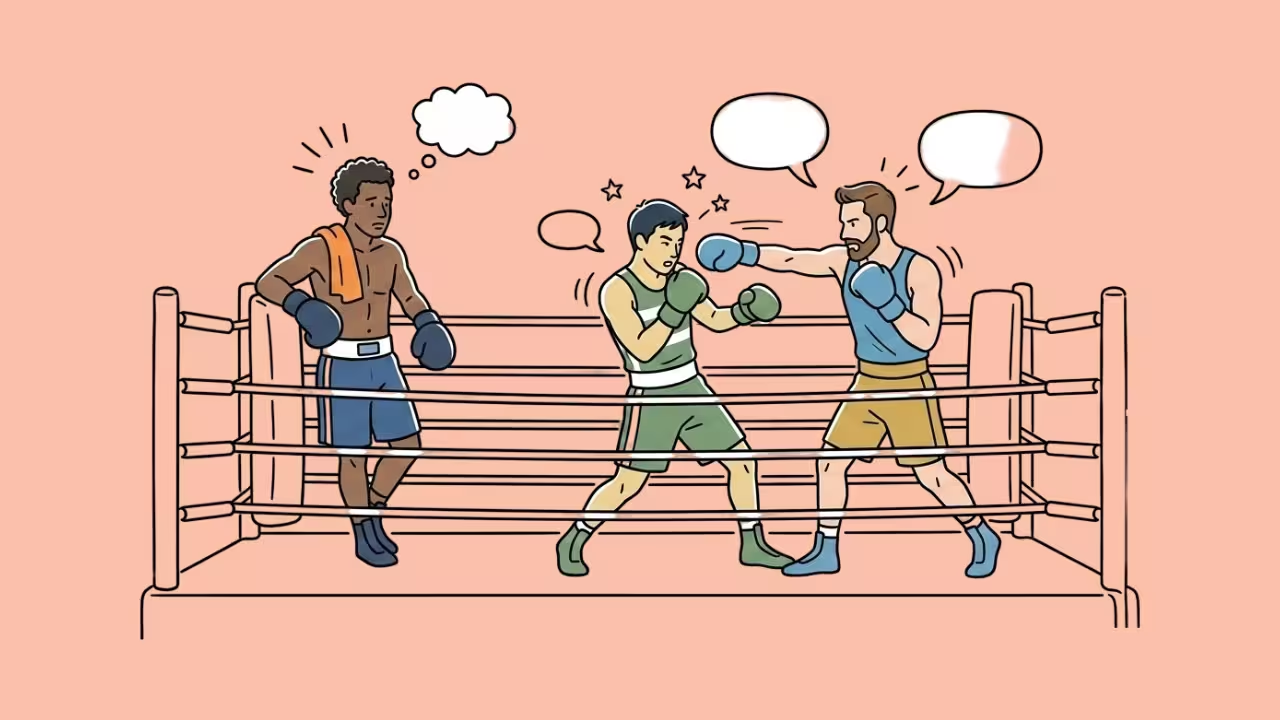

Anthropic CEO Dario Amodei has sharply criticized OpenAI and its leadership following a new defense agreement between OpenAI and the U.S. Department of Defense (DoD).
In an internal memo to staff, Amodei accused OpenAI of misleading the public about the nature of its military partnership.
According to reporting by The Information, he described the company’s messaging as “straight up lies.”
Anthropic and Pentagon
The dispute began after negotiations between Anthropic and the Department of Defense collapsed.
Anthropic already held a $200 million contract with the U.S. military. However, the Pentagon wanted unrestricted access to the company’s AI technology.
During the discussions, Anthropic requested clear safeguards. The company asked the Pentagon to confirm that its AI systems would not be used in two specific ways.
First, Anthropic wanted assurance that its technology would not support domestic mass surveillance.
Second, it asked the military to rule out the use of its AI in autonomous weapon systems.
These demands became a key obstacle. According to reports, the Department of Defense declined to provide the guarantees Anthropic requested.
The military wanted the flexibility to use the technology for “any lawful use.” Because of this disagreement and despite threats to Anthropic, the two sides failed to reach a new agreement.
Soon afterward, the Pentagon finalized a deal with OpenAI instead.
Amodei’s Criticism
In his internal memo, Amodei argued that Anthropic refused the deal because the company wanted stronger protections against misuse. He contrasted that position with OpenAI.
“The main reason OpenAI accepted the deal and we did not is that they cared about placating employees, and we actually cared about preventing abuses,” Amodei wrote.
Amodei also criticized how OpenAI presented the agreement to the public. He argued that the company’s statements created a misleading impression about the safeguards involved.
OpenAI’s Argument
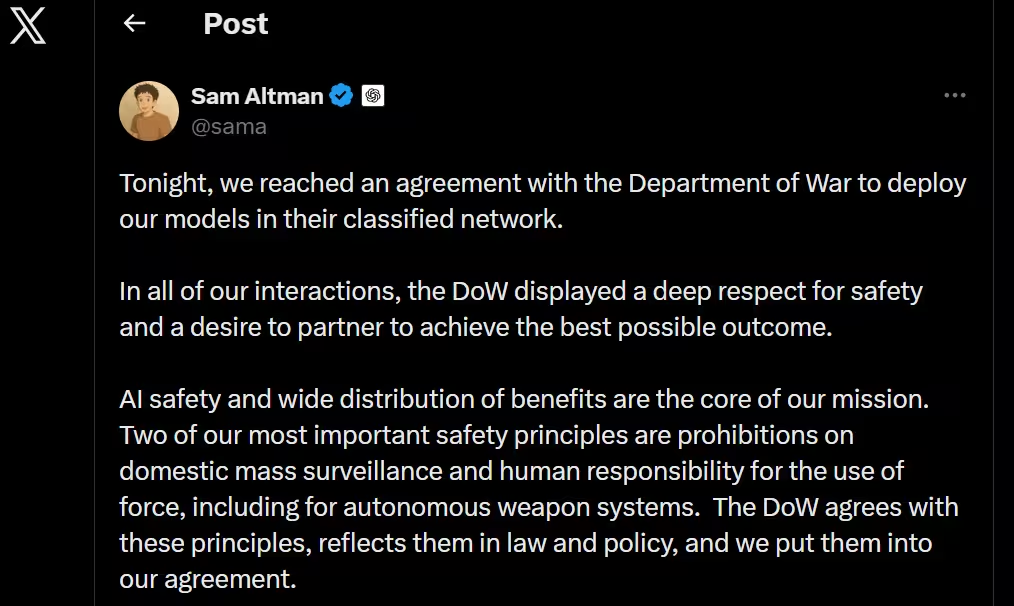
In a blog post discussing the agreement, the company said it ensured that the Pentagon could not use its AI systems for domestic mass surveillance.
OpenAI explained that the Department of Defense confirmed such surveillance would be illegal and not part of its intended use.
The company also said the contract clarified that domestic mass surveillance would not fall under the definition of lawful use.
Still, the agreement allows the Pentagon to use OpenAI’s AI tools for “all lawful purposes.” That language mirrors the wording requested during negotiations with Anthropic.
Major Concern
The problem with the Pentagon’s wording is that legal definitions can shift over time. A practice that is illegal today could become legal in the future.
Because of that possibility, some observers argue that relying solely on the phrase “lawful use” does not fully eliminate risk.
Anthropic’s leadership appeared to share that concern and sought specific contract-bound restrictions instead of broad language. This difference ultimately ended the negotiations.
After the Pentagon shifted its weight to ChatGPT, Amodei went on to accuse OpenAI CEO Sam Altman of misrepresenting the situation.
In the memo, Amodei wrote that Altman was falsely “presenting himself as a peacemaker and dealmaker.”He then described OpenAI’s public messaging as “safety theater.”
The phrase suggests that the company’s safety claims may focus more on public relations than on real limits.
Such direct criticism is unusual among major technology leaders. Both companies now compete for research leadership, commercial clients, and government partnerships.
Public Reaction
Reports indicate that ChatGPT uninstallations rose sharply after news of the Pentagon deal spread. According to available data, uninstall rates jumped by 295%.
The data does not explain exactly why users removed the app. Still, the timing suggests that the defense partnership raised privacy concerns among some users.
Amodei pointed to this reaction in his message to employees. “I think this attempted spin or gaslighting is not working very well on the general public or the media,” he wrote.
He also said many observers now view OpenAI’s deal with the Department of War as suspicious while seeing Anthropic as acting responsibly.
The situation appears to have boosted Anthropic’s visibility. According to Amodei’s memo, the company reached the number two position in the App Store rankings.
However, he expressed concern about one issue. He worried that OpenAI’s messaging might influence employees inside OpenAI itself.
“My main worry is how to make sure it doesn’t work on OpenAI employees,” he wrote.
