
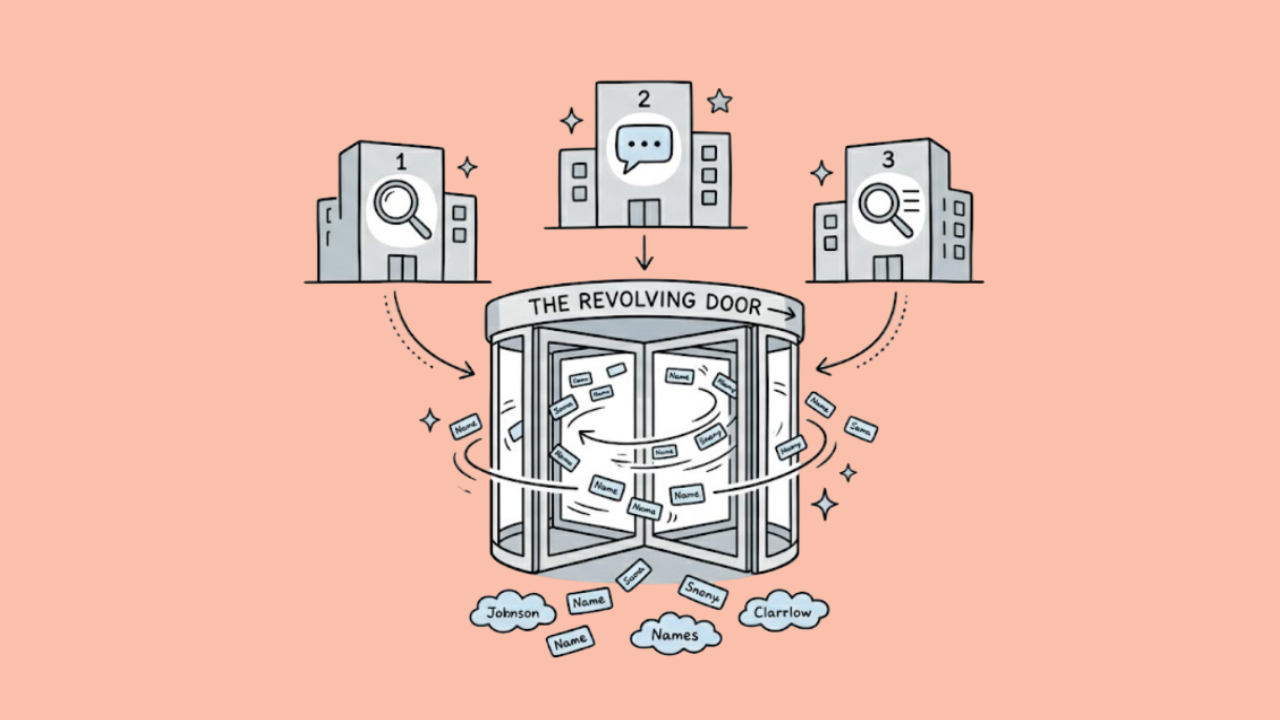

Two hires. One signals where OpenAI’s technology is headed. The other signals where its politics are headed. Both signal IPO.
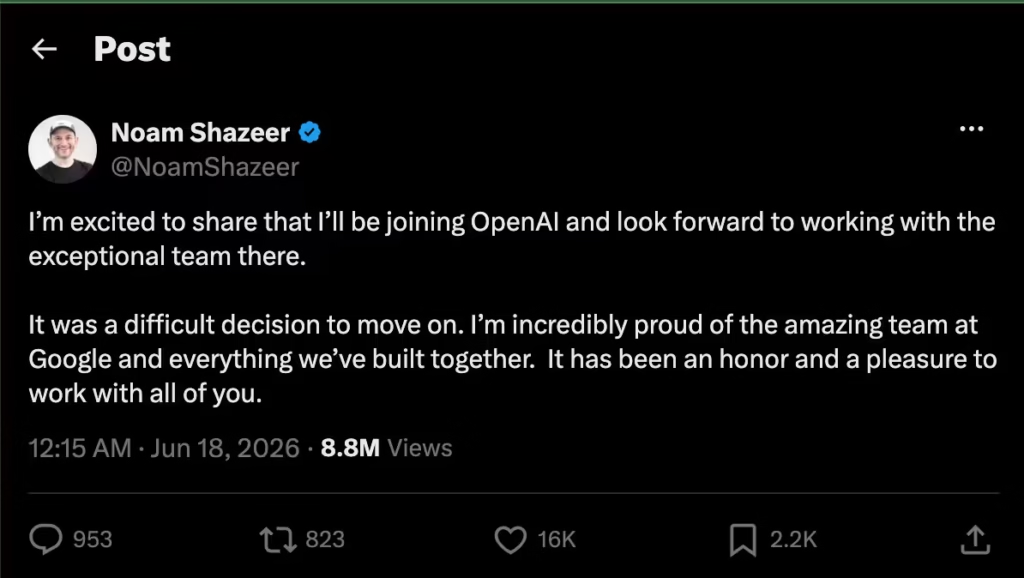
Google paid $2.7 billion to get Noam Shazeer back. That was less than two years ago. On Wednesday, he announced on X that he’s leaving to join OpenAI.
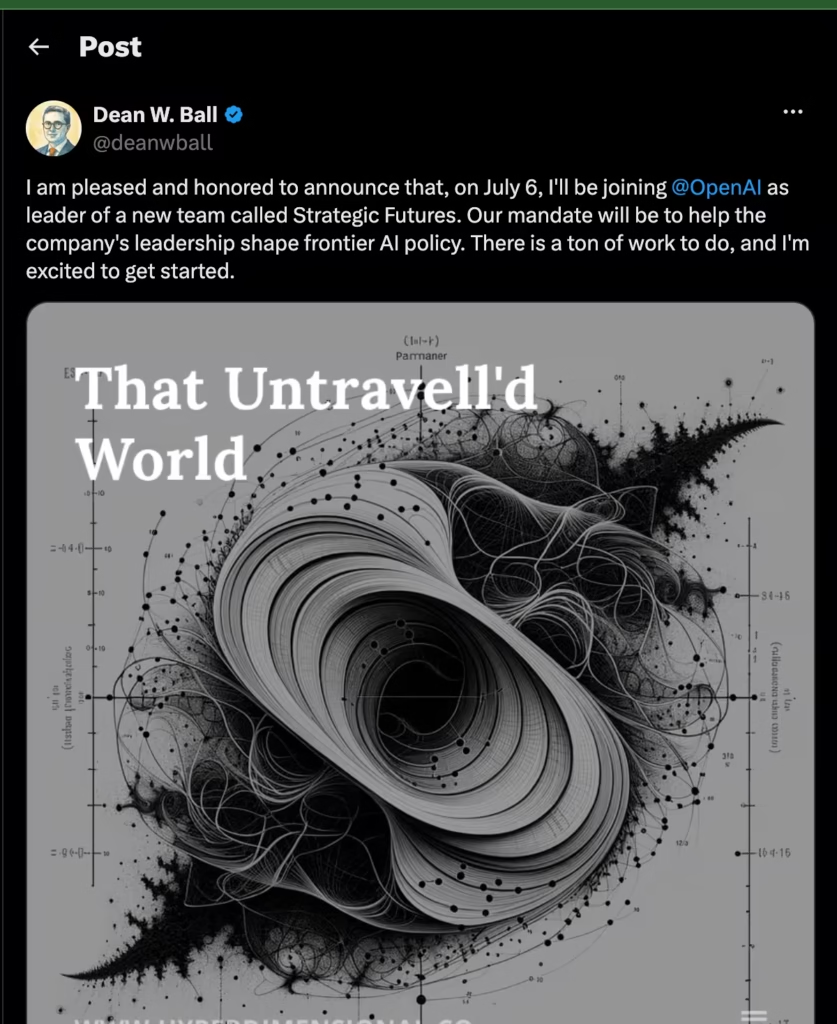
The next day, former Trump White House AI adviser Dean Ball announced he’s joining too – to lead a brand-new team called Strategic Futures.
Together, these are two of the most consequential hires in AI this year. And neither is a coincidence. OpenAI filed its confidential IPO paperwork earlier this month. It’s stacking the roster.
The Shazeer Move Hurts Google
There’s no way to sugarcoat this for Google. Shazeer is one of the co-authors of “Attention Is All You Need” – the 2017 paper that introduced the Transformer architecture behind every major language model in existence. GPT, Gemini, Claude – all of it traces back to that research. Time magazine named him one of the 100 most influential people in AI in 2023.
He first joined Google in 2000. Left in 2021 to co-found Character.AI because he thought Google was too cautious about releasing LLM-based products. Google brought him back in 2024 through a $2.7 billion licensing deal with Character.AI that also gave Google access to the startup’s technology. He became VP of Engineering and co-lead of Gemini.
Now he’s gone again.
“It was a difficult decision to move on,” Shazeer wrote on X. “I’m incredibly proud of the amazing team at Google and everything we’ve built together.”
Difficult or not, the move puts one of the foundational minds behind modern AI inside OpenAI’s building as it prepares to go public. For Google, it’s $2.7 billion that just walked out the door.
The Character.AI Shadow
Shazeer’s departure also leaves a messier legacy. Character.AI – the startup he co-founded – has been mired in lawsuits over teen suicides and mental health harms. In January 2026, Character.AI and Google agreed to settle multiple cases.
And according to The Information, Shazeer had also been posting internal opinions about transgender identity and the war in Gaza that resulted in Google management deleting his messages.
Whether any of that follows him to OpenAI is an open question.
Dean Ball: The Policy Play
The Shazeer hire is about talent. The Dean Ball hire is about positioning.
Ball spent time in the Trump White House as Senior Policy Adviser for AI and Emerging Technology at the Office of Science and Technology Policy. He helped write America’s AI Action Plan – one of the administration’s signature technology policy documents.
Before and after his government stint, he was a senior fellow at the Foundation for American Innovation, a techno-libertarian think tank. He’ll stay on as a non-resident fellow there while at OpenAI.
Starting July 6, Ball will report to Chief Strategy Officer Jason Kwon and lead a “small, high-agency team” focused on catastrophic risk, recursive self-improvement, labor market impact, and the relationship between frontier labs, governments, and society. The team covers both public-facing policy – think legislative proposals – and internal governance.
That second part is where Ball gets philosophical.
In a blog post announcing the move, he wrote that “almost by necessity,” AI labs will have to lead on AI governance decisions. “Internal governance will be more central to the future of AI than most people realize.”
The Timing Says Everything
Both hires land while Anthropic is getting squeezed. Last week, President Trump ordered an export control ban on Anthropic’s latest models – Fable 5 and Mythos 5 – forcing the company to pull them entirely to avoid noncompliance.
Anthropic is already blacklisted by the Pentagon. Now it’s losing access to international markets too.
Meanwhile, OpenAI is hiring the guy who wrote the White House’s AI playbook and the engineer who co-invented the architecture that powers every model on Earth. One company is locking in insider status. The other is being locked out.
Ball’s hiring in particular reads like an insurance policy.
With the Trahan-Obernolte AI Act entering public discussion and Congress expected to revise AI legislation throughout the second half of 2026, having someone with direct White House relationships shaping your policy team isn’t just nice to have. It’s strategic.
OpenAI’s chief strategy officer seems to agree. “Really glad Dean is joining OpenAI,” Kwon told Axios.
For anyone watching the AI industry’s power dynamics, these two hires tell you everything about where the leverage is shifting – and who’s building for the next chapter.
