
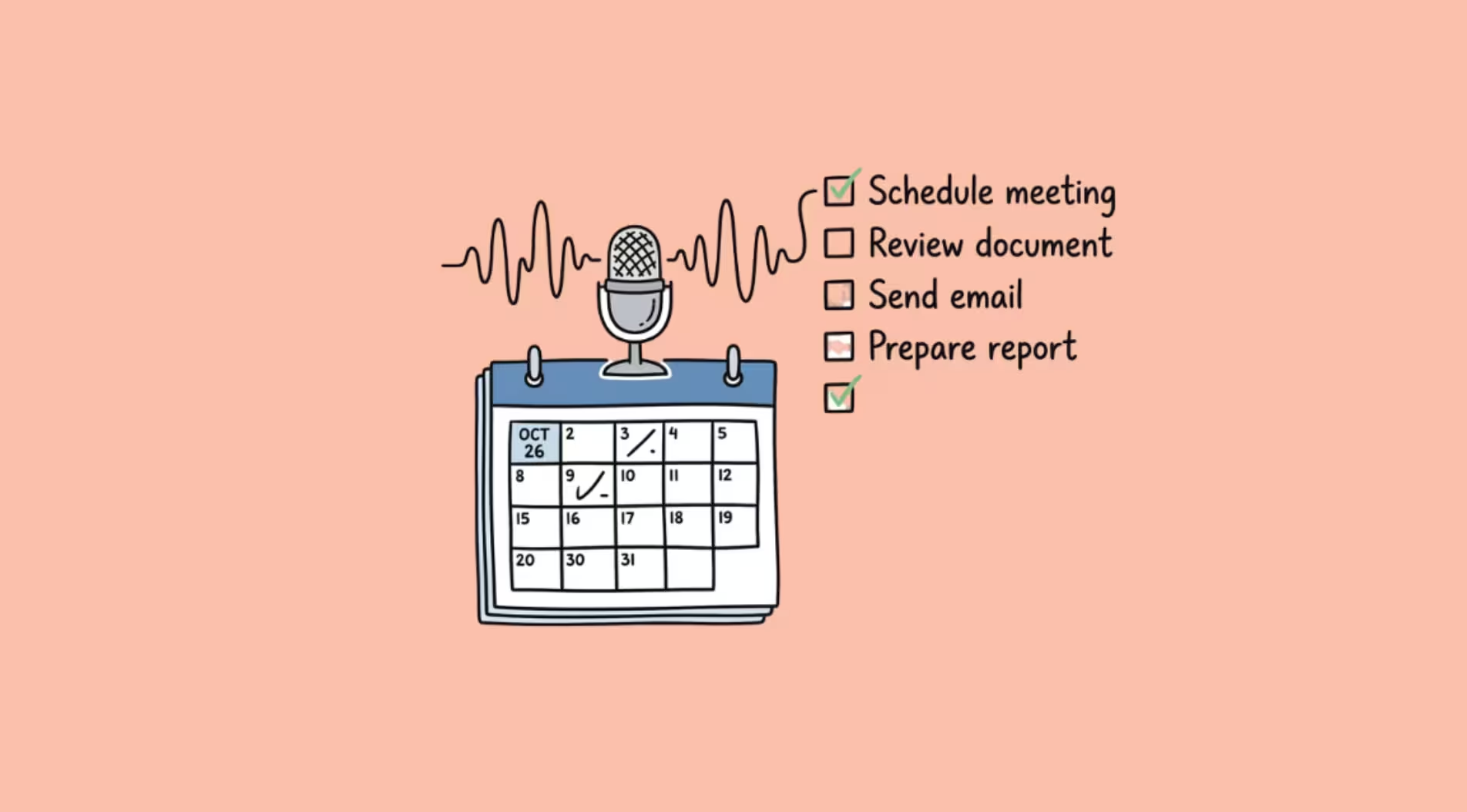

Calendly knows where your meetings are. It knows who’s in them and when they’re happening.
Now it wants to sit in on the call, take notes, and handle the follow-up. The question is whether being late to the party matters when you own the guest list.
On Tuesday, Calendly announced Notetaker and an AI assistant named Callie, expanding from the scheduling tool everyone knows into the AI meeting assistant space that everyone is fighting over.
The features work across Zoom, Google Meet, and Microsoft Teams.
CEO Tope Awotona isn’t pretending the market is empty.
He says “there’s a litany of note-takers, and all of them do a great job of recording and transcribing notes but a lot of work happens after the meetings. And we think that really that’s where the opportunity.”
What Notetaker and Callie Actually Do
Notetaker joins your meetings, records audio and video, transcribes the conversation, generates summaries with action items, and drafts follow-up emails.
Calendly is also testing a Granola-style mode that uses system audio to capture meetings without dropping a visible bot into the call.
Callie is the more interesting play.
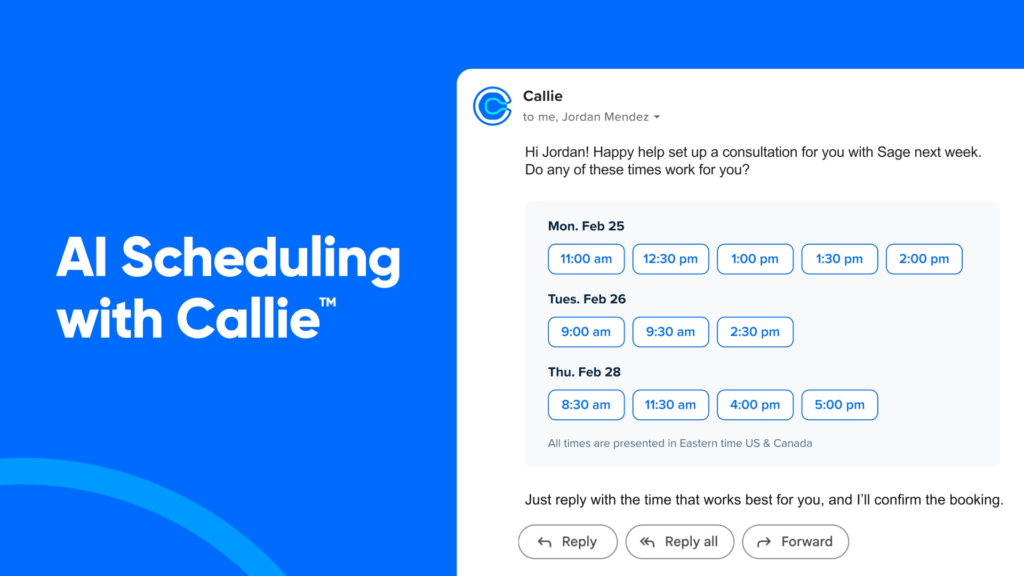
It’s an AI assistant that taps into Calendly’s scheduling stack.
Add [email protected] to any email thread and it finds times, coordinates with participants, and books the meeting.
Inside the Calendly app, you can ask Callie to summarize your last three calls with a specific client, pull up action items, or review a contact’s meeting history.
The pitch is that scheduling, note-taking, and follow-up all live in one place. You don’t need Calendly for booking, Otter for transcription, and a separate CRM for follow-up. One tool handles the entire meeting lifecycle.
The Competition Is Brutal
The list of companies already doing this is long.
- Granola just raised $125 million at a $1.5 billion valuation.
- Fireflies.ai has mini apps that extract insights from transcripts.
- Read AI launched an email-based digital twin that handles scheduling and answers.
- Fathom added a bot-less recording mode.
- Otter expanded into enterprise-wide search.
- Notion, ClickUp, and Wispr have all added meeting assistants to their productivity suites.
- Even Google and Microsoft have built-in meeting intelligence features. Gemini can summarize Google Meet calls. Microsoft Copilot does the same in Teams.
So Calendly is late. That’s obvious.
But Awotona is betting that Calendly’s existing position in the meeting lifecycle gives it a structural advantage.
The company already knows your schedule, your contacts, your meeting types, and your booking patterns. Nobody else in the note-taking space starts with that data.
The Privacy Card
One area where Calendly is trying to differentiate: transparency.
Otter is facing a privacy lawsuit over meeting transcription practices.
Granola has faced allegations of violating user privacy. Recording meetings without clear consent has become a real legal and reputational risk.
Awotona says Calendly’s Notetaker sends a chat message at the start of every recorded meeting, informing all participants.
Any user can ask it to leave. And because Notetaker is integrated with Calendly’s scheduling system, it can notify attendees before the meeting even starts that the call will be recorded.
Calendly also says it does not sell customer data or use it to train AI models.
The company uses OpenAI as its LLM provider and says only the minimum data needed for each feature gets shared.
The Real Bet Is on Post-Meeting Automation
Note-taking is table stakes at this point. Every tool in the market can record, transcribe, and summarize. The value isn’t in capturing the conversation. It’s in what happens next.
Calendly’s play is that Callie can turn action items from a meeting transcript into scheduled follow-ups, drafted emails, and new bookings, all within the same tool the user already relies on for scheduling.
If someone says “let’s meet next Tuesday to review this,” Callie can find availability, propose times, and send the invite without the user switching apps.
That’s a cleaner loop than what most standalone note-takers offer.
Whether it’s compelling enough to pull users away from Granola, Fireflies, or Otter is a different question.
Calendly has 20 million monthly users and is valued at $3 billion. It has the distribution.
Now it needs to prove the product can compete in a market that’s already crowded with well-funded, purpose-built tools.
