

Bring actual iPhone parts to your interview.
Keep your Apple laptop after you quit. Download confidential files while working at a competitor. Get coached by your new boss on how to dodge Apple’s exit security checks.
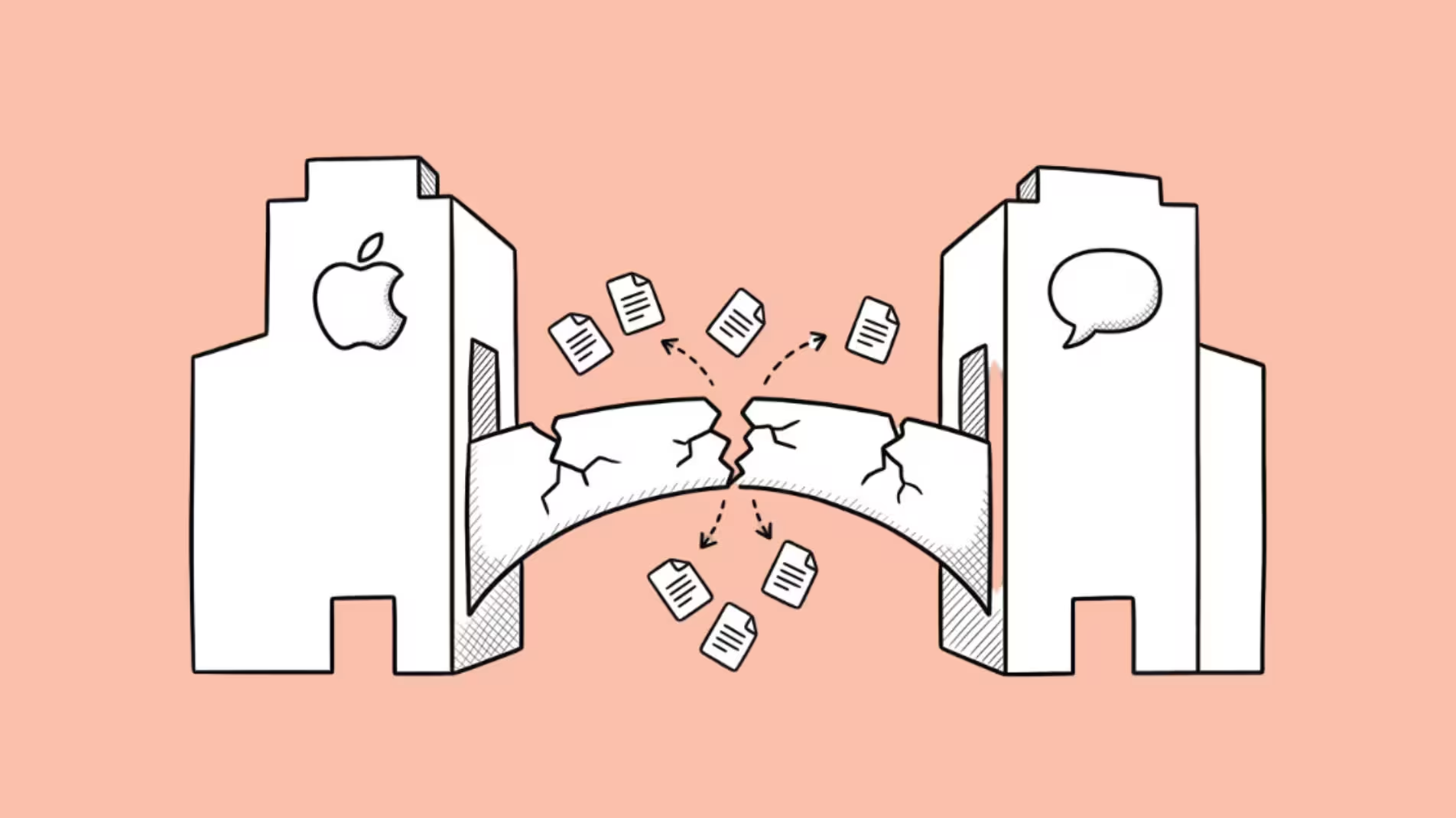
That’s what Apple is alleging in a federal lawsuit filed Friday against OpenAI, its hardware chief Tang Tan, former Apple engineer Chang Liu, and Jony Ive’s startup io Products.
The complaint was filed in the U.S. District Court for the Northern District of California, and the details read less like a corporate dispute and more like a spy thriller.
“Show and Tell” With Stolen Parts
Tang Tan spent 24 years at Apple. He was VP of product design for the iPhone and Apple Watch.
He left in February 2024 to co-found io Products with former Apple design chief Jony Ive. OpenAI acquired io last year for $6.5 billion, and Tan became OpenAI’s chief hardware officer.
According to Apple’s complaint, Tan didn’t just bring his expertise to OpenAI. He allegedly brought Apple’s secrets along with him.
Apple says Tan directed job candidates still working at Apple to bring “actual parts” to their interviews.
Batteries, logic boards, system-in-package components. He called them “show and tell” sessions.
Apple claims he used the company’s confidential internal project codenames during these interviews to extract even more information.
In one case, Apple says a candidate began screenshotting and downloading files from a highly confidential Apple project just hours before interviewing with Tan.
Once the interview started, Tan allegedly asked questions about that exact same project. Apple says this became an “established pattern.”
The Laptop That Never Came Back
Then there’s Chang Liu. He worked at Apple for eight years as a senior systems electrical engineer before leaving for OpenAI in January 2026. Apple says he kept his company-issued laptop after he left.
It gets worse. Liu allegedly discovered a bug that let him keep accessing Apple’s cloud file storage while employed at OpenAI.
When he realized the access still worked, he texted a contact still at Apple: “LOL, I found out I can access the [network storage], so funny.”
Apple says Liu used that access to download dozens of confidential hardware files, including technical specs, engineering presentations, and proprietary project data about unreleased products.
He also allegedly maintained a relationship with Yu-Ting “Alyssa” Peng, a current Apple employee who continued feeding him updates on Apple’s projects, vendor decisions, and engineering details.
An Exit Security Playbook for New Hires
One of the most damaging allegations: Apple says Tan either retained or obtained an internal “Need to Know” document that describes Apple’s security procedures for employee departures.
According to the filing, Tan and his OpenAI colleagues shared this document with new hires before they gave notice to Apple, effectively giving them a playbook for dodging Apple’s exit security checks.
Tan also allegedly told departing employees not to tell Apple they were going to OpenAI, so they could stay at Apple as long as possible and continue collecting information.
Apple says it found a pattern of employees leaving for OpenAI who emailed themselves confidential information on their way out. Including Tan himself.
Over 400 Former Apple Employees Now Work at OpenAI
That number jumped out of the filing. More than 400 former Apple employees currently work at OpenAI. The talent drain alone is significant. But Apple’s complaint suggests it wasn’t just talent that walked out the door.
“This is the tip of the iceberg,” the filing states. “
Apple lacks visibility into what’s been happening behind closed doors at OpenAI, where such misconduct is normalized and exemplified by leadership.”
Apple says its investigation also uncovered that OpenAI used Apple’s confidential information while building its own hardware product.
One example: OpenAI allegedly showed a partner a proprietary metal finishing technique and misled them into believing Apple had given permission to share it. Apple says it never did.
Why This Lawsuit, Why Now
The timing is loaded. OpenAI is preparing for what’s expected to be a historic IPO. It’s also rumored to be building its first consumer hardware device.
Analyst Ming-Chi Kuo suggested in April that it could be a smartphone powered by AI agents instead of apps, potentially launching in 2028.
If true, it would directly challenge Apple’s core business.
Apple and OpenAI entered a high-profile partnership in 2024 to integrate ChatGPT into the iPhone’s operating system. Sam Altman visited Apple’s Cupertino campus for the announcement.
That relationship has clearly soured. CNBC reports that Apple’s upcoming Siri overhaul this fall will run on Google’s Gemini, not OpenAI’s models.
Apple sent a letter to OpenAI in February raising its concerns. OpenAI did not respond.
What Apple Wants
The company is asking the court to bar OpenAI from using or disclosing any of Apple’s trade secrets, force the return of all confidential materials, and preserve evidence. Damages will be determined at trial.
“OpenAI’s nascent hardware business now rests on the shakiest of foundations,” Apple wrote in the filing, “rotten to its core by its illegal reliance on misappropriated trade secrets.”
OpenAI has not yet commented publicly. Jony Ive, notably, is not named as a defendant despite co-founding io Products with Tan.
This one is going to get ugly.
