
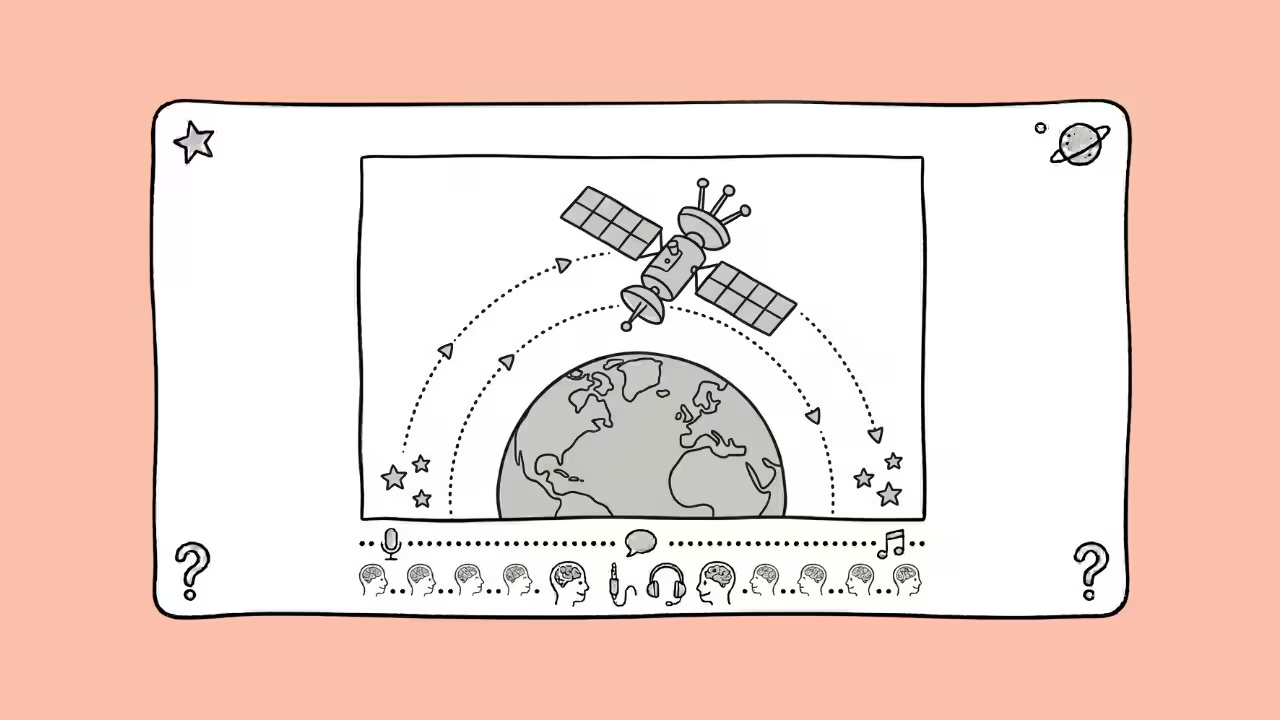

The energy powering AI just went interplanetary. Meta has signed a deal with a startup called Overview Energy to receive solar power beamed down from satellites in space.
It’s supposed to solve one of the biggest headaches in renewable energy, potentially: what happens after the sun goes down.
More Power
Meta’s data centers consumed over 18,000 gigawatt-hours of electricity in 2024 alone. That’s roughly enough to power more than 1.7 million American homes for an entire year.
And the demand isn’t slowing down. The company has committed to building 30 gigawatts of renewable power sources, with a heavy focus on industrial-scale solar.
Solar is great during the day. At night, though, it’s a different story. Data centers can’t just shut off when the sun sets.
So right now, companies face two not-so-great options: invest in massive battery storage systems, or quietly flip back to fossil fuels after dark. Neither is ideal.
Overview Energy thinks it has a better answer.
Also read: AI and Power Consumption Explained
Overview Energy
Overview Energy is only four years old. The company is based in Ashburn, Virginia, and came out of stealth mode in December 2024.
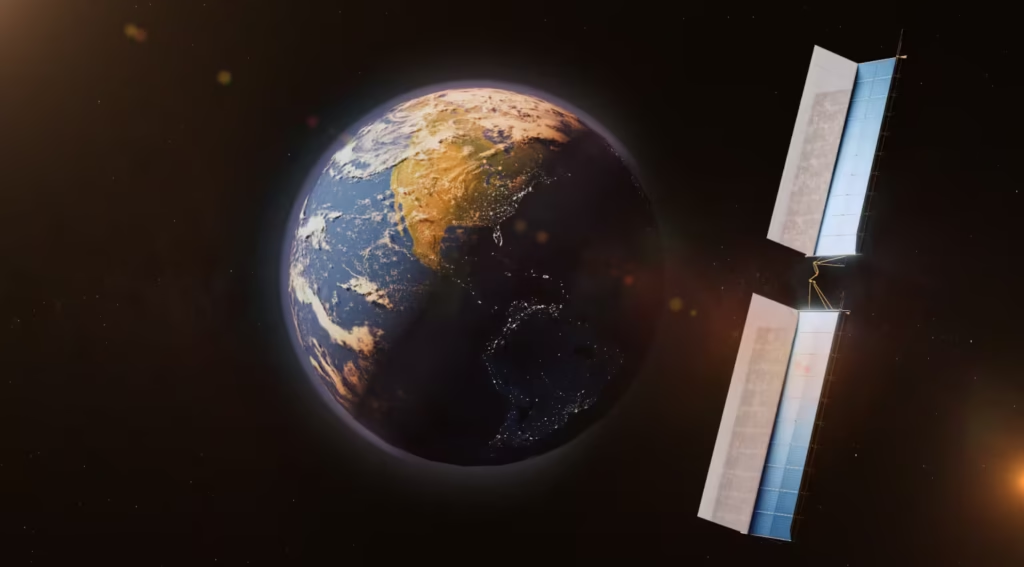
It plans to send satellites into space, collect solar energy up there where the sun always shines, and beam that energy back down to Earth as near-infrared light.
That light then hits large solar farms (we’re talking hundreds of megawatts in size), which convert it into usable electricity, even in the middle of the night.
Here’s what makes this different from sci-fi laser-beam fantasies. Overview is using a wide, diffuse infrared beam instead of a concentrated, high-power laser or microwave.
CEO Marc Berte says you could stare directly into his satellite’s beam without any harm.
That design choice is intentional; it sidesteps the safety and regulatory hurdles that have stalled other space-based power proposals for decades.
The Deal
Meta has signed what Overview calls a “capacity reservation agreement.” Under this deal, Meta could receive up to 1 gigawatt of power from Overview’s spacecraft.
It’s not entirely clear whether any money changed hands at this stage. To make sense of the contract, Overview invented a new unit of measurement: the “megawatt photon.”
It represents the amount of light needed to generate one megawatt of electricity. That’s a new way of thinking about power, and a sign that this technology is genuinely breaking new ground.
The Timeline
Overview hasn’t just drawn up plans on paper. The company says it has already demonstrated power transmission from an aircraft to the ground. That’s a real, physical proof of concept.
Next up: a satellite launch to low Earth orbit in January 2028 for the first-ever space-based power transmission test.
Berte expects to start launching the satellites that would fulfill Meta’s contract around 2030. The goal is a fleet of 1,000 spacecraft parked in geosynchronous orbit.
That’s the high orbit where satellites stay fixed above the same point on Earth. Each spacecraft is expected to operate for more than 10 years.
Coverage
Once the full fleet is in place, Overview says it could cover roughly a third of the planet.
The initial deployment would stretch from the West Coast of the United States all the way across to Western Europe.
Here’s the elegant part. As the Earth rotates and solar farms on the ground move into evening and nighttime, the satellites above would compensate.
They’d beam down additional light, keeping those farms generating electricity long after sunset.
That means a solar farm that used to produce power for maybe 8–10 hours a day could potentially run around the clock.
