
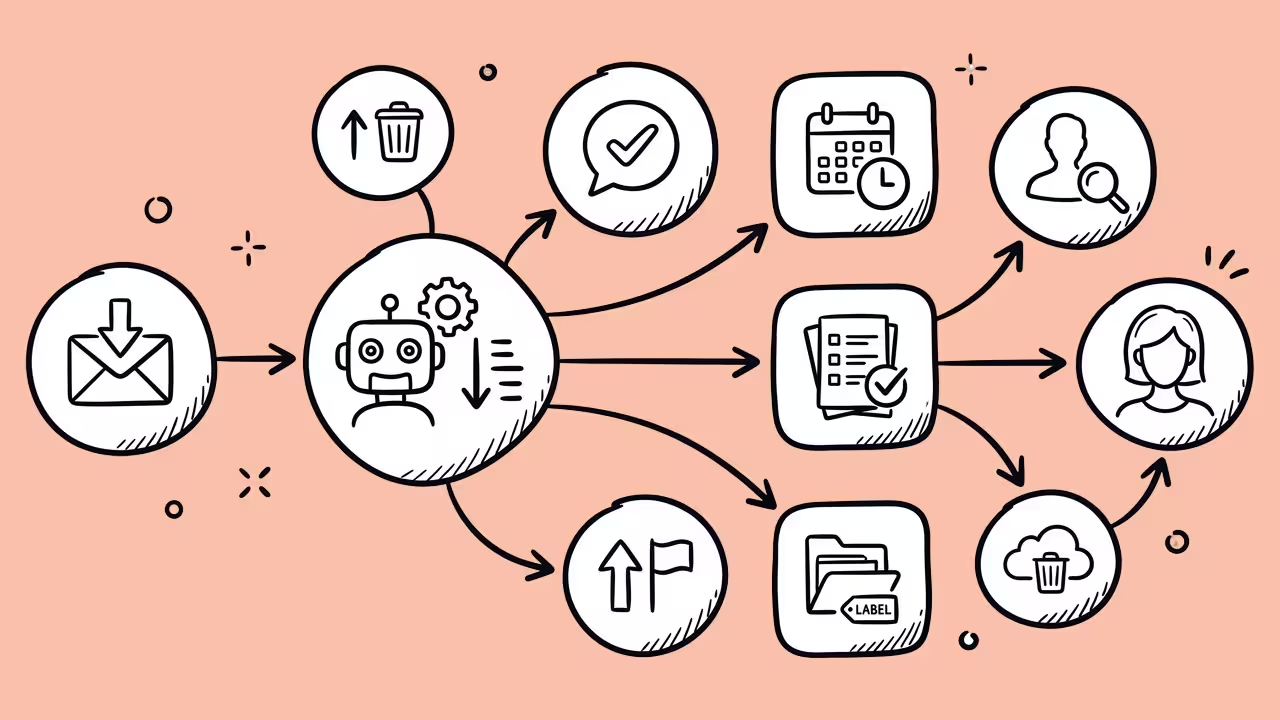

An AI agent is software that perceives its environment, processes that information, and takes actions to achieve a goal. They don’t wait around for instructions on every step. They are, instead, autonomous systems that adapt to conditions, learn from feedback, and make decisions on their feet.
Nowadays, they’re heavily used by businesses for daily operations, decision-making, and wide-scale intelligence. But not all AI agents are built the same. Each type solves a different problem, and choosing the wrong one can slow you down significantly.
This guide contains the top 10 types of AI agents, how each one works, where they’re already being used, and where they fall short.
1. Simple Reflex Agents
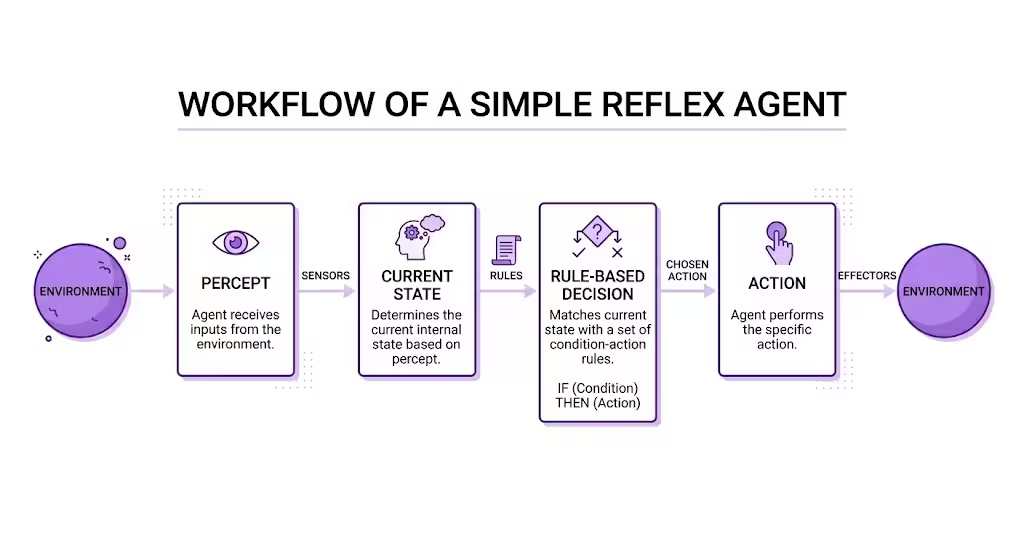
Simple reflex agents are the most foundational type. They follow a simple rule: if X happens, do Y. There’s no memory, learning, or planning. It only has a direct stimulus-response loop.
These agents work well in structured, predictable environments. An email autoresponder that replies to messages containing the word “unsubscribe” is a simple reflex agent. So is a thermostat that activates heating when the temperature drops below a set threshold.
In practice, simple reflex agents break the moment edge cases appear in email workflows. A single typo in a trigger keyword can cause silent failures for weeks before anyone notices. They’re reliable when inputs are clean and consistent, and brittle the moment they’re not.
Best for: Rule-based automation, safety triggers, and basic customer service workflows.
2. Model-Based Reflex Agents
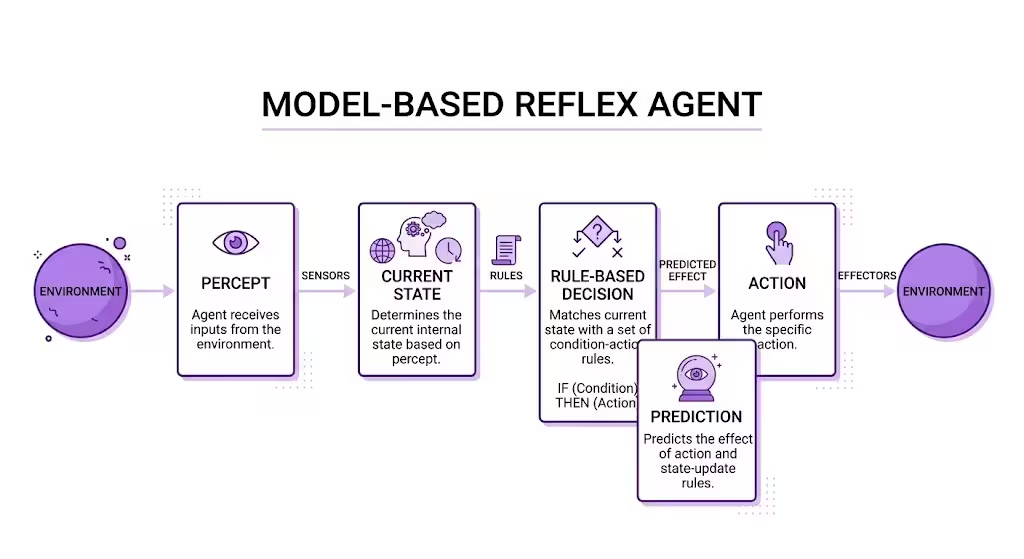
Simple reflex agents fail when they can’t see the full picture. Model-based reflex agents solve this by maintaining an internal representation of the world, letting them factor in information that isn’t immediately visible.
A document verification system is a practical example. As it processes a file, it tracks which fields it has already checked. When new information arrives, it updates its internal state and responds accordingly. These systems don’t forget what they’ve already done. Model-based agents still operate within predefined rule sets. They don’t strategize or adapt to goals they weren’t programmed to pursue, so their flexibility has a limit.
Best for: Partially observable environments, document processing, and quality assurance systems.
3. Goal-Based Agents
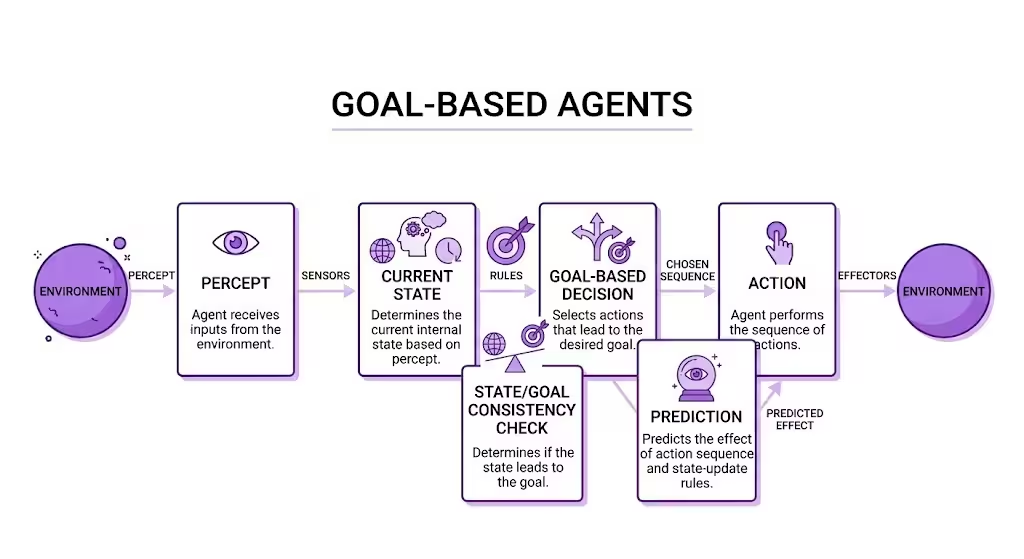
Goal-based agents are planners. These agents evaluate possible actions and choose the one most likely to achieve a defined objective, making them ideal for complex, multi-step tasks.
A logistics routing system is the perfect illustration. It weighs traffic, time windows, and fuel costs to select the most efficient route. Robotic warehouse systems use the same logic to fulfill orders while minimizing travel distance and collision risk.
Best for: Robotics, route optimization, automated scheduling, and strategic task management.
4. Utility-Based Agents
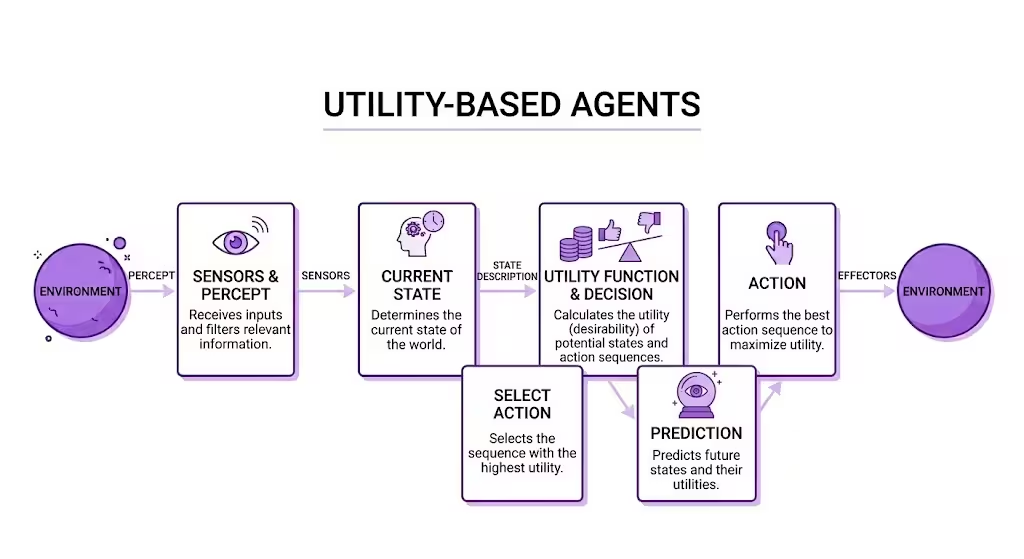
Utility-based agents chase multiple goals. They use a utility function to weigh competing outcomes and select the option with the highest overall value. An AI financial portfolio manager is a good example. It doesn’t simply maximize returns; it also accounts for risk tolerance, market volatility, and liquidity constraints. Autonomous vehicles use the same trade-off logic, constantly balancing speed, safety, and efficiency in real time.
The issue is that utility-based agents are brittle when conditions change faster than their utility function can adjust. During periods of unexpected market volatility, several portfolio management platforms struggle because their utility functions were calibrated on historical data that no longer reflects current conditions. Therefore, navigating this requires keeping the utility function current.
Best for: Financial modeling, resource allocation, autonomous vehicles, and complex trade-off scenarios.
5. Learning Agents
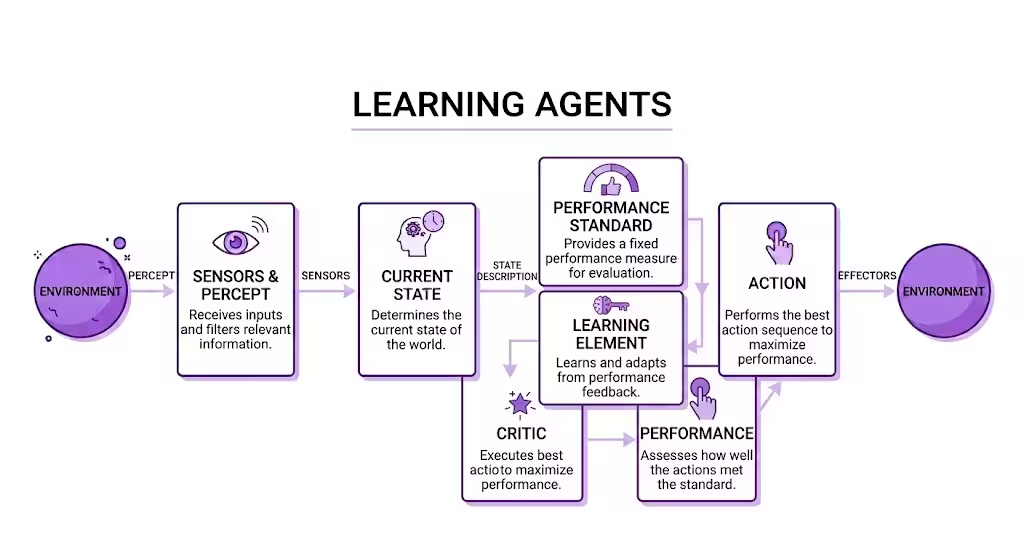
Learning agents improve over time by analyzing outcomes, adjusting their behavior, and becoming more effective through experience. This re-iterative loop is propelled using reinforcement learning or supervised machine learning techniques.
E-commerce recommendation engines are the textbook case. Amazon and Netflix study browsing history, clicks, and purchase patterns to surface more relevant suggestions with each interaction.
Just like utility-based agents, most learning agents plateau after that initial improvement curve unless teams actively retrain them on fresh data. The learning doesn’t continue indefinitely on its own.
Best for: Personalization engines, fraud detection, predictive analytics, and dynamic pricing systems.
Also read: 30+ AI Agent Examples That Actually Work in 2026
6. Hierarchical Agents
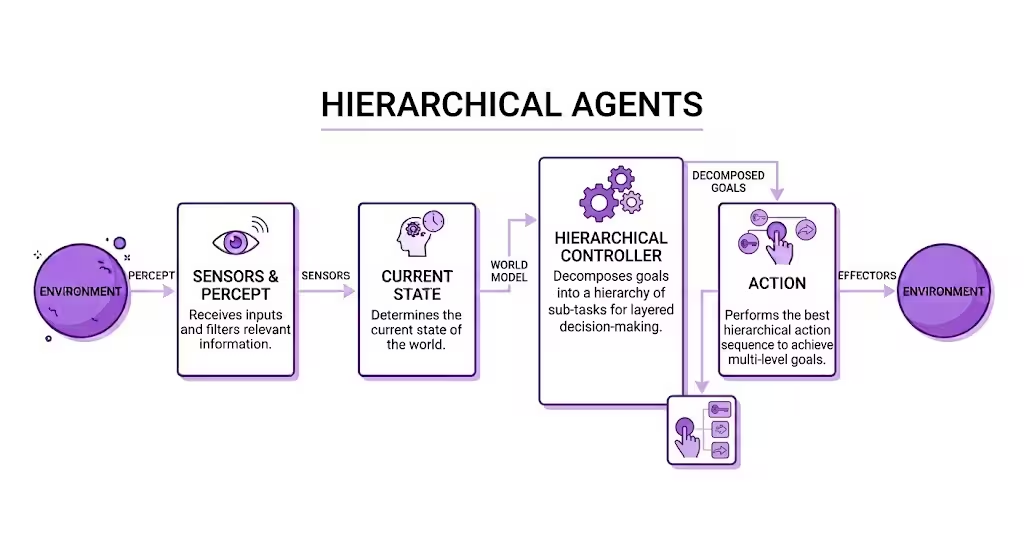
Hierarchical agents are built for complexity, which they tackle by decomposing large tasks into layered subtasks. A high-level agent sets strategic direction, mid-level agents manage operations, and lower-level agents handle execution.
For instance, autonomous drone delivery follows this layered pattern. The top-level agent defines the mission, destination, timing, and priority. Mid-level agents navigate and avoid obstacles, and lower-level agents control individual motor functions. Together, they complete a task that no single agent could manage alone.
Best for: Manufacturing control systems, robotic task planning, and enterprise workflow automation.
7. Multi-Agent Systems (AI Agents Working in Coordination)
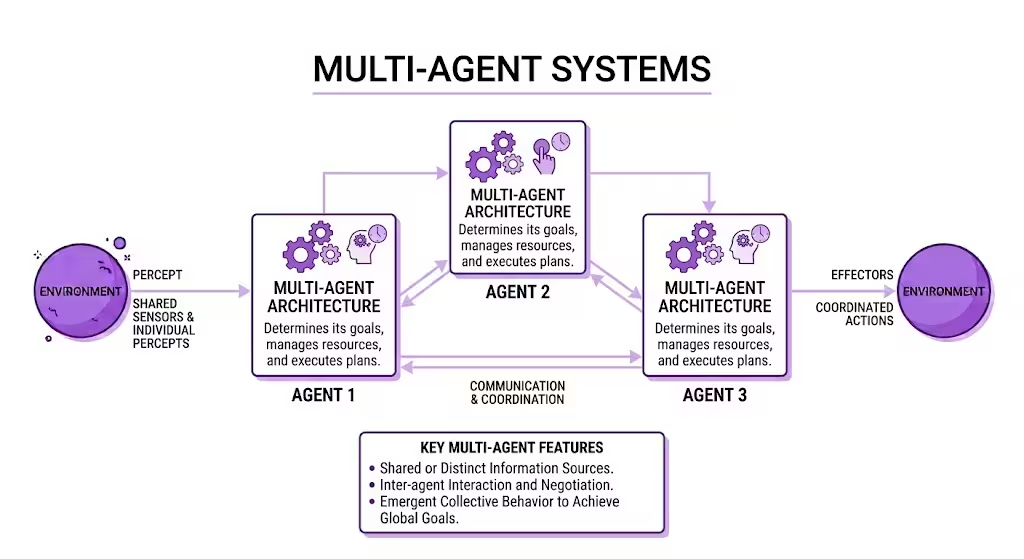
Multi-agent systems (MAS) involve multiple AI agents working together, or competing, to achieve shared or individual goals. They communicate, coordinate, and divide labor, making them ideal for large-scale problems.
In the average city, traffic lights, delivery vehicles, and public transit are run by multi-agent systems. They collectively share live data to reduce congestion. Amazon’s warehouse robotics also deploys MAS to coordinate entire fleets of robots operating simultaneously across the same floor space.
That said, MAS are overkill for many use cases. Things can get complex fast when considering coordination overhead, communication protocol design, conflict management between agents, and debugging emergent behavior. Before committing to MAS, it’s worth asking whether a well-designed hierarchical agent could handle the job more cleanly.
Best for: Smart infrastructure, supply chain management, decentralized decision-making, and large-scale simulations.
8. Conversational Agents
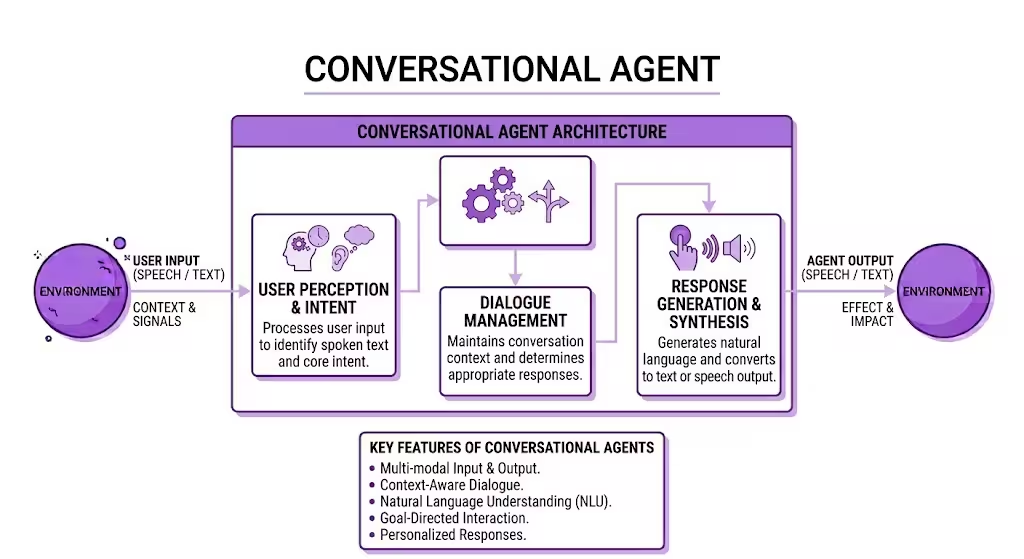
Conversational agents interact with humans through natural language. They understand queries, generate responses, and guide users through tasks, all through dialogue through extended multi-turn interactions.
ChatGPT, Google’s Gemini, and the customer support bots in retail websites are all conversational agents. More advanced versions, like voice assistants and AI sales agents, maintain context across a full conversation and adapt their tone based on user signals.
Best for: Customer support, virtual assistants, healthcare triage bots, and AI-powered sales tools.
9. Generative Agents
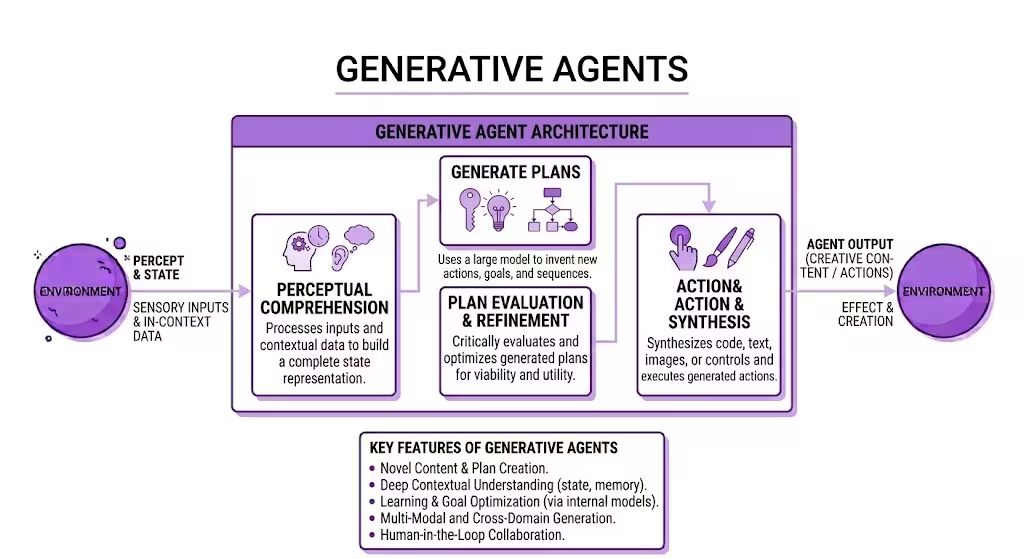
Generative agents are creative. These agents produce original content, simulate environments, and generate solutions that didn’t previously exist in their training data. GitHub Copilot is a prominent example. It generates contextual code suggestions that help developers write faster and with fewer errors.
Best for: Content creation, code generation, creative design, game development, and synthetic data production.
10. Agentic AI Systems (Fully Autonomous AI Agents)
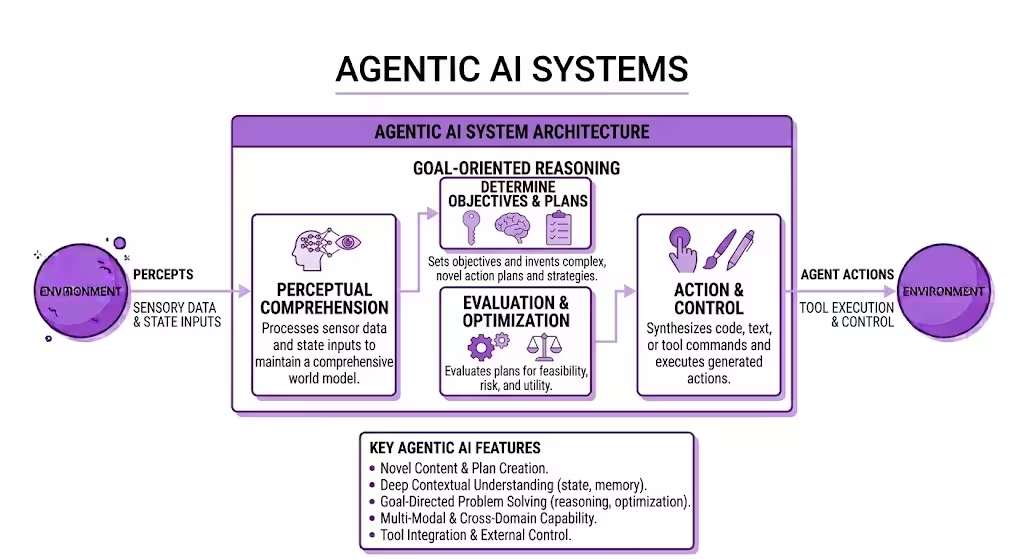
Agentic AI operates with high autonomy across extended, multi-step tasks, using tools, browsing the web, executing code, and making sequential decisions without human input at each stage.
Anthropic’s Claude and OpenAI’s Operator fall into this category. An agentic system might receive a single prompt, “research our top five competitors and draft a positioning report”, then independently search the web, extract data, synthesize findings, and deliver a finished document.
Agentic AI systems, however good, have a consistent failure point: most break down when a subtask returns an unexpected output format. The system doesn’t know how to recover gracefully, and the entire chain stalls. Robust error handling remains the gap separating impressive demos from production-ready deployments.
Best for: Research automation, complex business workflows, software development pipelines, and AI decision-making at scale.
Which AI Agent Type Fits Your Business?
If your system runs on clear, stable rules, a simple or model-based reflex agent is all you need. Don’t over-engineer it. If your use case involves dynamic goals and multi-step planning, leverage goal-based or utility-based agents, but budget time to calibrate their logic, especially in fast-changing environments.
Businesses in e-commerce or media will benefit most from learning agents. It only requires building the feedback loop first, then layering in conversational agents once support volume actually justifies the added complexity.
If you’re coordinating large fleets, supply chains, or distributed infrastructure, multi-agent systems earn their complexity at that scale, but not before.
Agentic AI systems are exciting, but they’re only choice for teams with the engineering maturity to handle failure gracefully. If you’re still defining your AI strategy, start with learning agents and grow into agentic workflows as your team’s confidence and infrastructure catch up.
