
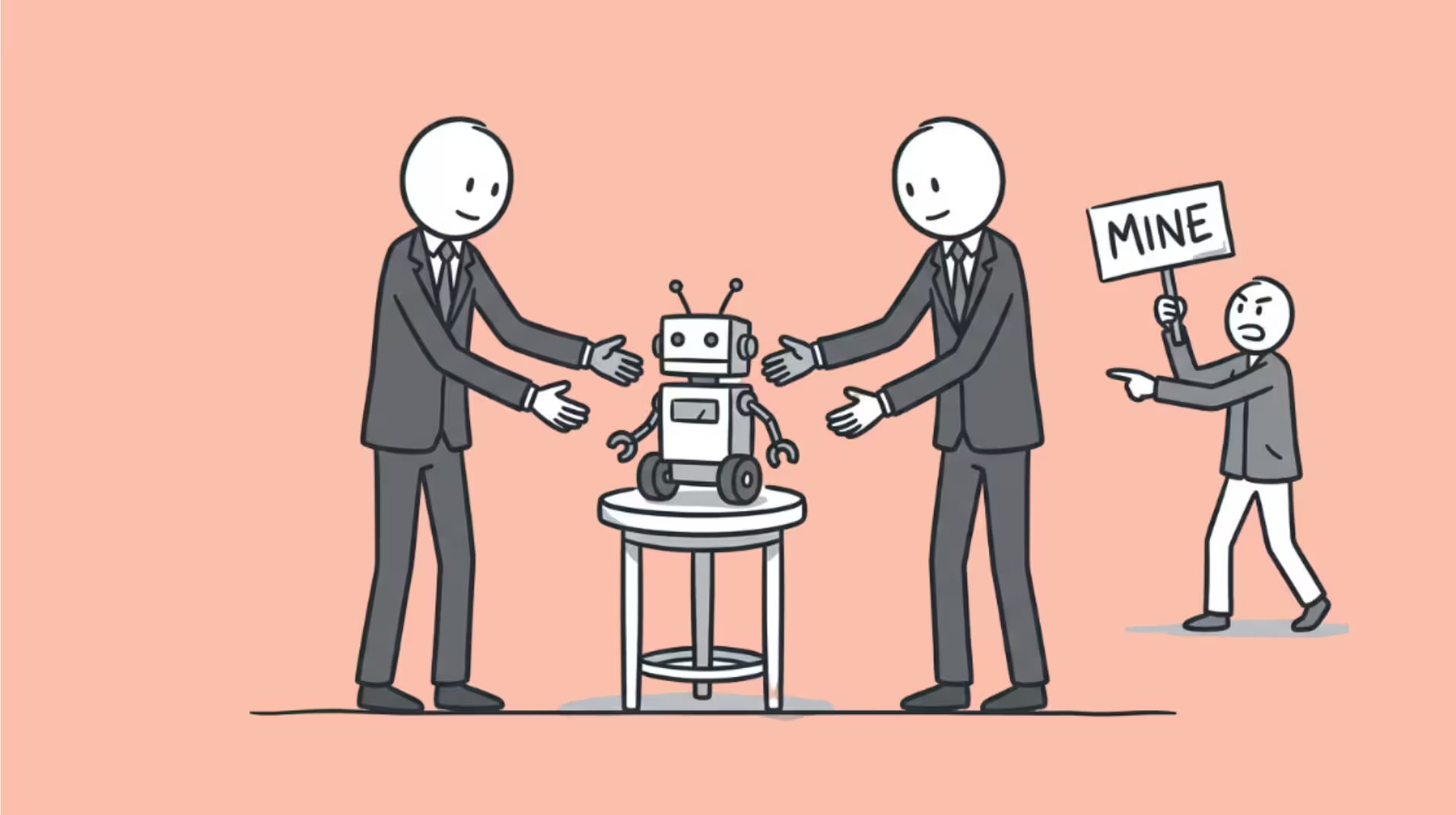

When Golden Gate Casino, the oldest casino on the Las Vegas Strip, announced it was replacing nearly every dealer with electronic table games this year, most coverage called it an AI story. It isn’t, not really. Those machines run on random number generators, the same technology that’s been in slot machines for decades. What’s actually happening elsewhere in the gambling industry, quietly and with far less fanfare, is a genuine AI story, and it’s a bigger one.
Sportsbooks have spent the last few years building AI into the core of how they price, protect, and personalize their platforms. Not chatbots bolted onto a website. Actual machine learning models making decisions in milliseconds, with real money attached to every one of them.
Odds that reprice themselves
The clearest evidence of how far this has gone comes from Kambi, a sportsbook technology supplier whose odds-pricing systems power operators including BetMGM, Bally’s, and Rush Street Interactive. According to figures reported by Yahoo Sports, 48 percent of all bets placed across Kambi’s network in 2025 were traded entirely by AI, up from 28 percent in 2024 and just 4 percent in 2022. That’s not AI assisting a human trader. That’s AI setting the price, adjusting it in real time, and managing the risk, with no person in the loop for nearly half of all wagers on that network.
Traditional sportsbooks relied on human traders to watch a game and adjust lines as it unfolded, tracking injuries, momentum, and where the sharp money was landing. That model doesn’t scale to modern in-play betting, where an operator might need to reprice thousands of markets simultaneously across dozens of games running at once. Machine learning models handle that instead, ingesting live data streams and adjusting probabilities as the data changes.
Some of these systems go further than crunching numbers on a spreadsheet. Computer vision models can spot a player starting to favor one leg, or a subtle shift in formation, and trigger an odds adjustment before a human trader would even notice. Natural language processing tools scan beat writer posts and press conference transcripts for hints, a coach mentioning he might rest a starter, for instance, giving the model a head start before anything becomes official news.
The parts nobody advertises
Odds pricing gets the attention, but fraud detection might be the more consequential use of AI in the industry. Betting platforms now run pattern recognition models that flag coordinated betting behavior, arbitrage attempts, and account anomalies as they happen rather than after the fact. That shift, from investigating fraud after the money’s gone to catching it in progress, mirrors the same trajectory AI has followed in banking and payments over the past decade.
Personalization runs on the same infrastructure. Rather than sending every user the same promo, sportsbooks now build individual behavioral profiles predicting what a specific bettor is likely to want, then serve odds boosts and offers accordingly. Anyone curious about what that looks like in practice can see it play out directly; a DraftKings sportsbook promo code rarely gets shown the same way twice, since the offer itself is often shaped by the same personalization models doing the pricing work behind the scenes.
Why this matters beyond betting
None of this is unique to sportsbooks. It’s the same pattern showing up in fraud detection at banks, in dynamic pricing at airlines and ride-share apps, in recommendation engines everywhere. What makes gambling a useful case study is the sheer volume and speed involved. A sportsbook can’t afford to get an odds adjustment wrong by even a few seconds, so the industry has become an unusually aggressive early adopter of real-time ML infrastructure, often ahead of sectors that get more attention for their AI spending.
It also raises the same governance questions every other AI deployment raises: who audits these models, how much autonomy they should have, and what happens when a fraud detection system flags a legitimate user by mistake. Anyone tracking how organizations are building accountability into automated decision systems more broadly will recognize the shape of the problem, it’s covered in more general terms in AutoGPT’s rundown of AI governance tools, which digs into exactly this compliance and audit challenge across industries.
The casino floor swapping dealers for RNG machines is a labor story wearing an AI costume. The actual AI story in gambling is happening one level up, in the pricing engines and fraud models that never get a press release of their own. That’s usually how it goes with AI adoption: the visible change gets the headlines, and the real infrastructure shift happens somewhere nobody’s pointing a camera.
