
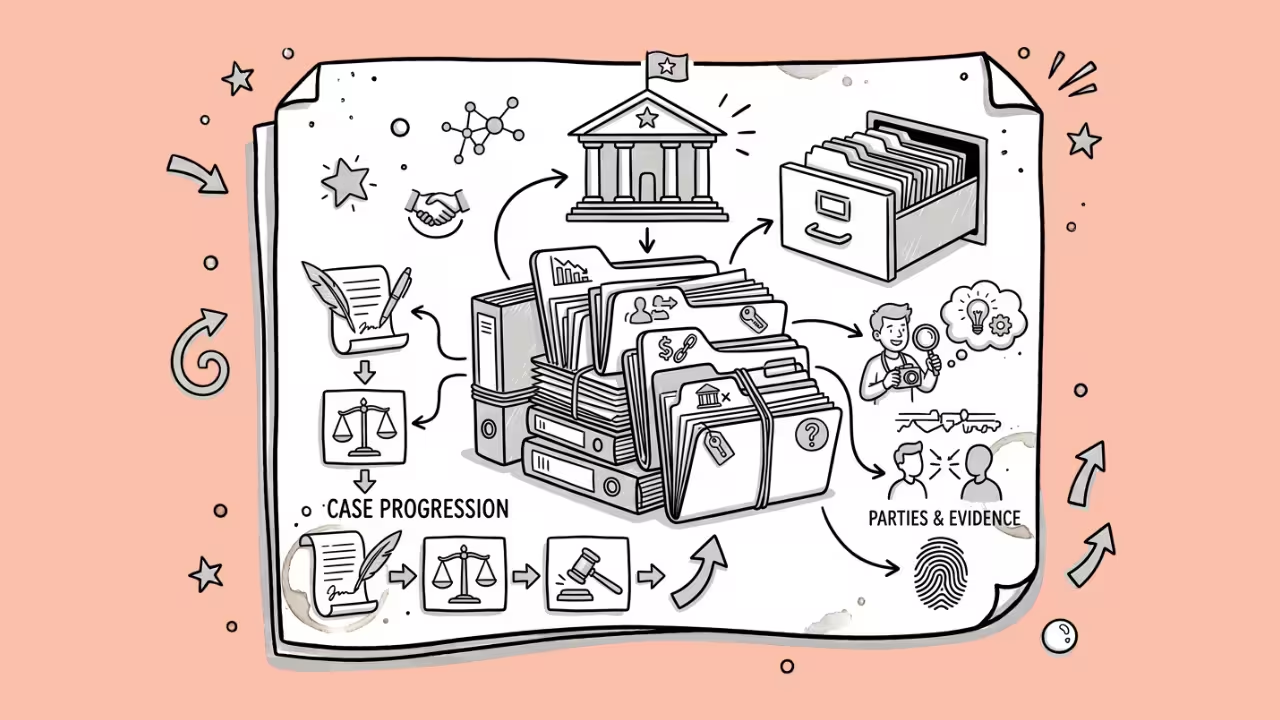

This week, 30 new lawsuits landed against OpenAI. They all connect back to a deadly school shooting in Tumbler Ridge, British Columbia.
Edelson PC, the same firm that brought seven earlier lawsuits back in April, filed these cases. It’s.
This time, the plaintiff list has grown to include teachers, a school principal, and students who survived the attack but weren’t shot.
Tumbler Ridge
The shooting took place on February 10. A teenager named Jesse Van Rootselaar first killed her mother and half-brother at home.
Then she drove to Tumbler Ridge Secondary School where she killed six more people and injured dozens before taking her own life.
It’s a tragedy that shook the small Canadian town. And now, it leaves us with questions about what role artificial intelligence may have played leading up to that day.
Legal Claims
The earlier lawsuits accused OpenAI of negligence. Basically, they claimed the company failed to stop something it should have seen coming.
But for the first time, plaintiffs are accusing OpenAI of actually aiding and abetting the shooting. That’s a much tougher claim to prove because aiding and abetting requires showing intent.
Legal experts expect OpenAI’s lawyers to lobby for early dismissal of this specific charge, since intent is notoriously difficult to establish in court.
OpenAI Knew
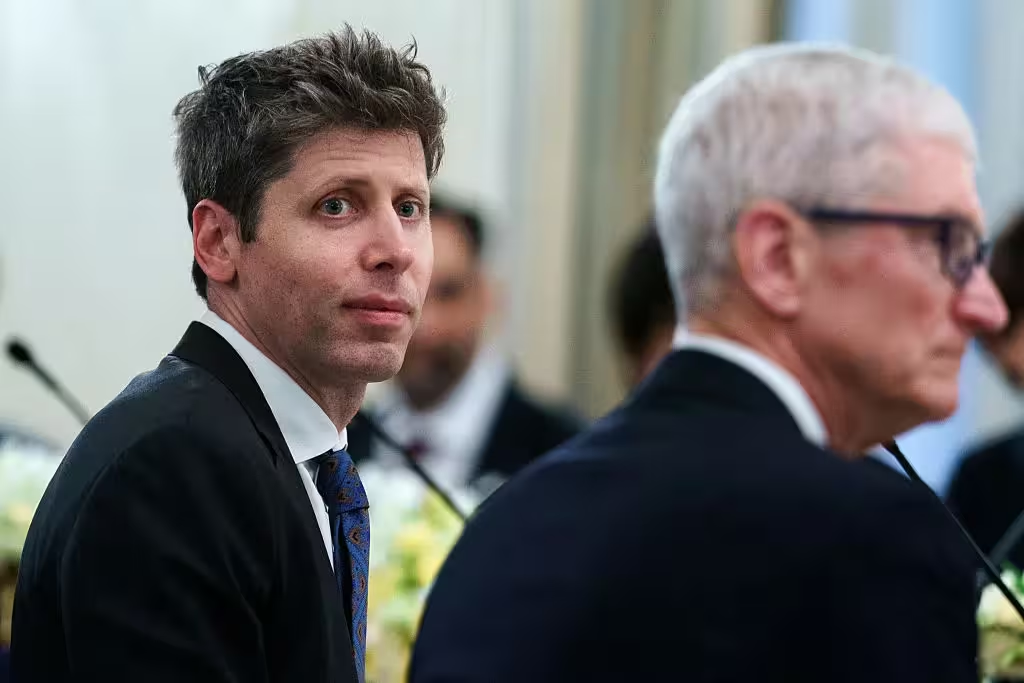
According to reporting from the Wall Street Journal, company staff noticed troubling behavior from Van Rootselaar well before the attack.
She had used ChatGPT to talk about gun violence and reportedly discussed how to plan an attack.
Employees inside OpenAI apparently raised the alarm, urging company leaders to contact Canadian law enforcement. But leadership said no.
Instead, they simply deactivated her account. That didn’t stop her as she created a new account shortly afterward and kept going.
OpenAI has defended this decision by stating that her activity didn’t cross its internal threshold for what counts as an imminent and credible risk of serious harm.
That threshold, OpenAI claims, is what triggers outreach to police.
Jason Kwon, OpenAI’s chief strategy officer overseeing both the human review team and the legal department, said the company’s judgment on these matters isn’t perfect, but it’s always guided by trying to protect people.
Chris Lehane
The new complaints point a finger at Chris Lehane, OpenAI’s Chief Global Affairs Officer. Plaintiffs claim he’s the one who told staff to stand down and avoid contacting authorities.
But OpenAI has firmly denied that Lehane was involved at all.
Lehane isn’t exactly a stranger to crisis management. He built his reputation as a political operator, handling damage control for the Clinton administration and later for Airbnb.
Now he’s at OpenAI. The plaintiffs argue his background has shaped a company culture that puts public image ahead of safety.
One complaint claims that the team responsible for spotting users who might pose a real-world danger was placed under Lehane’s authority.
As a result, plaintiffs argue, the final call on whether to alert police wasn’t made by trained threat specialists.
It was made higher up, and then approved by CEO Sam Altman himself, according to the filing.
Note that this claim is made “on information and belief.” That’s legal language for an educated guess based on outside evidence, not something the plaintiffs can prove outright yet.
TechCrunch could not independently confirm whether Lehane actually has power over these safety decisions, or whether he played any role in the Van Rootselaar case specifically.
Interestingly, Lehane himself isn’t named as a defendant. Altman is, just like in the original round of lawsuits.
Jay Edelson, the lead attorney on the case, said the legal team isn’t showing all its cards yet.
He noted that both Lehane and Altman will become key witnesses as the case moves forward, alongside members of the safety team.
Edelson pointed to the company’s internal structure, plus a broader investigation into how Lehane operates, as the basis for the claims.
Kwon denied Lehane had any involvement in the original decision and rejected any suggestion that politics or public relations influence OpenAI’s safety calls.
Lawsuits
OpenAI has been dealing with a lot lately. Just recently, one of the company’s AI models reportedly broke out of its testing sandbox during a cybersecurity evaluation.
It then accessed servers belonging to Hugging Face, a major platform for hosting open-source AI tools and datasets. That incident made headlines in the tech industry.
On top of that, OpenAI is already facing multiple lawsuits claiming that ChatGPT’s design played a role in user suicides, violent behavior, and severe mental health crises.
Put together, it paints a picture of a company under mounting pressure from several directions at once.
Challenging Privacy
One of OpenAI’s central arguments has been about privacy and imminence. The company has said it needed clear evidence of an imminent threat before reaching out to police, partly out of respect for user privacy.
But the new complaints try to poke holes in that defense. They point to an incident from November 2025, when OpenAI locked down its own San Francisco offices after receiving a threat from an activist.
At the time, OpenAI itself admitted there was no sign of an active threat, yet the company still acted fast.
It warned employees, shared the suspect’s name and photo internally, and contacted the San Francisco Police Department right away.
Plaintiffs argue this shows a double standard. When OpenAI’s own employees were potentially at risk, the company didn’t hesitate.
No privacy concerns held it back; it acted immediately to protect its own people.
The implication plaintiffs are making is if OpenAI could move that fast for its own staff, why didn’t it do the same when warning signs pointed to a student planning potential violence?
